How to Build a Chess Opening Repertoire, Step by Step
How to build a chess opening repertoire: choose by style, cover every main reply, pick openings with shared structures, set how deep to go, and keep it fresh.
In short
- A repertoire is your set of prepared openings: one plan for White and answers to Black's main problems.
- Cover the essentials first: White's first move plus answers to Black's main replies; as Black, a defense to 1.e4 and one to 1.d4.
- Choose openings that share structures and ideas, so your knowledge carries over.
- Let your own games decide what to add next, and keep the repertoire in one place you can review.
An opening repertoire is the set of openings you’ve prepared: what you play as White, and how you respond as Black to each of your opponent’s main choices. A good repertoire saves you time, keeps you out of unfamiliar trouble, and lets your opening knowledge build up game after game instead of starting from scratch every week.
Here’s how to build one, step by step.
Step 1: Know your style
Your repertoire should lead to positions you enjoy and understand. Ask yourself:
- Do I like open, tactical positions or closed, strategic ones?
- Do I prefer to attack or to counter-attack?
- How much time can I spend on theory?
There’s no wrong answer. A tactical player will be miserable in the slow Queen’s Gambit Declined; a positional player won’t enjoy the Sicilian Dragon. Choose accordingly.
Step 2: Map what you need to cover
As White
Pick your first move (1.e4 or 1.d4 are the usual choices; see 1.e4 vs 1.d4), then list Black’s main replies:
| After 1.e4 | After 1.d4 |
|---|---|
| 1…e5 | 1…d5 (QGD, Slav, QGA) |
| 1…c5 (Sicilian) | 1…Nf6 (King’s Indian, Nimzo, Grünfeld) |
| 1…e6 (French) | 1…f5 (Dutch) |
| 1…c6 (Caro-Kann) | Others (1…e6, 1…c5) |
| 1…d5 (Scandinavian) and others |
A system opening like the London covers most of the 1.d4 column with one setup, which is why it’s so popular with busy players.
As Black
You need, at minimum:
- A defense to 1.e4.
- A defense to 1.d4.
- A plan against 1.c4, 1.Nf3 and systems like the London, which often transposes from your 1.d4 defense.
Step 3: Choose openings that fit together
The most efficient repertoires reuse ideas. When your openings share pawn structures and plans, everything you learn in one helps in the others.
| Repertoire | Against 1.e4 | Against 1.d4 | Shared idea |
|---|---|---|---|
| Solid | Caro-Kann | Slav | …c6 and …d5, bishop out before …e6 |
| Classical | 1…e5 | Queen’s Gambit Declined | Classical central control |
| Fianchetto | Pirc or Dragon | King’s Indian | …g6, …Bg7, kingside play |
| Counter-attacking | French | Queen’s Gambit Declined | …e6 and …d5 pawn chain |
As White, the same principle applies: Italian Game players often like the Advance Variation against the French and Caro-Kann, because both involve slow, central buildups.
Step 4: Decide how deep to go
Depth should depend on your rating and on how sharp the opening is.
| Rating | Main line depth | Sidelines |
|---|---|---|
| Under 1200 | 5–6 moves + the main ideas | Only the most common traps |
| 1200–1600 | 8–10 moves + plans | 1–2 moves of the common deviations |
| 1600–2000 | 10–15 moves in critical lines | The sidelines you actually meet |
| 2000+ | As deep as the opening requires | Detailed |
In sharp openings (the Najdorf, the Marshall Attack, the Yugoslav Dragon), you need more depth, because one wrong move can lose. In systems (the London, the Colle), plans matter far more than move orders.
Step 5: Learn it actively
Read each line with explanations, then practice it from memory. In the Chess Opens trainer, every move comes with the reason it’s played, and Practice mode makes you play your side without seeing the moves. Our articles on how to learn chess openings and how to practice chess openings cover the full routine.
Step 6: Keep it in one place
Write your repertoire down: a study file in a chess database, a notebook, or a simple document with your lines and plans. Note your answer to each sideline the first time you meet it. Over time, this file becomes your personal opening book.
Step 7: Let your games guide you
After every game, check the opening: where did you or your opponent leave your preparation? If an opponent played something you didn’t know, look it up and add it to your file. This keeps your repertoire focused on what people actually play against you, not on lines you’ll never see.
Example repertoires
Beginner (under 1200):
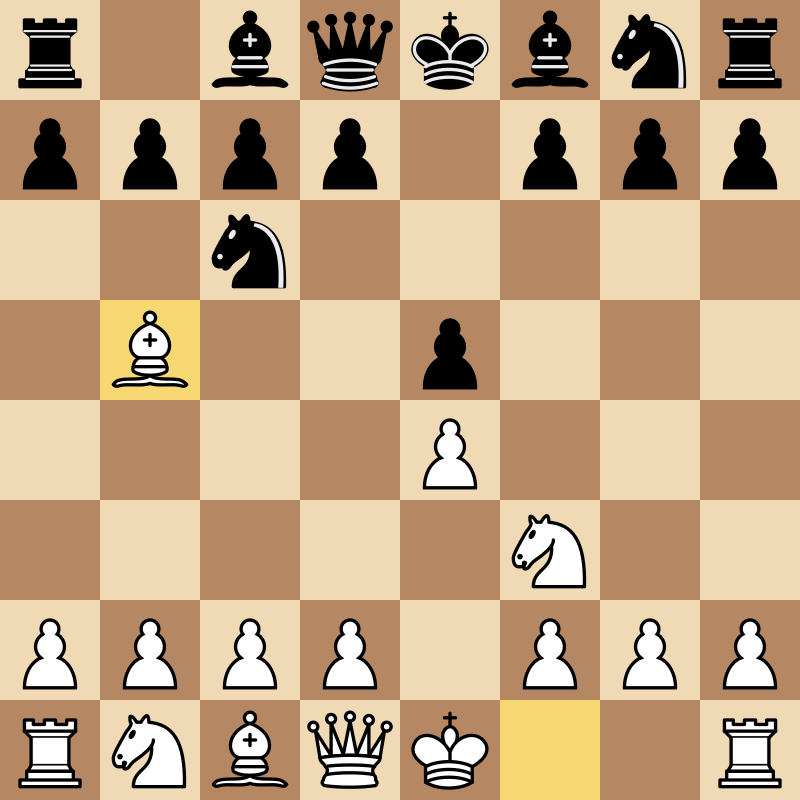
- White: Italian Game or London System
- Against 1.e4: 1…e5 or the Caro-Kann
- Against 1.d4: the Queen’s Gambit Declined
Solid club player:
- White: London System or Queen’s Gambit
- Against 1.e4: Caro-Kann
- Against 1.d4: Slav
Aggressive club player:
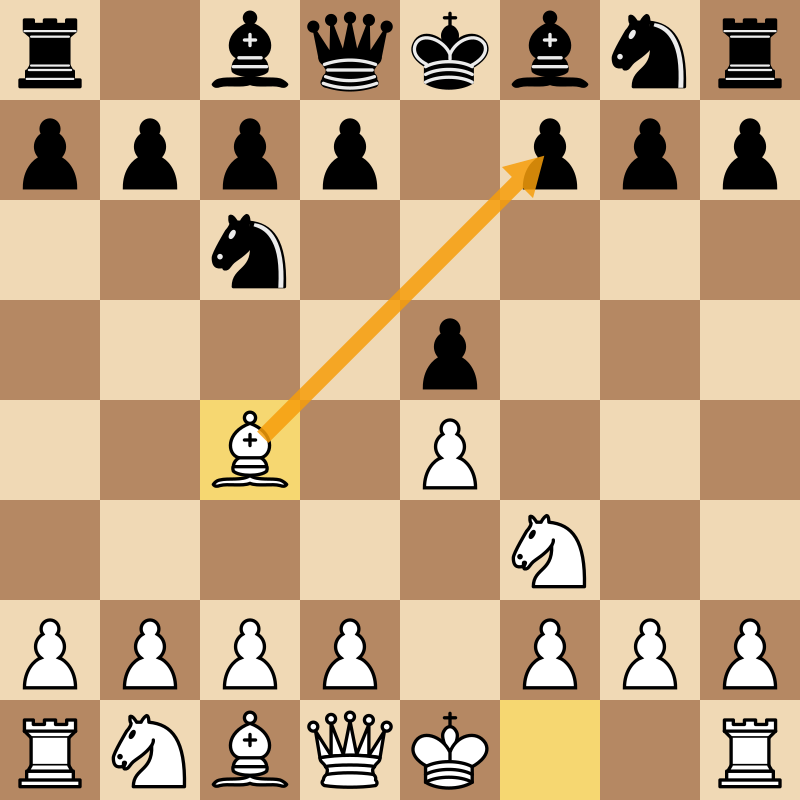
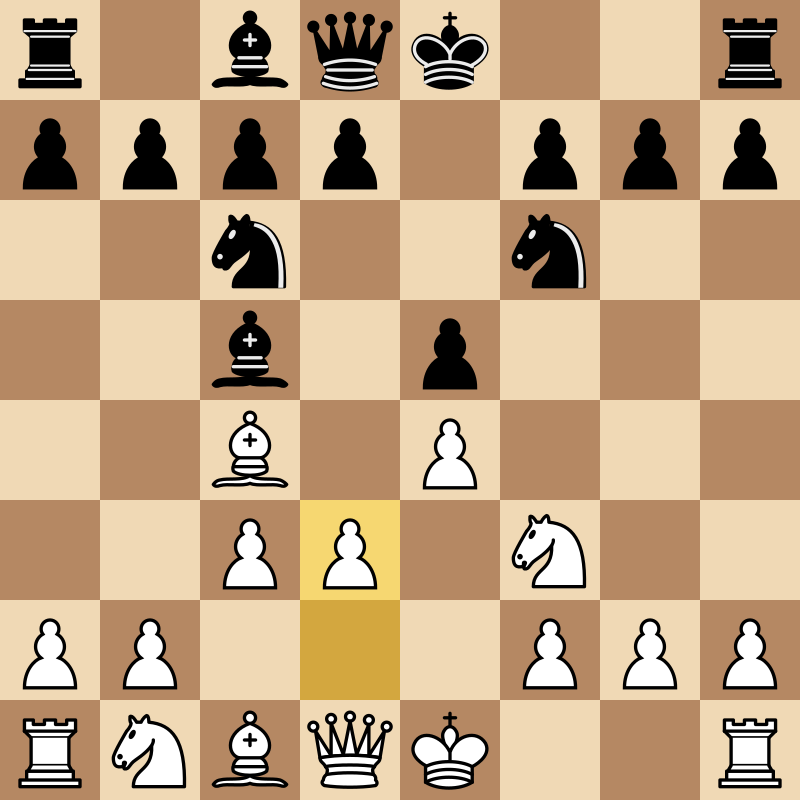
- White: 1.e4 with the Italian (including the Evans Gambit) and the Smith-Morra against the Sicilian
- Against 1.e4: Sicilian Dragon
- Against 1.d4: King’s Indian Defense
For more choices by rating, see the best chess openings under 1200, and for style-based picks, the best chess openings for White and for Black.
Common repertoire mistakes
- Too many openings at once. Learn one fully before adding the next.
- Mismatched styles. A sharp Sicilian with Black and a dry London with White can feel like two different games, so choose deliberately.
- No answer to sidelines. Have at least a simple plan against 1.c4, 1.Nf3 and the London.
- Never updating. A repertoire that ignores your games stops improving.
Browse the full opening library to start building yours. For an outside overview of how openings are classified (ECO codes and families), see Wikipedia’s list of chess openings.
Practice it in Chess Opens
Learn the Italian Game move by move
Step through the Italian Game with the reason behind every move, then play it from memory against the trainer. Free, no sign-up.
Also in this article: Caro-Kann Defense, Slav Defense, London System, Queen's Gambit Declined
Questions
Q1How many openings should be in my repertoire?
Start with three core choices: one opening for White, one defense against 1.e4 and one against 1.d4. Add answers to sidelines (1.c4, 1.Nf3, anti-Sicilians and so on) as you meet them in your games.
Q2Should my repertoire be aggressive or solid?
Match it to how you like to play. Aggressive openings give more winning chances but more risk; solid ones are more forgiving. Many players use a more aggressive opening with White and a more solid one with Black.
Q3How often should I change my repertoire?
Rarely. Give each opening at least a few months and 50–100 games. Switching often means you never learn any opening deeply.
Keep reading
The 8 Best Chess Openings for Beginners (and Why They Work)
The best chess openings for beginners, for White and Black: the Italian, London, Queen's Gambit, Caro-Kann and more, with diagrams and simple plans.
How to Learn Chess Openings Without Memorizing Everything
A step-by-step method to learn chess openings: start with principles, pick a small repertoire, learn ideas and structures, then practice and review real games.
Best Chess Openings for White: 7 Choices for Every Style
The best chess openings for White, by style: the Italian, Ruy Lopez, Scotch, Vienna, Queen's Gambit, London System and English, with diagrams and plans.