Best Chess Openings for Black Against 1.e4 and 1.d4
The best chess openings for Black, against 1.e4 and 1.d4, sorted by style: solid, classical and aggressive. Diagrams, plans, and ready-made repertoires.
In short
- As Black you need two answers: one to 1.e4 and one to 1.d4.
- Solid choices: the Caro-Kann against 1.e4 and the Slav or Queen's Gambit Declined against 1.d4.
- Aggressive choices: the Sicilian against 1.e4 and the King's Indian against 1.d4.
- Pick openings that lead to similar positions or pawn structures, so your knowledge carries over.
Playing Black is harder than playing White. White moves first, chooses the opening, and decides how sharp the game will be. Black has to be ready for whatever comes. The good news: you only need two main answers, one to 1.e4 and one to 1.d4, and those two cover the vast majority of your games.
Here are the best chess openings for Black, grouped by style, with suggested combinations at the end.
Against 1.e4
Caro-Kann Defense (solid)
1.e4 c6 2.d4 d5. Black challenges the center while keeping the light-squared bishop free to come out to f5 or g4. Solid, logical, and full of good endgames. It’s our top recommendation for improving players who want reliability. Full details in the Caro-Kann guide.
Sicilian Defense (aggressive)
1.e4 c5. The most popular reply to 1.e4 at every level, because it creates an unbalanced position immediately. Black trades a wing pawn for White’s center pawn, leading to rich, double-edged fights. The Najdorf and Dragon are the sharpest versions. Start with our Sicilian Defense guide.
1…e5 (classical)
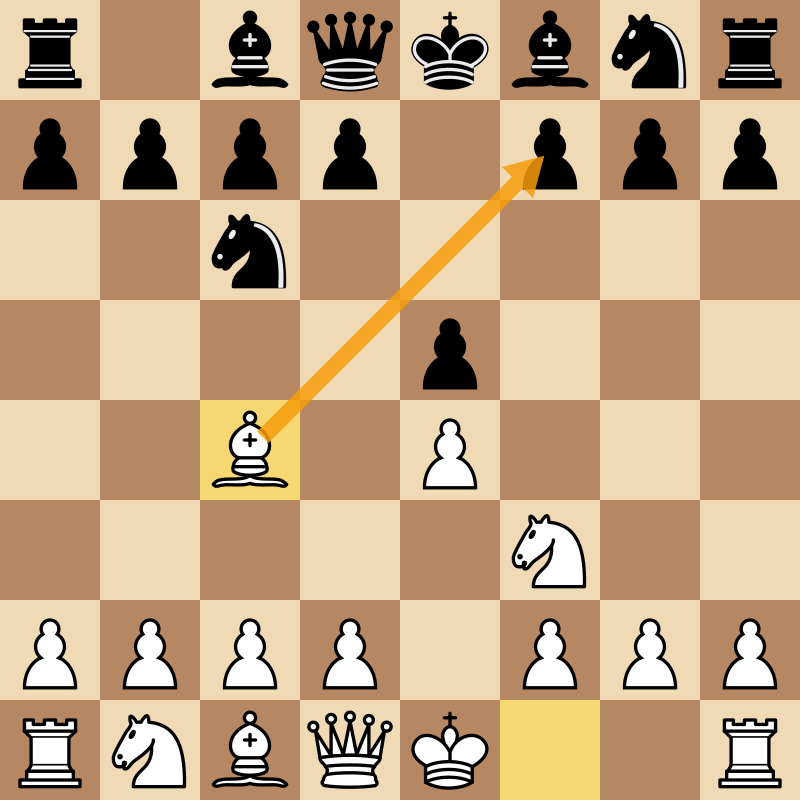
1.e4 e5. The most natural answer: claim your share of the center. You’ll need to know the Italian (meet it with the Two Knights Defense or 3…Bc5), the Ruy Lopez, the Scotch and some gambits. It’s the best way to learn classical chess.
French Defense (counter-attacking)
1.e4 e6 2.d4 d5. Black builds a solid pawn chain and then counter-attacks White’s center with …c5 and …f6. The trade-off is a sometimes-passive light-squared bishop. See the French Defense guide.
Scandinavian Defense (direct)
1.e4 d5. Black forces the issue on move one. The plans are simple and White can’t avoid it. A great practical choice if you don’t have time for theory. Learn it on the Scandinavian page.
Against 1.d4
Queen’s Gambit Declined (classical)
1.d4 d5 2.c4 e6. The most solid and time-tested defense. Black holds d5 with a pawn and develops naturally. It has been trusted by world champions for over a hundred years. Read the QGD guide.
Slav Defense (solid)
1.d4 d5 2.c4 c6. Like the Caro-Kann, the Slav supports d5 with the c-pawn so the c8 bishop can still come out. Very solid, with more active piece play than the QGD. See the Slav Defense guide.
King’s Indian Defense (aggressive)
1.d4 Nf6 2.c4 g6. Black lets White take the center, then strikes back with …e5 and attacks the king. Ambitious and double-edged. The King’s Indian guide explains the plans.
Nimzo-Indian Defense (strategic)
1.d4 Nf6 2.c4 e6 3.Nc3 Bb4. Black pins the knight and fights for e4 with pieces. Flexible, rich and highly respected. When White avoids 3.Nc3, Black needs a second line (often the Queen’s Indian). See the Nimzo-Indian page.
Dutch Defense (aggressive)
1.d4 f5. Black fights for e4 with a pawn from the start and aims for a kingside attack. Unbalanced, and a great surprise weapon. The trainer covers the Leningrad setup on the Dutch Defense page; we cover the Stonewall setup in the Stonewall Dutch guide.
Ready-made repertoires
The best combinations share pawn structures or ideas, so what you learn in one helps in the other.
| Style | Against 1.e4 | Against 1.d4 | Why it fits |
|---|---|---|---|
| Solid | Caro-Kann | Slav | Same idea: …c6 and …d5, bishop out early |
| Classical | 1…e5 | Queen’s Gambit Declined | Principled center play, traditional structures |
| Aggressive | Sicilian (Dragon) | King’s Indian | Same fianchetto setup with …g6 and …Bg7 |
| Counter-attacking | French | Queen’s Gambit Declined | Same …e6 and …d5 pawn structure |
| Low theory | Scandinavian | Queen’s Gambit Declined | Simple plans, few sharp lines |
Don’t forget the sidelines
White won’t always play 1.e4 or 1.d4. You’ll also face 1.c4 (the English), 1.Nf3 (the Réti) and system openings like the London. Most defenses handle these naturally. A Slav or QGD player can often play …d5 and …c6 or …e6 against anything. For specific answers, see how to beat the London System and how to beat the English Opening.
How to choose
- Pick by style first. If you like attacking, choose the aggressive pair; if you like stable positions, choose the solid pair.
- Check your study time. The Najdorf and Grünfeld need a lot of theory; the Caro-Kann, Slav and Scandinavian need much less.
- Commit for a few months. Switching openings every week means you never learn any of them deeply.
Browse every defense in the opening library, or start from the beginning with the best chess openings for beginners. For a broad overview of named defenses and their codes, the Wikipedia list of chess openings is handy.
Practice it in Chess Opens
Learn the Caro-Kann Defense move by move
Step through the Caro-Kann Defense with the reason behind every move, then play it from memory against the trainer. Free, no sign-up.
Also in this article: Sicilian Najdorf, French Defense, Two Knights Defense, Scandinavian Defense, Queen's Gambit Declined, Slav Defense, King's Indian Defense, Nimzo-Indian Defense, Dutch Defense
Questions
Q1What is the best chess opening for Black?
There isn't one best opening, but the Sicilian Defense is the most popular reply to 1.e4 at every level, and the Queen's Gambit Declined and Nimzo-Indian are the most respected answers to 1.d4. For club players, the Caro-Kann and the Slav are excellent solid choices.
Q2What is the most aggressive opening for Black?
Against 1.e4, the Sicilian Defense, especially the Dragon and Najdorf. Against 1.d4, the King's Indian Defense and the Dutch Defense lead to the most double-edged positions.
Q3Should Black play for a draw?
No. Black should aim for a sound, playable position with clear plans. Solid openings like the Caro-Kann aren't about drawing; they reach positions where the better player can still win.
Keep reading
The 8 Best Chess Openings for Beginners (and Why They Work)
The best chess openings for beginners, for White and Black: the Italian, London, Queen's Gambit, Caro-Kann and more, with diagrams and simple plans.
Slav vs Queen's Gambit Declined: Which Should Black Play?
Slav vs Queen's Gambit Declined compared: the c8 bishop, development speed, pawn structures, White's best tries and theory, to help you choose against 1.d4.
King's Indian Defense Pros and Cons
The King's Indian Defense's pros and cons: winning chances, attacking play and a flexible setup, versus heavy theory, risk, and positions that go wrong fast.