Sicilian Dragon Pros and Cons: Is the Risk Worth It?
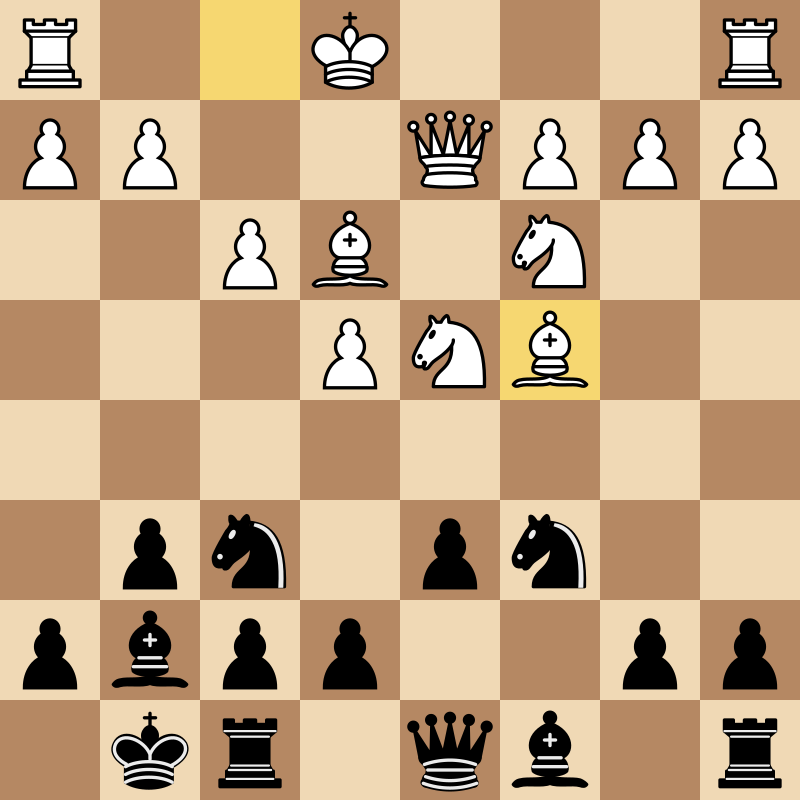
The Sicilian Dragon's pros and cons: a powerful g7 bishop, clear attacking plans and big winning chances, versus the dangerous Yugoslav Attack and heavy theory.
Free chess opening trainer
Chess Opens explains the idea behind every move of 38 openings, then makes you play them from memory. No account, no paywall. Just you, the board, and the reasons.
Step through the line and read why each piece goes where it does.
How you train
Four modes take an opening from "never seen it" to "I could play this in my sleep."
Step through a line one move at a time. Every move comes with the reason it's played, and you make the moves yourself.
Open Learn →Play your side from memory while the trainer answers. Hints when you're stuck, three stars for a clean run.
Open Practice →2Move freely for both sides. Chess Opens names the opening as you go, even by transposition, and shows the book moves.
Open Explore →Watch a line play out and name the opening. The fastest way to learn to recognize what your opponent is doing.
Open Quiz →Opening library
Beginner-friendly systems and world-championship weapons, for White and for Black.
The perfect first opening. Fast development, the bishop aims at f7, and the plans are easy to understand.
The same setup against almost anything: d4, Bf4, e3, c3, Nd2, Ngf3, Bd3. Low theory, solid, and very popular.
Super solid and beginner-friendly. Like the French, but the light-squared bishop gets out first.
The king of 1.d4 openings. c4 challenges Black's center from the side; the Exchange Variation has crystal-clear plans.
Let White build a huge center, then launch an all-out kingside attack. Fischer and Kasparov's favorite.
A rock-solid pawn chain and counterattacks against White's center. Black attacks the base of the chain with ...c5.
Chrome extension
The Chess Opens extension puts your opening on the Chess.com board. Pick a plan, play the bots, and the next move's squares light up, one move at a time, until you don't need them.
From the blog
The Sicilian Dragon's pros and cons: a powerful g7 bishop, clear attacking plans and big winning chances, versus the dangerous Yugoslav Attack and heavy theory.
1.e4 vs 1.d4 compared: open vs closed positions, tactics vs strategy, the defenses you'll face, how much theory each needs, and how to choose your first move.
Caro-Kann traps every player should know: the Nd6 smothered mate, the Nxf7 sacrifice against ...h6, and why ...h6 matters in the Classical. With diagrams.
Learn the Vienna Game (1.e4 e5 2.Nc3): the Vienna Gambit with f4, the Bc4 lines and the copycat trap, plans against ...Nf6 and ...Nc6, and key tactics.
Yes. The trainer, the opening guides, the blog and the Chrome extension are all free, with no account and no sign-up.
38 openings with 43 lines, including the Italian Game, Ruy Lopez, London System, Queen's Gambit, Sicilian Najdorf and Dragon, French, Caro-Kann, King's Indian, Nimzo-Indian, Grünfeld and more, for both White and Black.
Every single move comes with a plain-English reason. When you know why a knight goes to f3, you remember it, and you know what to do when your opponent plays something different.
Yes. Your stars and practice history are saved in your browser, so they're there next time you visit on the same device.
It highlights the next move of your chosen opening right on the Chess.com board while you play against Chess.com's bots, so you can drill your opening in real games. It only runs in bot games and on the analysis board, in line with Chess.com's Fair Play Policy.
Chess.com's Fair Play Policy doesn't allow browser extensions in games against other people. The Chess Opens extension stays switched off in those games and only works against bots and on the analysis board, which the policy doesn't cover.
Free, no sign-up, works on any device. The first opening takes about ten minutes.
Open the trainer