1.e4 vs 1.d4: Which First Move Should You Play?
1.e4 vs 1.d4 compared: open vs closed positions, tactics vs strategy, the defenses you'll face, how much theory each needs, and how to choose your first move.
In short
- 1.e4 tends to lead to open, tactical games; 1.d4 to closed, strategic ones.
- After 1.e4 you must prepare for 1...e5, the Sicilian, the French and the Caro-Kann; after 1.d4, for the QGD, Slav and the Indian defenses.
- Both are equally sound. Choose based on the kind of positions you enjoy and learn best from.
- Low-theory options exist for both: the Italian or Vienna for 1.e4, the London for 1.d4.
It’s the first decision you make as White, and one of the most debated questions in chess: 1.e4 or 1.d4? Both moves put a pawn in the center, open lines for your pieces, and are played by world champions. But they lead to very different games.
The key difference: open vs closed
1.e4 leads to open positions
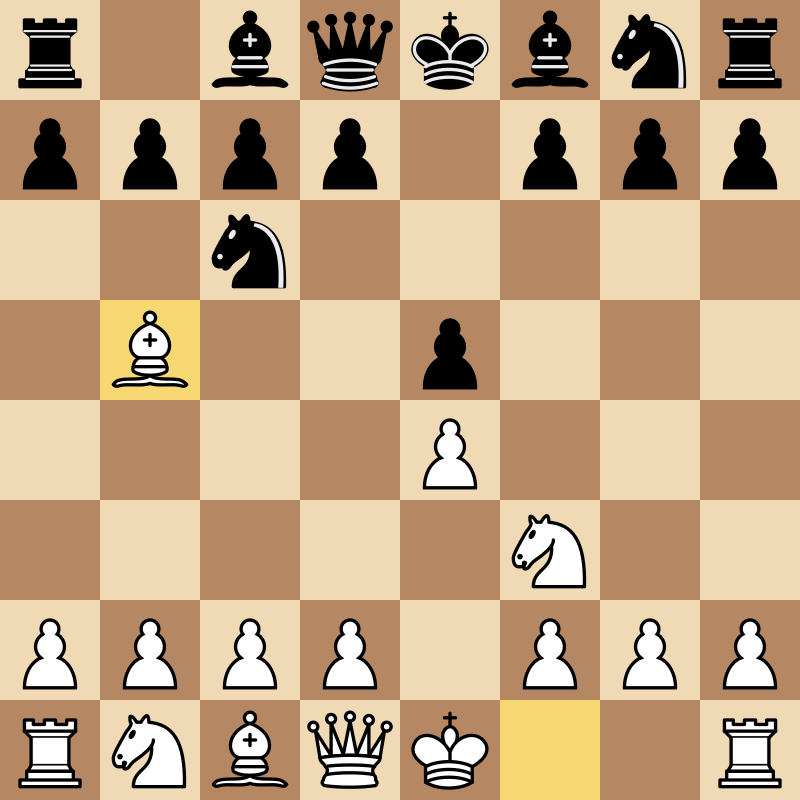
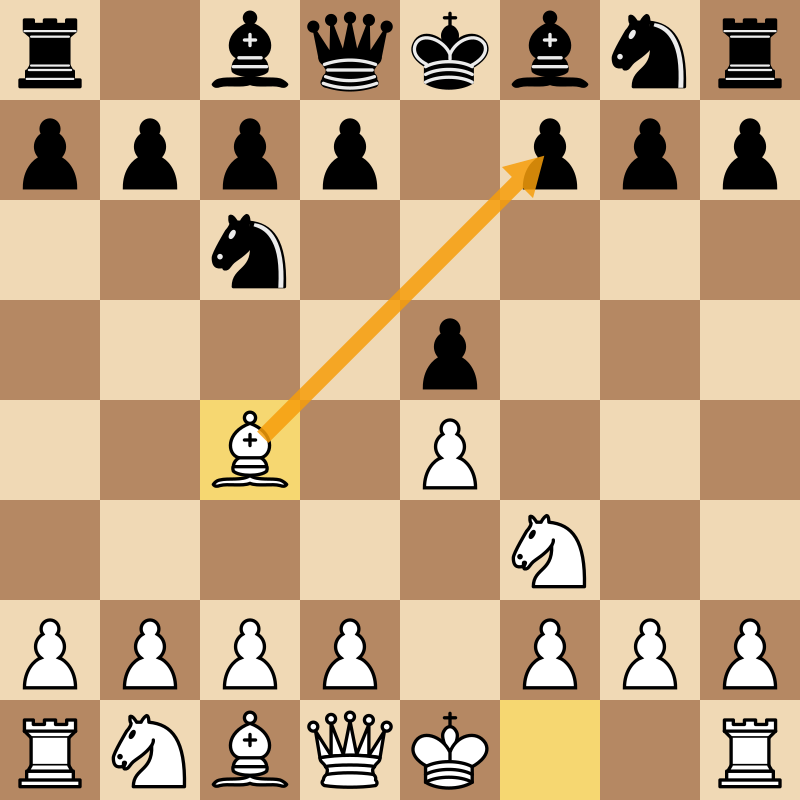
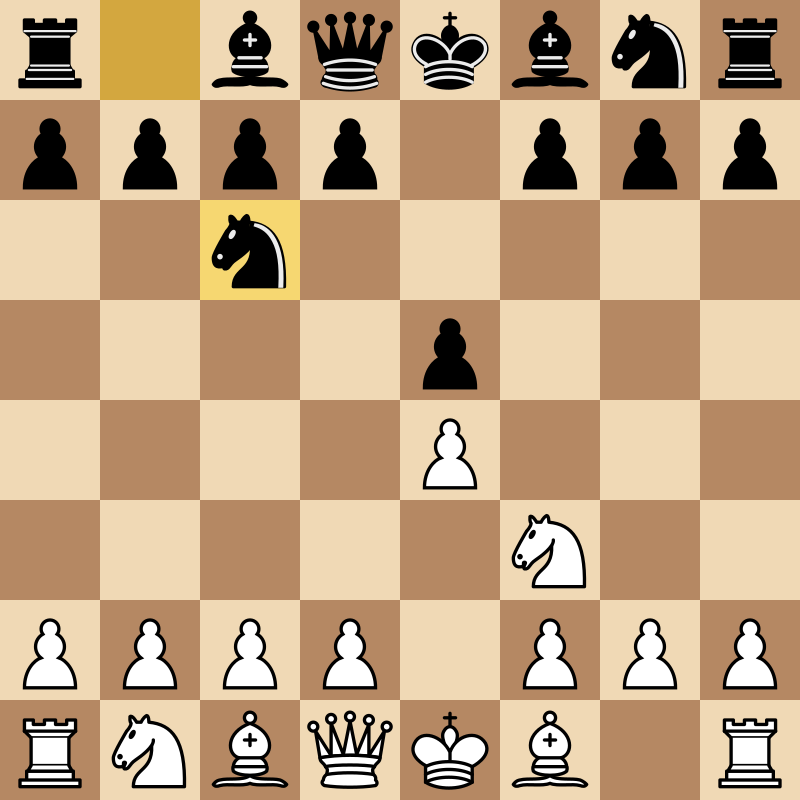
After 1.e4, the e-pawn opens lines for the queen and the f1 bishop, and the e4 pawn is undefended. Black can attack it right away (1…e5 2.Nf3 Nc6 hits back, 1…d5 attacks it directly). The result: faster development, earlier contact, and more tactics.
1.d4 leads to closed positions
After 1.d4, the pawn is defended by the queen, and Black often blocks it with …d5. Pawn chains form, pieces maneuver behind them, and the game is decided by pawn structure and long-term plans.
This is a generalization; there are sharp 1.d4 openings (the King’s Indian, the Benoni) and quiet 1.e4 ones (the Caro-Kann, the Exchange French). But the tendency is real.
What you’ll face as Black’s replies
| After 1.e4 | After 1.d4 |
|---|---|
| 1…e5 (Italian, Ruy Lopez, Scotch) | 1…d5 2.c4 e6 (Queen’s Gambit Declined) |
| 1…c5 (Sicilian) | 1…d5 2.c4 c6 (Slav) |
| 1…e6 (French) | 1…Nf6 2.c4 g6 (King’s Indian, Grünfeld) |
| 1…c6 (Caro-Kann) | 1…Nf6 2.c4 e6 3.Nc3 Bb4 (Nimzo-Indian) |
| 1…d5 (Scandinavian), 1…d6 (Pirc) | 1…f5 (Dutch), 1…d5 2.c4 dxc4 (QGA) |
Both lists are long. The difference is in the kind of preparation:
- 1.e4 players face very different structures after each reply. The Sicilian, French and Caro-Kann have almost nothing in common, so each needs its own plan.
- 1.d4 players face more related structures. Many defenses share …d5 and …e6 or …c6, and some systems (like the London) can be played against almost everything.
Theory: which needs more?
It depends on how you play it.
- 1.e4 with main lines (Open Sicilian, Ruy Lopez) is the most theoretical path in chess.
- 1.e4 with practical choices (Italian, Alapin or Smith-Morra against the Sicilian, Advance against the French and Caro-Kann) is very manageable.
- 1.d4 with the Queen’s Gambit needs moderate theory, plus answers to the Indian defenses.
- 1.d4 with the London System needs the least theory of any approach.
Which suits your style?
| If you… | Try |
|---|---|
| Love tactics and attacking the king | 1.e4 |
| Like open positions and quick development | 1.e4 |
| Prefer slow maneuvering and pawn structures | 1.d4 |
| Want the least possible theory | 1.d4 with the London |
| Want to learn the most about chess | Either, played with main lines |
| Play mostly blitz | Either, with a system (London, Italian) |
A practical way to decide
- Look at your favorite games. Do you enjoy the ones with sacrifices and attacks, or the ones where you slowly squeezed your opponent?
- Try each for a month. Play 30–50 games with each first move and see which positions feel natural.
- Consider your Black repertoire. If you play the Sicilian as Black, you’ll already understand open, tactical positions; if you play the Queen’s Gambit Declined, you’ll already understand d4 structures.
Recommended starting repertoires
With 1.e4:
- Against 1…e5: the Italian Game
- Against the Sicilian: the Alapin or Smith-Morra (see how to beat the Sicilian Defense)
- Against the French and Caro-Kann: the Advance Variation
With 1.d4:
- The London System against everything, or
- The Queen’s Gambit against 1…d5 plus a plan against 1…Nf6
For more options, see the best chess openings for White. Try the first lines of the Italian Game, Queen’s Gambit and London System in the trainer; playing a few lines of each is the fastest way to feel which first move suits you. For more background, see Wikipedia’s articles on 1.e4 and 1.d4.
Practice it in Chess Opens
Learn the Italian Game move by move
Step through the Italian Game with the reason behind every move, then play it from memory against the trainer. Free, no sign-up.
Also in this article: Queen's Gambit, London System
Questions
Q1Is 1.e4 or 1.d4 better for beginners?
Many coaches recommend 1.e4 for beginners because the open positions teach tactics and fast development. But 1.d4 with the London System is also very beginner-friendly because it needs so little theory.
Q2Which first move do grandmasters prefer?
Both are played constantly at the top level. 1.e4 and 1.d4 have traded places as the most popular move many times over the years, and 1.c4 and 1.Nf3 are common too.
Q3Can I switch from 1.e4 to 1.d4 later?
Yes. Many players start with 1.e4 to learn tactics and open positions, then add or switch to 1.d4 as they become more interested in strategy.
Keep reading
Best Chess Openings for White: 7 Choices for Every Style
The best chess openings for White, by style: the Italian, Ruy Lopez, Scotch, Vienna, Queen's Gambit, London System and English, with diagrams and plans.
The 8 Best Chess Openings for Beginners (and Why They Work)
The best chess openings for beginners, for White and Black: the Italian, London, Queen's Gambit, Caro-Kann and more, with diagrams and simple plans.
Italian Game vs Ruy Lopez: Which 1.e4 e5 Opening Fits You?
Italian Game vs Ruy Lopez compared: what 3.Bc4 and 3.Bb5 aim at, theory, Black's best defenses (Two Knights vs Berlin), plans, and which to choose.