Caro-Kann Defense: A Complete Guide for Black
Learn the Caro-Kann Defense: the ideas behind 1.e4 c6, the Classical, Advance and Exchange variations, typical plans, and the mistakes to avoid.
In short
- The Caro-Kann (1.e4 c6 2.d4 d5) challenges White's center without blocking Black's light-squared bishop.
- Black's key idea is to develop that bishop to f5 or g4 before playing ...e6.
- Against the Advance Variation, hit White's center with ...c5 and play on the queenside.
- The Caro-Kann's pawn structure is very healthy, so Black often does well in endgames.
The Caro-Kann Defense begins 1.e4 c6, followed by 2…d5. It’s named after Horatio Caro and Marcus Kann, who analyzed it in the 1880s, and it has been a favorite of world champions from José Raúl Capablanca to Mikhail Botvinnik and Anatoly Karpov.
The Caro-Kann has a reputation as a solid, reliable defense, and it deserves it. But it’s not a passive opening: Black gets a healthy pawn structure, active pieces and clear counter-attacking plans. This guide covers the ideas, every major variation, and how to play the middlegames.
The idea behind 1…c6
After 1.e4, Black wants to challenge White’s center with …d5. The French Defense does it with 1…e6, but that locks in Black’s light-squared bishop on c8. The Caro-Kann prepares …d5 with …c6 instead, so the bishop can still come out to f5 or g4.
The price is a slightly slower development (the c-pawn takes away the knight’s natural c6 square), but the benefits are a rock-solid pawn chain and no long-term “bad bishop.” If you want to see how it compares to the French in detail, read Caro-Kann vs French.
The Classical Variation: 3.Nc3 dxe4 4.Nxe4 Bf5
The traditional main line. White develops, Black trades in the center and immediately develops the bishop with tempo on the e4 knight.
The main line continues 5.Ng3 Bg6 6.h4 h6 7.Nf3 Nd7 8.h5 Bh7 9.Bd3 Bxd3 10.Qxd3 e6. White gains kingside space with the h-pawn, Black trades off the light-squared bishops, and both sides develop.
Black’s plan: finish development with …Ngf6, …Be7 or …Bd6, and …Qc7. Black often castles queenside here because White’s h-pawn has advanced on the kingside. Later, …c5 strikes at d4. Step through the full line with explanations on the Caro-Kann page.
The Advance Variation: 3.e5
The Advance is White’s most popular try at club level. White grabs space with e5 and dares Black to prove the bishop belongs on f5.
The standard plan for Black is 3…Bf5, then …e6, …c5 and …Nc6, attacking White’s d4 pawn, the base of the pawn chain.
Key ideas for Black:
- Pressure d4 with …c5, …Nc6 and …Qb6. The d4 pawn is the base of White’s chain.
- Use the e7 knight route. The knight often goes …Ne7 and then …Nf5 or …Nc6, hitting d4.
- Watch for g4. In some lines White kicks the f5 bishop with g4 and h4. Know your bishop’s retreat squares (g6, e4).
White’s sharpest tries here are covered in how to beat the Caro-Kann.
The Exchange Variation: 3.exd5 cxd5
After 3.exd5 cxd5, the pawn structure becomes symmetrical. White often plays the “Carlsbad-like” setup with Bd3, c3 and Qc2 to stop …Bf5.
Black is very comfortable here. Develop with …Nc6, …Nf6, …Bg4 (or …Bf5 if allowed), then …e6, …Bd6 and castling. Black can play for a minority attack with …b5–b4, the same plan White uses in the Queen’s Gambit Exchange. We explain the structure in the Carlsbad structure guide.
Other White tries
- Panov-Botvinnik Attack (3.exd5 cxd5 4.c4): White accepts an isolated d-pawn for active piece play. Black should develop quickly and blockade on d5. Our article on the isolated queen’s pawn shows how to handle it.
- Two Knights Variation (2.Nc3 d5 3.Nf3): White keeps options open. 3…Bg4 is a simple, reliable answer.
- Fantasy Variation (3.f3): White supports e4 with a pawn. 3…e6 or 3…dxe4 4.fxe4 e5 are both good.
Plans and pawn structures
Once you know the variations, the Caro-Kann becomes a game of structures:
- Against a big center (Advance): undermine it with …c5 and sometimes …f6.
- Against an open center (Classical): develop calmly and use your better pawn structure; Black usually has no weaknesses.
- In symmetrical structures (Exchange): play the minority attack and use the c-file.
Because Black’s structure is so healthy, the Caro-Kann often reaches good endgames. Trading pieces is rarely a problem for Black.
Common mistakes in the Caro-Kann
- Playing …e6 before the bishop is out. Then you have a bad French without the French’s counterplay.
- Forgetting the bishop’s safety. Lines with h4–h5 or g4 can trap a careless bishop.
- Moving too slowly against the Advance. If Black doesn’t challenge d4 with …c5, White’s space advantage grows.
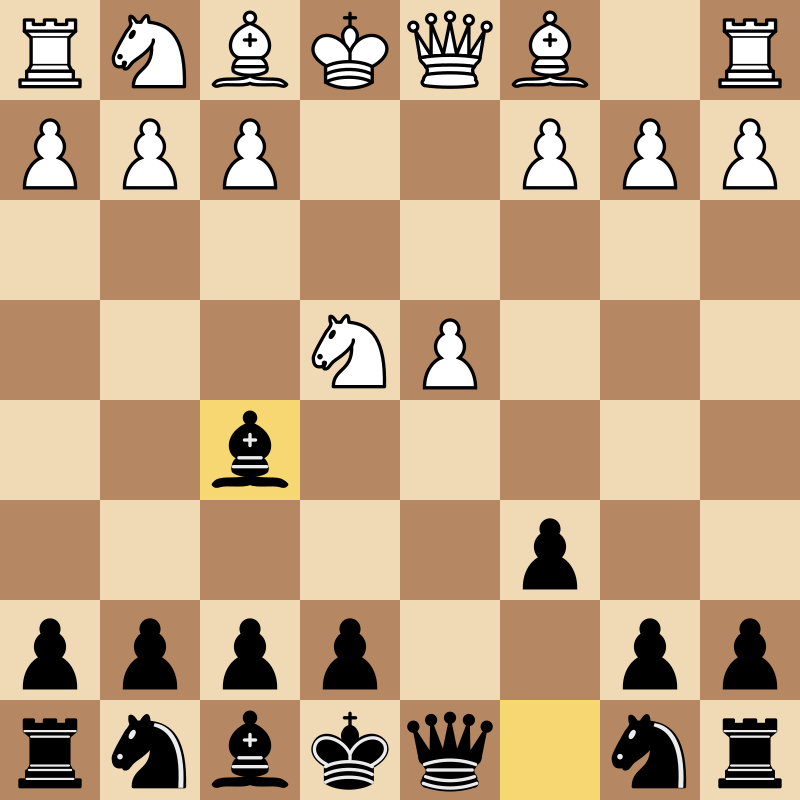
- Falling for the Nd6 mate trap. After 3.Nc3 dxe4 4.Nxe4 Nd7 5.Qe2 Ngf6?? 6.Nd6#. Learn this and other tricks in Caro-Kann traps.
Is the Caro-Kann right for you?
Choose the Caro-Kann if you like solid positions, clear plans and good endgames, and you don’t mind letting White have a little more space for a while. If you prefer sharp, unbalanced fights from move one, the Sicilian may suit you better; we compare them in Caro-Kann vs Sicilian. For an honest look at its downsides, see Caro-Kann pros and cons.
Practice it
Read through both lines (Classical and Advance) on the Caro-Kann page, then play them from memory in the trainer. For more history and sidelines, Wikipedia’s Caro–Kann Defence article is thorough.
Practice it in Chess Opens
Learn the Caro-Kann Defense move by move
Step through the Caro-Kann Defense with the reason behind every move, then play it from memory against the trainer. Free, no sign-up.
Questions
Q1Is the Caro-Kann a good opening for beginners?
Yes. The Caro-Kann is solid and logical: Black takes a share of the center, develops the problem bishop early, and rarely falls for quick tactics. It's one of the most recommended defenses to 1.e4 for improving players.
Q2Is the Caro-Kann passive?
It's solid rather than passive. Black accepts a slightly slower start in exchange for a sound pawn structure, then counter-attacks with ...c5 or ...e5. Many world champions, including Botvinnik and Karpov, used it to win at the highest level.
Q3What is the main line of the Caro-Kann?
The Classical Variation, 1.e4 c6 2.d4 d5 3.Nc3 dxe4 4.Nxe4 Bf5, is the traditional main line. The Advance Variation, 3.e5, is White's most popular modern try at club level.
Keep reading
Caro-Kann Pros and Cons: Solid, but Is It Too Passive?
The Caro-Kann's pros and cons: a sound structure, a free light-squared bishop and good endgames, versus slower development, less space and fewer winning tries.
Caro-Kann vs French Defense: Which Should You Play?
Caro-Kann vs French Defense compared: pawn structures, the bad bishop, sharpness, theory, and White's main tries, to help you pick the right defense to 1.e4.
Sicilian Dragon: A Complete Guide for Aggressive Players
Learn the Sicilian Dragon: the setup with ...g6 and ...Bg7, the Yugoslav Attack race, the ...Rxc3 exchange sacrifice, and White's quieter alternatives.