Sicilian Defense: A Beginner's Guide to the Main Lines
Understand the Sicilian Defense (1.e4 c5): why it works, the Najdorf, Dragon, Sveshnikov and ...e6 systems, the anti-Sicilians, and which line to choose.
In short
- 1...c5 fights for d4 with a wing pawn, creating an unbalanced position from move one.
- In the Open Sicilian, Black trades the c-pawn for White's d-pawn, gaining a central pawn majority and the half-open c-file.
- The main systems are the Najdorf, Dragon, Sveshnikov and the ...e6 lines (Taimanov, Kan, Scheveningen).
- Many White players avoid the main lines with anti-Sicilians like the Alapin (2.c3), the Closed (2.Nc3) and the Smith-Morra Gambit.
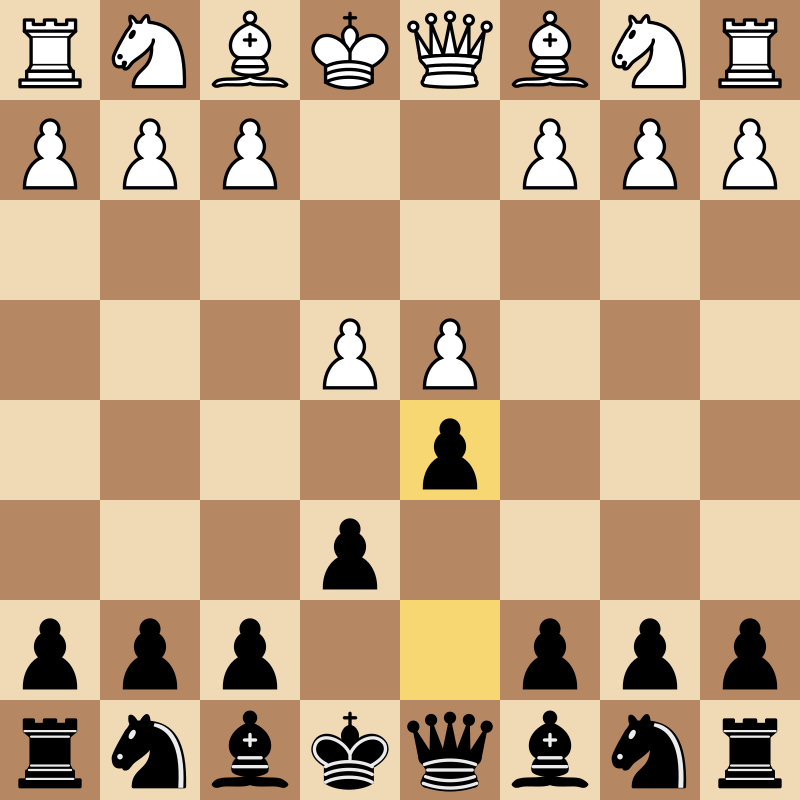
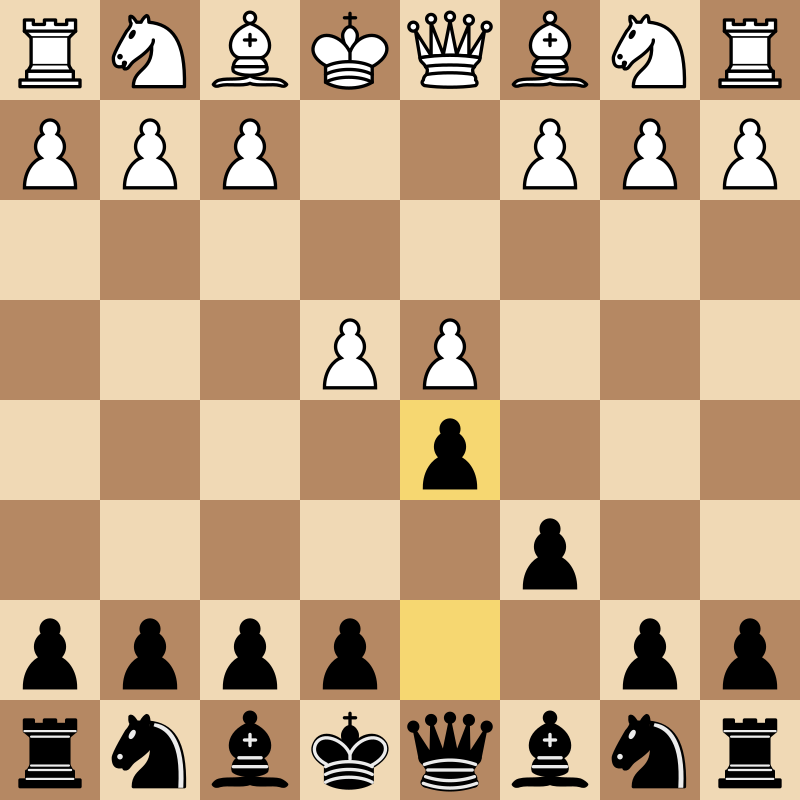
The Sicilian Defense is the most popular reply to 1.e4 at almost every level, from club tournaments to world championships. After 1.e4 c5, Black doesn’t copy White’s center pawn. Instead, Black fights for the d4 square from the side, setting up an unbalanced game where both players can play for a win.
This guide explains the core idea, walks through the main systems, covers the anti-Sicilians you’ll face, and helps you decide which version to play.
The core idea: an unbalanced trade
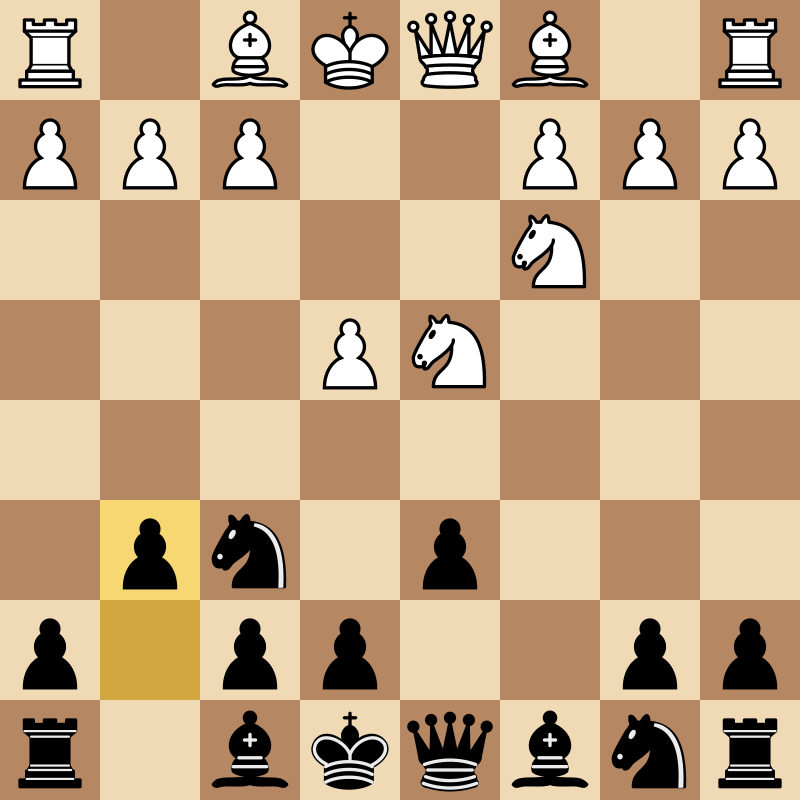
In the main lines, White plays 2.Nf3 and 3.d4, and Black captures 3…cxd4. White recaptures 4.Nxd4.
Look at what’s happened:
- White has a pawn on e4 and quick development, which often means attacking chances on the kingside.
- Black has traded a wing pawn (c5) for a center pawn (d4). Black now has two central pawns (d- and e-pawns) against White’s one, and a half-open c-file for the rooks.
That imbalance is the soul of the Sicilian. White attacks the king; Black counter-attacks on the queenside and in the center, often with the …d5 break. In many games the kings castle on opposite sides and the result comes down to whose attack lands first.
The main Sicilian systems
Black’s choice on moves two through five defines the system. Here are the big four.
Najdorf: 2…d6 and 5…a6
The most famous Sicilian, championed by Bobby Fischer and Garry Kasparov. 5…a6 controls b5 (stopping White’s pieces from using it) and prepares …e5 or …e6 and …b5. It’s flexible, rich and deeply analyzed. Read the Najdorf guide or step through the English Attack on the Najdorf page.
Dragon: 2…d6 and 5…g6
Black fianchettoes the bishop to g7, where it eyes the long diagonal toward White’s queenside. In the main line (the Yugoslav Attack), White castles queenside and storms the kingside with h4–h5; Black races on the queenside with …Rc8, …Ne5–c4 and sometimes the famous exchange sacrifice …Rxc3. Sharp and thrilling. See the Dragon guide and the Dragon page.
Sveshnikov: 2…Nc6 and 5…e5
Black kicks the d4 knight immediately with …e5, accepting a weak d5 square and a backward d-pawn in exchange for active pieces. A favorite of Magnus Carlsen. Concrete and dynamic. Learn the main line on the Sveshnikov page.
The …e6 systems: Taimanov, Kan and Scheveningen
With 2…e6, Black keeps the position flexible. The Kan (…a6) and Taimanov (…Nc6) delay …d6 and keep the pieces flexible; the Scheveningen builds a compact “small center” with pawns on d6 and e6. These are often the best Sicilians for players who don’t want to memorize long forcing lines.
The anti-Sicilians
Many White players don’t want to face Black’s preparation in the Open Sicilian, so they choose a different second move. You need an answer to each:
| Line | Moves | Black’s simple answer |
|---|---|---|
| Alapin | 2.c3 | 2…d5 or 2…Nf6, hitting e4 immediately |
| Closed Sicilian | 2.Nc3 and g3 | …Nc6, …g6, …Bg7 and …e6/…d6 |
| Grand Prix Attack | 2.Nc3 and f4 | …Nc6, …g6 or …e6 and …d5 |
| Smith-Morra Gambit | 2.d4 cxd4 3.c3 | Accept with 3…dxc3 and develop carefully, or decline with 3…Nf6 |
| Rossolimo | 2.Nf3 Nc6 3.Bb5 | …g6 and …Bg7, or …e6 and …Nge7 |
| Moscow | 2.Nf3 d6 3.Bb5+ | …Bd7 or …Nd7 |
We go deeper into these from White’s side in how to beat the Sicilian Defense. The Alapin and Smith-Morra both have their own pages in the trainer: Alapin and Smith-Morra.
Typical Sicilian plans
For Black
- Queenside counterplay: …a6, …b5, …Bb7 and rooks on the c-file.
- The …d5 break: when it works, it frees Black’s position and often equalizes immediately.
- The exchange sacrifice on c3: …Rxc3 to destroy White’s queenside pawn structure, especially when White has castled queenside.
For White
- The kingside pawn storm (f3, g4, h4) when White castles queenside.
- Pressure on d6 in lines where it’s a backward pawn.
- Control of d5 in the Sveshnikov and Najdorf …e5 lines: a knight on d5 can dominate the board.
Which Sicilian should you play?
| If you like… | Try |
|---|---|
| Deep theory and the richest positions | Najdorf |
| All-out attacking races | Dragon |
| Dynamic, concrete play | Sveshnikov |
| Flexibility with less memorization | Kan or Taimanov |
| Simple setups and a fianchetto | Accelerated Dragon |
Sicilian or something else?
The Sicilian gives you the most winning chances against 1.e4, but it asks for more study. If you prefer something calmer, compare it with the Caro-Kann in Caro-Kann vs Sicilian, or with the classical approach in Sicilian vs 1…e5. For tricks to watch out for, see Sicilian Defense traps.
Start practicing with the trainer’s Najdorf, Dragon and Sveshnikov lines, and see the Wikipedia overview of the Sicilian Defence for the full family tree of variations.
Practice it in Chess Opens
Learn the Sicilian Najdorf move by move
Step through the Sicilian Najdorf with the reason behind every move, then play it from memory against the trainer. Free, no sign-up.
Also in this article: Sicilian Dragon, Sicilian Sveshnikov, Alapin Sicilian, Smith-Morra Gambit
Questions
Q1Is the Sicilian Defense good for beginners?
The Sicilian is excellent but theory-heavy. Beginners can play it, ideally with a simpler system like the Kan or Taimanov (2...e6) or the Accelerated Dragon, but should expect to learn more theory than with the Caro-Kann or 1...e5.
Q2Why is the Sicilian so popular?
Because it creates imbalance immediately. Black gives White more central control and attacking chances in exchange for queenside counterplay and a long-term central pawn majority. Both sides play to win, which suits Black when facing 1.e4.
Q3What is the best Sicilian variation?
The Najdorf is the most famous and was played by both Fischer and Kasparov. The best variation for you depends on style: the Dragon for attacking players, the Taimanov or Kan for flexible players, and the Sveshnikov for players who like concrete, dynamic positions.
Keep reading
Sicilian Dragon: A Complete Guide for Aggressive Players
Learn the Sicilian Dragon: the setup with ...g6 and ...Bg7, the Yugoslav Attack race, the ...Rxc3 exchange sacrifice, and White's quieter alternatives.
French Defense: A Complete Guide for Black
Learn the French Defense (1.e4 e6 2.d4 d5): the Advance, Winawer, Classical, Tarrasch and Exchange variations, Black's pawn breaks, and the bad bishop.
Caro-Kann Defense: A Complete Guide for Black
Learn the Caro-Kann Defense: the ideas behind 1.e4 c6, the Classical, Advance and Exchange variations, typical plans, and the mistakes to avoid.