Ruy Lopez Pros and Cons: Should You Play the Spanish?
The Ruy Lopez's pros and cons: lasting pressure, rich middlegames and lifelong value, versus heavy theory, slow games, and tough Black defenses like the Berlin.
In short
- Pros: lasting pressure on e5, some of the richest middlegames in chess, and an opening you'll never outgrow.
- Cons: lots of theory, many different Black defenses, slow games, and very solid replies like the Berlin and Marshall.
- The Ruy Lopez suits patient, strategic players with time to study.
- If you're newer to 1.e4 e5, start with the Italian and add the Ruy Lopez later.
The Ruy Lopez, or Spanish Opening, is often called the most testing answer to 1…e5. It has been a world championship favorite for over a century, and its middlegames are some of the richest in chess. It’s also a big commitment. Here’s an honest look at its pros and cons.
For the full theory, read our Ruy Lopez guide.
The pros
1. Lasting pressure
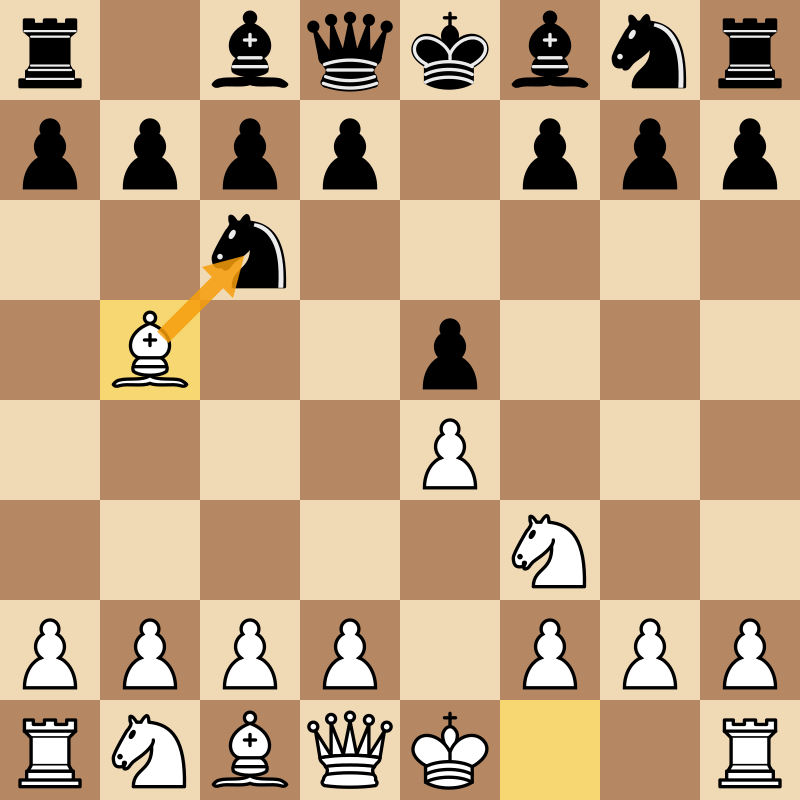
The Ruy Lopez’s bishop pressures the c6 knight, the defender of e5. Even after Black plays …a6 and …b5, the bishop on b3 keeps pressure on f7 and the center. Black has to stay alert for a long time.
2. Rich middlegames
Few openings lead to such varied, instructive positions: the d4 break, the Nbd2–f1–g3 maneuver, queenside play with a4, kingside attacks. Playing the Ruy Lopez teaches you how to build up a position slowly and correctly.
3. You’ll never outgrow it
From club players to world champions, the Ruy Lopez works at every level. Everything you learn about it stays useful for life.
4. Flexible options
You can choose the character of the game: the Closed main line for strategy, the Exchange Variation (4.Bxc6) for endgame-oriented play, or anti-Berlin and anti-Marshall lines to avoid Black’s most solid setups.
The cons
1. A lot of theory
Black has many respected defenses: the Morphy main lines, the Berlin, the Open, the Marshall Attack, the Steinitz, the Schliemann. Each needs its own preparation.
2. Very solid Black replies
The Berlin Defense leads to an early endgame that is extremely hard to win for White. The Marshall Attack gives Black a dangerous initiative for a pawn. Both are why many top players use anti-Berlin (4.d3) and anti-Marshall (8.a4 or 8.h3) lines.
3. Slow games
The Ruy Lopez is a marathon. If you like quick tactical knockouts, you may find the long maneuvering phases frustrating.
4. Harder to learn than the Italian
The ideas are subtler. For newer players, the Italian Game teaches similar themes with fewer complications. We compare them in Italian vs Ruy Lopez.
At a glance
| Pros | Cons | |
|---|---|---|
| Pressure | Long-lasting | Small advantage against best defense |
| Middlegames | Rich, instructive | Slow, maneuvering |
| Theory | Well-mapped | Large: many Black defenses |
| Longevity | Works at every level | Big upfront commitment |
| Black’s best | Morphy lines give White play | Berlin and Marshall are very solid |
Who should play the Ruy Lopez?
Play it if you:
- Enjoy long strategic games and slow pressure.
- Have time to study an opening in depth.
- Already know the Italian’s ideas and want the next step.
Consider something else if you:
The verdict
The Ruy Lopez is one of the most rewarding openings in chess. Its cons are about time and patience, not soundness. If you’re ready for the commitment, it’ll serve you for your whole chess life. Learn both trainer lines on the Ruy Lopez page, see Black’s toughest reply on the Berlin page, and pick up the classic tricks in Ruy Lopez traps. Wikipedia’s Ruy Lopez article covers its history, which stretches back more than 450 years.
Practice it in Chess Opens
Learn the Ruy Lopez move by move
Step through the Ruy Lopez with the reason behind every move, then play it from memory against the trainer. Free, no sign-up.
Also in this article: Berlin Defense
Questions
Q1Is the Ruy Lopez the best opening for White?
It's often called the most testing answer to 1...e5, and it has been a world championship favorite for over a century. 'Best' depends on you: it's excellent if you enjoy strategy, less so if you want quick tactics or minimal theory.
Q2Why do top players avoid the Berlin?
The Berlin endgame (after 3...Nf6 4.O-O Nxe4 5.d4 Nd6 6.Bxc6 dxc6 7.dxe5 Nf5 8.Qxd8+ Kxd8) is extremely solid for Black. Many White players prefer 4.d3, keeping the queens on and the position more complex.
Q3How much theory does the Ruy Lopez need?
More than most 1.e4 e5 openings. You need answers to the Berlin, the Open, the Marshall, the Steinitz and other defenses. The Exchange Variation (4.Bxc6) is a good lower-theory option within the Ruy.
Keep reading
Italian Game vs Ruy Lopez: Which 1.e4 e5 Opening Fits You?
Italian Game vs Ruy Lopez compared: what 3.Bc4 and 3.Bb5 aim at, theory, Black's best defenses (Two Knights vs Berlin), plans, and which to choose.
Ruy Lopez: The Complete Guide to the Spanish Opening
Learn the Ruy Lopez (1.e4 e5 2.Nf3 Nc6 3.Bb5): the Closed main line, Exchange, Berlin, Marshall and Open variations, plus White's plans and key traps.
Italian Game Pros and Cons: Simple, Safe, or Too Slow?
The Italian Game's pros and cons: principled development, attacking chances and manageable theory, versus slow main lines and solid Black defenses.