Italian Game: The Complete Guide for White
Learn the Italian Game (1.e4 e5 2.Nf3 Nc6 3.Bc4): the Giuoco Pianissimo main line, plans with c3 and d3, how to meet 3...Nf6, and key traps.
In short
- The Italian Game starts 1.e4 e5 2.Nf3 Nc6 3.Bc4, aiming the bishop at f7.
- The modern main line is slow: c3, d3, castling, Re1, Bb3 and the knight maneuver Nb1–d2–f1–g3.
- Against 3...Nf6, choose between the calm 4.d3 and the sharp 4.Ng5.
- White's main breaks are d3–d4 in the center and a kingside attack with Ng3, Nh4 or Nf5.
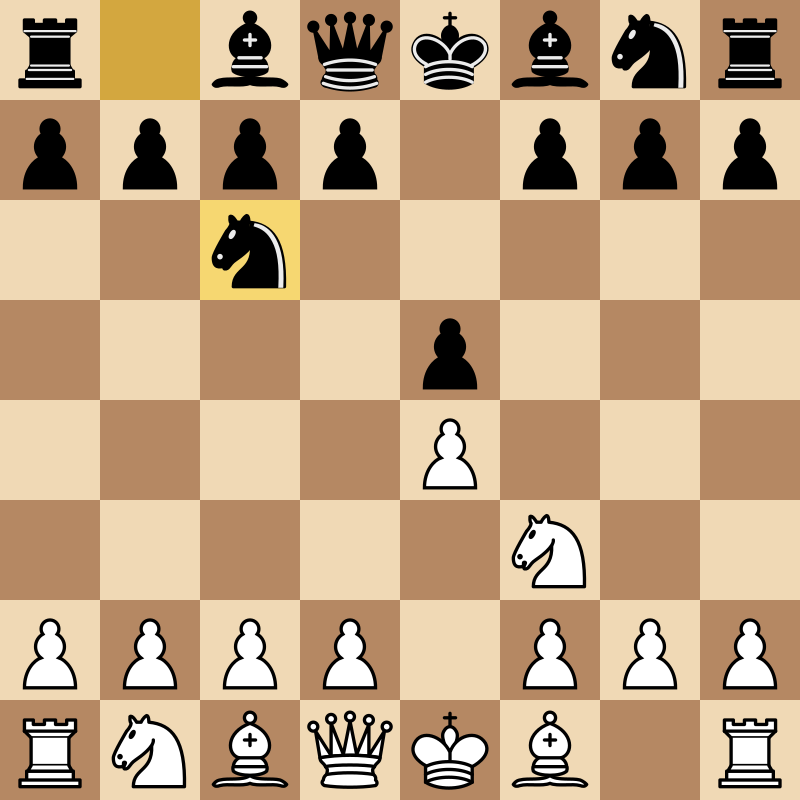
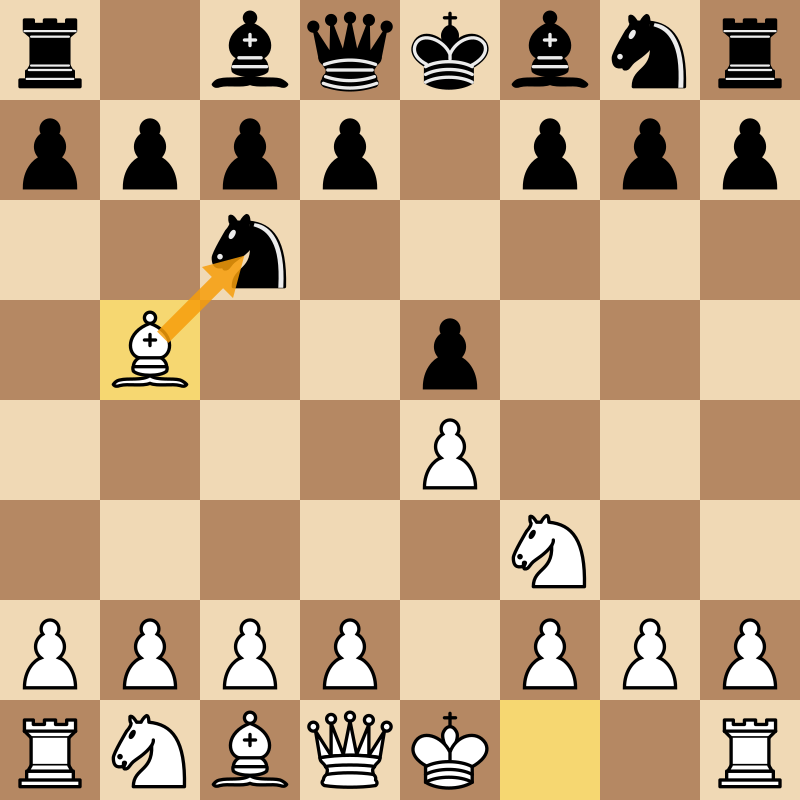
The Italian Game is one of the oldest openings in chess, analyzed by Italian masters in the 1500s, and it’s still one of the most popular at every level. After 1.e4 e5 2.Nf3 Nc6 3.Bc4, White has developed two pieces, controls the center and points the bishop straight at f7, the square only Black’s king defends.
This guide covers the modern main line, the plans that make it work, White’s options against each Black defense, and the traps to know.
The main line: Giuoco Pianissimo
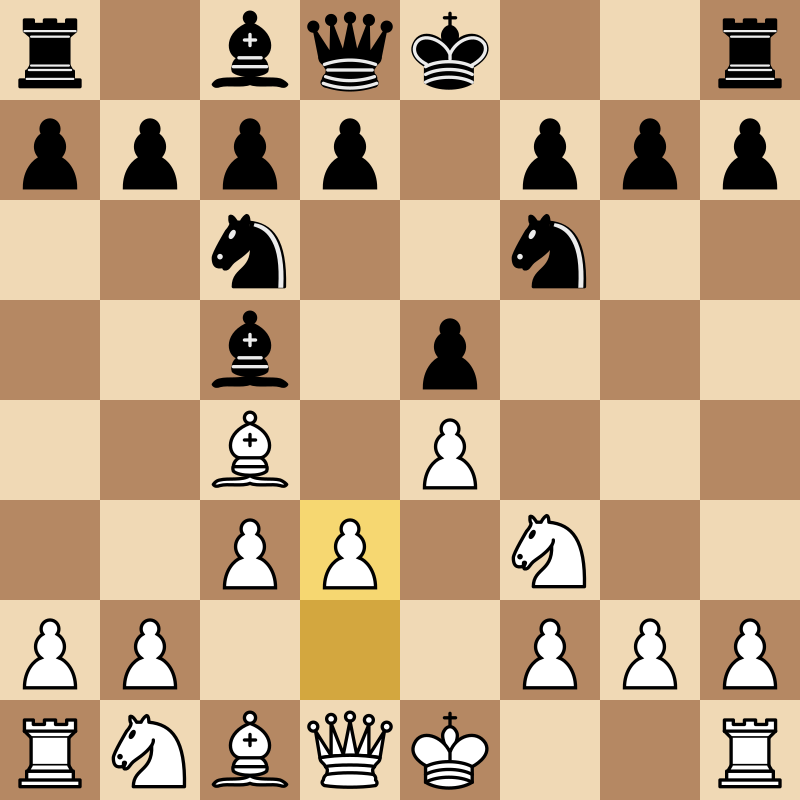
Black’s most common reply is 3…Bc5, mirroring White’s bishop. The modern main line then continues slowly:
4.c3 prepares d4 and takes the d4 and b4 squares from Black’s pieces. 4…Nf6 counter-attacks e4. 5.d3 calmly defends e4 instead of opening the center right away. This is the Giuoco Pianissimo, the “very quiet game.”
Both sides castle, then the typical moves are:
- Re1 supports the e4 pawn and a future d4 push.
- Bb3 (or a4 first) keeps the bishop safe from …b5 or …d5 while it still eyes f7.
- Nbd2–f1–g3 is the signature maneuver: the queenside knight travels around to the kingside, where it can jump to f5 or h5.
- h3 stops …Bg4 pins and …Ng4 jumps.
You can step through this whole line, with the reason for every move, on the Italian Game page.
White’s plans in the Italian
The d4 break
Everything White does prepares d3–d4. When it comes with enough support (c3, Re1, the knight on f3, sometimes Bc2), it opens the center at the moment White’s pieces are better placed. Timing is everything: push too early and Black’s pieces become active; wait too long and Black finishes development.
The kingside attack
With the knight on g3, a pawn on h3 and the bishop on b3, White often attacks the kingside: Nf5, Nh4, sometimes Bg5 pinning the f6 knight. If Black’s king position loosens, the queen joins via e2 or f3.
Queenside space with a4
In many lines White plays a4, gaining space and stopping …b5. It also gives the bishop the a2 square. Our deep dive on Italian Game plans shows these ideas in full middlegames.
Against 3…Nf6: the Two Knights Defense
Black’s sharpest reply develops the other knight and hits e4 immediately. White has two very different choices.
The calm 4.d3
Simply defending e4 with 4.d3 leads to positions much like the Giuoco Pianissimo. This is the most popular choice today.
The sharp 4.Ng5
4.Ng5 attacks f7 with knight and bishop. Black’s correct reply is 4…d5 5.exd5 Na5, giving up a pawn to chase the bishop and gain time.
If Black instead recaptures with 5…Nxd5?!, White can play the famous Fried Liver Attack: 6.Nxf7 Kxf7 7.Qf3+, sacrificing the knight to drag the black king into the open.
At club level, the Fried Liver is a scary weapon. Learn it on the Fried Liver page, and see more tricks in Italian Game traps.
Other Black defenses
- 3…Be7 (Hungarian Defense): passive. White should take the center with d4.
- 3…d6: solid but slow. Again, d4 is a good reply.
- 3…Nd4?! (Blackburne Shilling Gambit): a trap. Don’t grab with 4.Nxe5?, which runs into 4…Qg5!, hitting the knight and g2. The calm 4.Nxd4 exd4 5.O-O or 5.c3 is simply better for White.
The Evans Gambit: the aggressive alternative
If you want a sharper Italian, try the Evans Gambit: 1.e4 e5 2.Nf3 Nc6 3.Bc4 Bc5 4.b4. White sacrifices a pawn to gain time with c3 and d4, building a big center and opening lines toward Black’s king. It was a favorite of the romantic era and still scores well at club level. Read more in our Evans Gambit guide or try the line on the Evans Gambit page.
Common Italian Game mistakes
- Pushing d4 too early. Without c3 and Re1, an early d4 often just trades pieces and frees Black’s position.
- Forgetting about …d5. In many lines Black can break with …d5, hitting the c4 bishop and the e4 pawn. Bb3 early helps.
- Allowing …Na5. After Bb3, a knight on a5 can trade off your best bishop. Keep a retreat to c2 in mind (that’s another job for c3).
- Attacking without enough pieces. The Italian is slow for a reason. Get the knight to g3 and the rook to e1 before starting a kingside attack.
Is the Italian Game right for you?
The Italian is right for you if you want a classical, principled opening that works at every level, with both quiet and sharp options. The downside is that strong opponents know it well, and the slow main lines need patience. We weigh it up in Italian Game pros and cons, and compare it with its big rival in Italian vs Ruy Lopez.
If you face the Italian as Black, read how to play against the Italian Game.
Practice it
Step through the main line on the Italian Game page, then play it from memory in the trainer. For the full history of the opening, see Wikipedia’s Italian Game article.
Practice it in Chess Opens
Learn the Italian Game move by move
Step through the Italian Game with the reason behind every move, then play it from memory against the trainer. Free, no sign-up.
Also in this article: Fried Liver Attack, Evans Gambit
Questions
Q1Is the Italian Game good for beginners?
It's one of the best. The Italian follows every opening principle, the main ideas are easy to understand, and the attacking chances against f7 teach you how to go after the king. It's also played at the very top, so you never outgrow it.
Q2What is the difference between the Giuoco Piano and the Giuoco Pianissimo?
Giuoco Piano (quiet game) usually refers to 1.e4 e5 2.Nf3 Nc6 3.Bc4 Bc5. Giuoco Pianissimo (very quiet game) is the slower version where White plays d3 instead of an early d4. The Pianissimo is the main line in modern practice.
Q3What is the best response to the Italian Game?
The two main answers are 3...Bc5 (the Giuoco Piano) and 3...Nf6 (the Two Knights Defense). Both are excellent; 3...Nf6 is sharper because it allows 4.Ng5.
Keep reading
Italian Game Pros and Cons: Simple, Safe, or Too Slow?
The Italian Game's pros and cons: principled development, attacking chances and manageable theory, versus slow main lines and solid Black defenses.
Italian Game vs Ruy Lopez: Which 1.e4 e5 Opening Fits You?
Italian Game vs Ruy Lopez compared: what 3.Bc4 and 3.Bb5 aim at, theory, Black's best defenses (Two Knights vs Berlin), plans, and which to choose.
Ruy Lopez: The Complete Guide to the Spanish Opening
Learn the Ruy Lopez (1.e4 e5 2.Nf3 Nc6 3.Bb5): the Closed main line, Exchange, Berlin, Marshall and Open variations, plus White's plans and key traps.