Italian Game vs Ruy Lopez: Which 1.e4 e5 Opening Fits You?
Italian Game vs Ruy Lopez compared: what 3.Bc4 and 3.Bb5 aim at, theory, Black's best defenses (Two Knights vs Berlin), plans, and which to choose.
In short
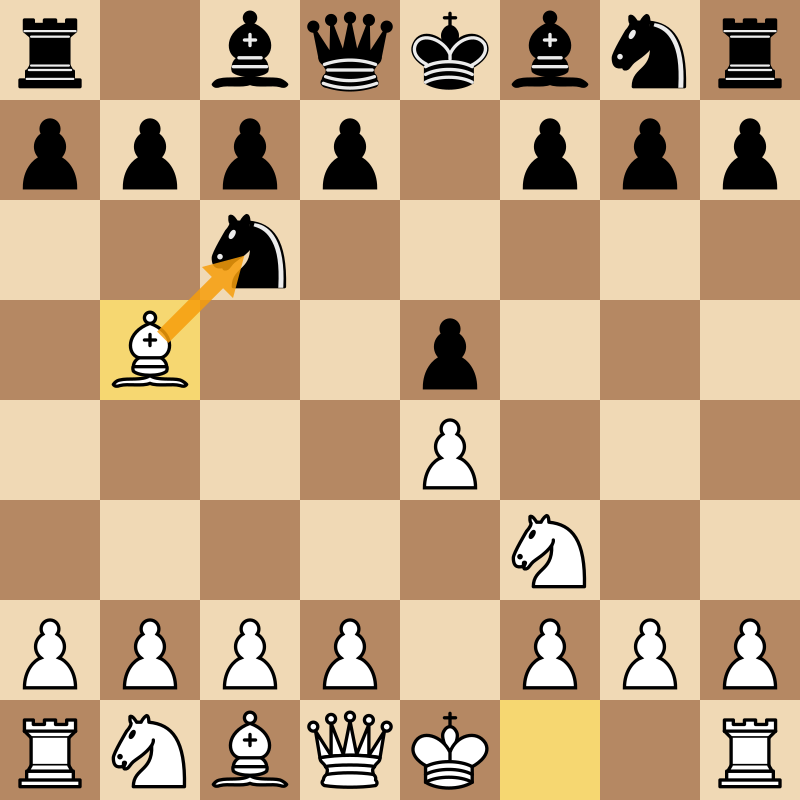
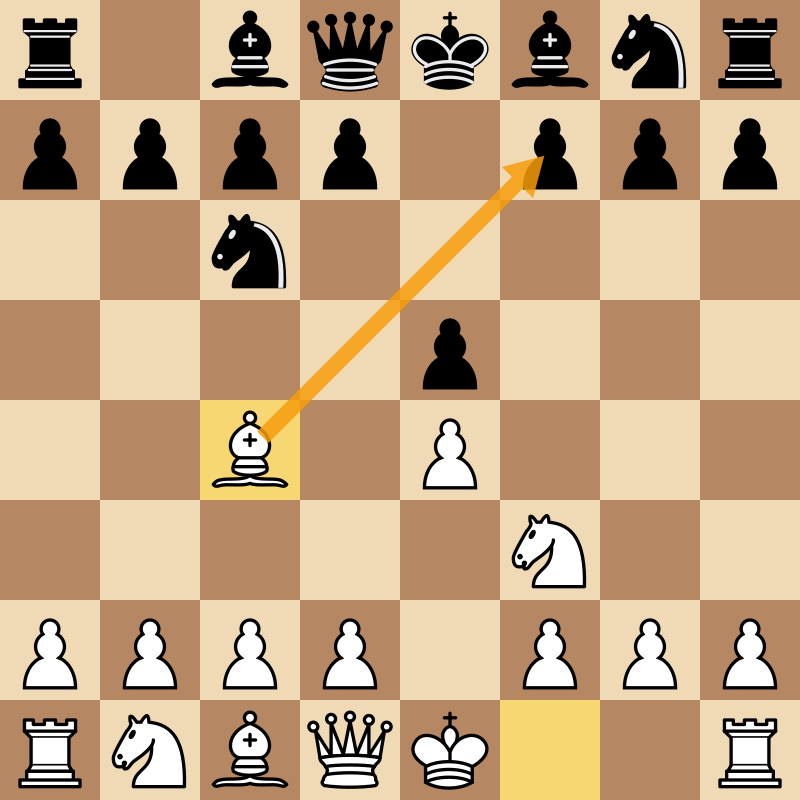
- Both start 1.e4 e5 2.Nf3 Nc6; the Italian plays 3.Bc4 (aiming at f7), the Ruy Lopez 3.Bb5 (pressuring c6 and e5).
- The Italian is easier to learn and has sharper early options; the Ruy Lopez puts more long-term pressure on Black.
- Black's most testing answers are the Two Knights (3...Nf6) against the Italian and the Berlin (3...Nf6) against the Ruy.
- Beginners should usually start with the Italian and add the Ruy Lopez later.
After 1.e4 e5 2.Nf3 Nc6, White’s two most popular choices are the Italian Game (3.Bc4) and the Ruy Lopez (3.Bb5). Both are classical, principled and played at every level, including world championship matches. But they lead to different kinds of games, and choosing the right one for you matters.
What each bishop is doing
Italian: 3.Bc4 aims at f7
The Italian bishop points at f7, which only Black’s king defends. That creates immediate tactical tension, especially in lines like the Two Knights with 4.Ng5. In the modern main line, White plays slowly (c3, d3, Re1) but the f7 pressure is always in the background.
Ruy Lopez: 3.Bb5 pressures e5
The Ruy Lopez bishop attacks the c6 knight, the defender of e5. It’s not an immediate threat (Bxc6 and Nxe5 doesn’t win a pawn yet), but it creates strategic pressure that lasts the whole game.
How the games usually go
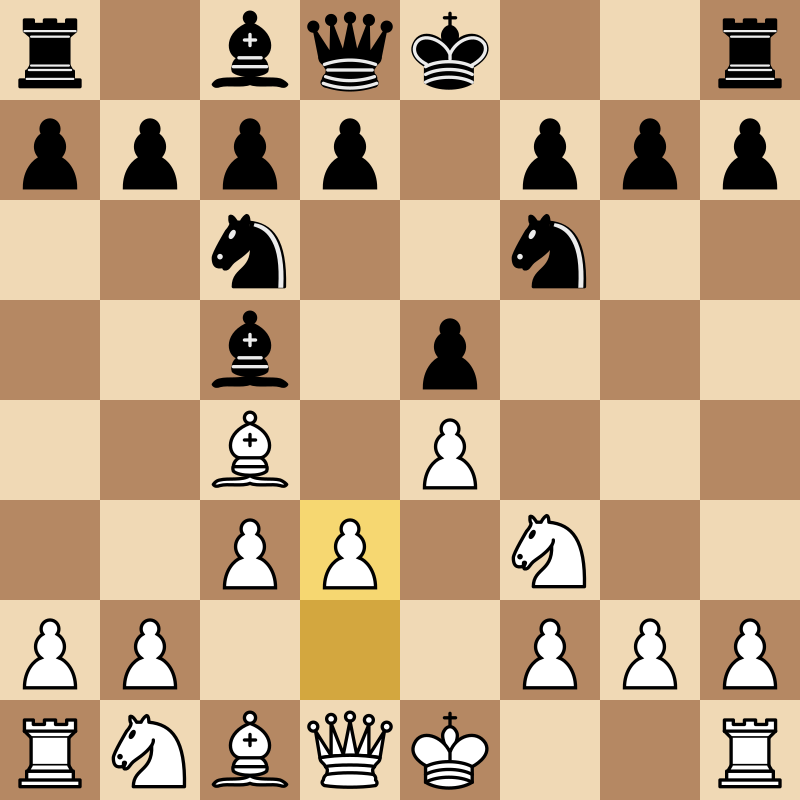
The Italian tends toward either quick tactical skirmishes (in sharper lines) or slow maneuvering in the Giuoco Pianissimo, where White’s plan is a well-prepared d4 or a kingside attack with the knight coming to g3. See the Italian Game guide.
The Ruy Lopez tends toward long strategic battles. White builds a big center with c3 and d4, keeps the bishop on the a2–g8 diagonal, and slowly increases the pressure. Many games are decided after move 30. See the Ruy Lopez guide.
The two structures look similar. That’s no coincidence: both openings use c3, Re1, Bb3 and the Nbd2–f1–g3 maneuver. The difference is in the details: the Ruy Lopez’s …a6 and …b5 give both sides more queenside play, and the pressure on e5 is more persistent.
Black’s best defenses
| Italian Game | Ruy Lopez | |
|---|---|---|
| Solid reply | 3…Bc5 (Giuoco Piano) | 3…Nf6 (Berlin Defense) |
| Sharp reply | 3…Nf6 (Two Knights) | 8…d5 (Marshall Attack) |
| Main line | 3…Bc5 4.c3 Nf6 5.d3 | 3…a6 4.Ba4 Nf6 5.O-O Be7 |
| Trap-based | 3…Nd4 (Blackburne Shilling) | Noah’s Ark trap in …d6 lines |
The Berlin Defense is the toughest nut for Ruy Lopez players: after 3…Nf6 4.O-O Nxe4 5.d4 Nd6 6.Bxc6 dxc6 7.dxe5 Nf5 8.Qxd8+ Kxd8, the queens are off and Black is very solid. Many White players avoid it with 4.d3. Learn it on the Berlin page.
Theory and learning curve
| Italian Game | Ruy Lopez | |
|---|---|---|
| Theory needed to start | Low–medium | Medium–high |
| Number of major Black defenses | ~3 | ~6 (Morphy, Berlin, Open, Marshall, Steinitz, Schliemann…) |
| Typical game length | Medium | Long |
| Tactical chances early | High | Moderate |
| Long-term pressure | Moderate | High |
| Best for | Beginners to masters | Intermediate to masters |
Which should you choose?
Choose the Italian Game if you:
- Are new to 1.e4 e5 openings.
- Like clear plans and attacking chances against f7 and the kingside.
- Want a manageable amount of theory.
Choose the Ruy Lopez if you:
- Enjoy long, strategic games and slow pressure.
- Are willing to study more theory for a deeper, richer opening.
- Already understand the Italian’s ideas and want the next step.
Practice both
The trainer has the Italian Game main line and two Ruy Lopez lines (Closed and Exchange). Try playing each from memory a few times; you’ll quickly feel which one suits you. For an honest look at each, read Italian Game pros and cons and Ruy Lopez pros and cons. If you’re also considering the Scotch or Vienna, see the best chess openings for White.
Wikipedia’s articles on the Italian Game and the Ruy Lopez cover their long histories.
Practice it in Chess Opens
Learn the Italian Game move by move
Step through the Italian Game with the reason behind every move, then play it from memory against the trainer. Free, no sign-up.
Also in this article: Ruy Lopez, Berlin Defense
Questions
Q1Is the Ruy Lopez better than the Italian Game?
The Ruy Lopez is traditionally considered the more testing opening, but at the top level both are played regularly. The difference in strength is small; the difference in style and difficulty matters more for most players.
Q2Which is easier, the Italian or the Ruy Lopez?
The Italian. Its plans are more direct and there's less theory to learn before you're comfortable. The Ruy Lopez's slow maneuvering and many Black defenses take longer to master.
Q3Can I play both the Italian and the Ruy Lopez?
Yes, many players alternate between them. They share the first two moves and many middlegame ideas (c3, d3 or d4, the Nbd2–f1–g3 maneuver), so learning one helps with the other.
Keep reading
Ruy Lopez: The Complete Guide to the Spanish Opening
Learn the Ruy Lopez (1.e4 e5 2.Nf3 Nc6 3.Bb5): the Closed main line, Exchange, Berlin, Marshall and Open variations, plus White's plans and key traps.
Italian Game Pros and Cons: Simple, Safe, or Too Slow?
The Italian Game's pros and cons: principled development, attacking chances and manageable theory, versus slow main lines and solid Black defenses.
Italian Game: The Complete Guide for White
Learn the Italian Game (1.e4 e5 2.Nf3 Nc6 3.Bc4): the Giuoco Pianissimo main line, plans with c3 and d3, how to meet 3...Nf6, and key traps.