Italian Game Pros and Cons: Simple, Safe, or Too Slow?
The Italian Game's pros and cons: principled development, attacking chances and manageable theory, versus slow main lines and solid Black defenses.
In short
- Pros: follows every opening principle, easy to learn, flexible (quiet or sharp), and played at every level.
- Cons: the modern main line is slow, Black has comfortable equalizing options, and you still need answers to the Sicilian, French and Caro-Kann.
- It's the best first 1.e4 e5 opening for most players.
- Players who want more pressure can graduate to the Ruy Lopez; players who want more fire can add the Evans Gambit.
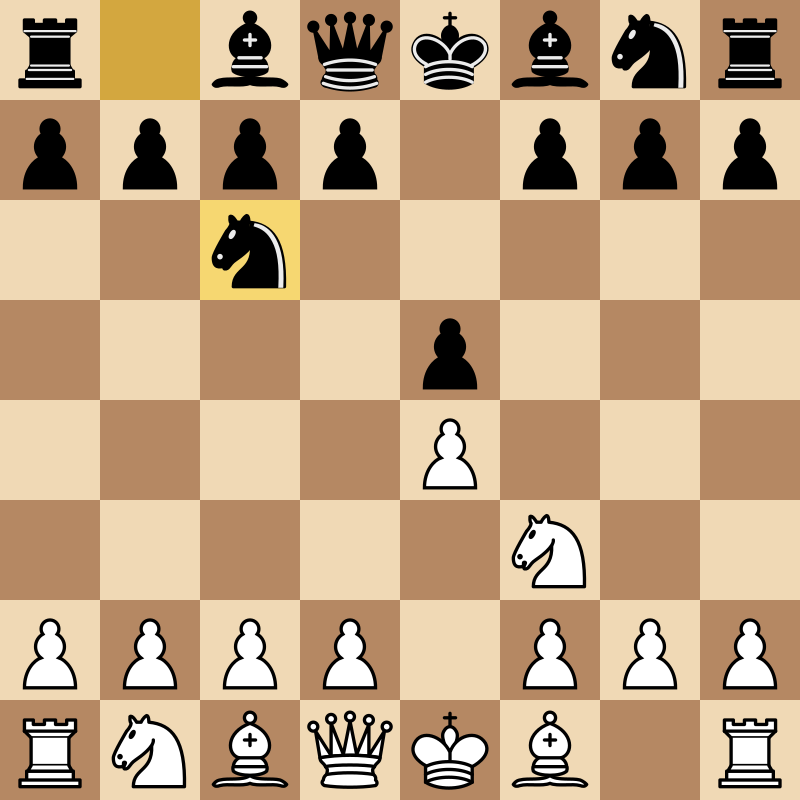
The Italian Game is the classic recommendation for players starting out with 1.e4. But is it actually the right choice for you, or would the Ruy Lopez, the Scotch or a sharper gambit serve you better? Here’s an honest look at the Italian Game’s pros and cons.
For the full theory, see our Italian Game guide.
The pros
1. It follows every opening principle
Center pawn, knight development, bishop to an active diagonal, quick castling. The Italian is practically a demonstration of chess opening principles. That makes it easy to understand and easy to play well even when your opponent leaves the main line.
2. Easy to learn, hard to outgrow
You can learn enough of the Italian to play it confidently in a weekend. At the same time, it’s one of the most popular openings among the world’s best players. Few openings work this well at both ends of the rating scale.
3. Flexible: quiet or sharp
You choose the character of the game:
- Quiet: the Giuoco Pianissimo (c3, d3) for a slow buildup.
- Sharp: 4.Ng5 against the Two Knights, with Fried Liver chances.
- Gambit: the Evans Gambit (4.b4) for an all-out attack.
4. Clear attacking plans
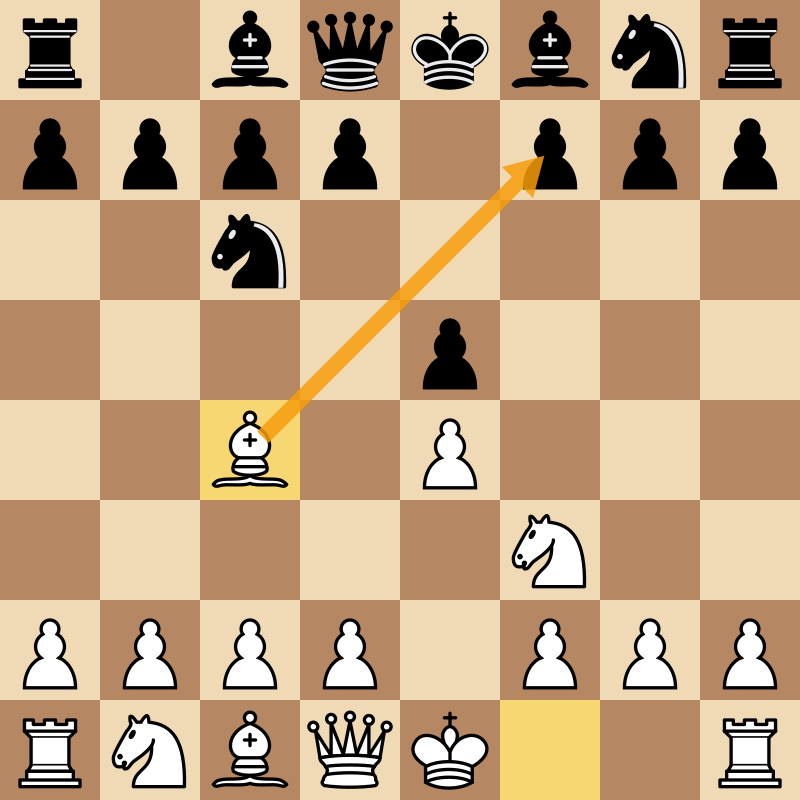
The bishop on c4 aims at f7, and the knight maneuver Nb1–d2–f1–g3 brings extra force to the kingside. Many Italian games end with a direct attack on Black’s king. See Italian Game plans for the details.
5. Plenty of traps for careless opponents
The Légal Trap, the Fried Liver, the Blackburne Shilling response: at club level, many Italian games are won in under 20 moves. We collect them in Italian Game traps.
The cons
1. The main line is slow
The Giuoco Pianissimo is a maneuvering opening. If you want an early fight, the slow c3–d3 buildup can feel uneventful, and the real battle often begins around move 15.
2. Black can equalize comfortably
Black’s main replies (3…Bc5 and 3…Nf6) are both solid and well understood. Against a well-prepared opponent, White’s advantage out of the opening is small. The Ruy Lopez keeps more pressure.
3. The Two Knights demands preparation
After 3…Nf6, White must choose between the calm 4.d3 and the sharp 4.Ng5. If you choose 4.Ng5, you need to know the 4…d5 5.exd5 Na5 main line, where Black gets real compensation for the pawn.
4. It only covers 1…e5
This is true of every 1.e4 e5 opening, but worth remembering: as a 1.e4 player you’ll also need answers to the Sicilian, French, Caro-Kann and Scandinavian.
At a glance
| Pros | Cons | |
|---|---|---|
| Learning | Easy to learn, principled | Main line requires patience |
| Flexibility | Quiet, sharp or gambit options | Each branch has its own theory |
| Advantage | Sound, lasting pressure | Black equalizes with accurate play |
| Practical results | Many traps at club level | Strong opponents avoid them |
| Longevity | Played at every level | Needs a full 1.e4 repertoire |
Who should play the Italian?
Play it if:
- You’re starting out with 1.e4 and want a principled, flexible opening.
- You like attacking chances but don’t want huge amounts of theory.
- You want an opening you’ll never need to replace.
Consider something else if:
- You want maximum long-term pressure: the Ruy Lopez.
- You want open positions immediately: the Scotch Game.
- You want an attacking alternative with less theory: the Vienna Game.
Practice
Step through the main line on the Italian Game page, and try the sharper Fried Liver and Evans Gambit lines when you want more action. If you’re torn between the Italian and the Spanish, read Italian vs Ruy Lopez. For history, Wikipedia’s Italian Game article is a good read.
Practice it in Chess Opens
Learn the Italian Game move by move
Step through the Italian Game with the reason behind every move, then play it from memory against the trainer. Free, no sign-up.
Also in this article: Fried Liver Attack, Evans Gambit
Questions
Q1Is the Italian Game good at higher levels?
Yes. The slow Giuoco Pianissimo is one of the most popular openings in elite chess today. It's not a 'beginner-only' opening; you can play it your whole career.
Q2Is the Italian Game too passive?
The modern main line is slow, but not passive. White builds up with c3, d3 and the Nbd2–f1–g3 maneuver, then strikes with d4 or a kingside attack. Players who want early action can choose 4.Ng5 against the Two Knights, or the Evans Gambit.
Q3What's the main drawback of the Italian?
Black has several solid ways to equalize, so White's advantage out of the opening is small. You win Italian games in the middlegame, not in the opening.
Keep reading
Italian Game vs Ruy Lopez: Which 1.e4 e5 Opening Fits You?
Italian Game vs Ruy Lopez compared: what 3.Bc4 and 3.Bb5 aim at, theory, Black's best defenses (Two Knights vs Berlin), plans, and which to choose.
Italian Game: The Complete Guide for White
Learn the Italian Game (1.e4 e5 2.Nf3 Nc6 3.Bc4): the Giuoco Pianissimo main line, plans with c3 and d3, how to meet 3...Nf6, and key traps.
How to Play Against the Italian Game as Black
How to beat the Italian Game as Black: the Giuoco Piano with ...a6 and ...d5, the Two Knights against 4.d3 and 4.Ng5, and how to handle the Evans Gambit.