Italian Game Traps: 5 Tricks Every Player Should Know
The Italian Game traps every player should know: the Légal Trap, Blackburne Shilling, Fried Liver, the fork trick and more, with diagrams and how to dodge them.
In short
- Most Italian Game traps revolve around f7 (or f2) and the c4 bishop's diagonal.
- The Légal Trap and Blackburne Shilling punish greedy captures; the fix is simply not to grab material without checking.
- Against 4.Ng5 in the Two Knights, answer 4...d5 5.exd5 Na5, not 5...Nxd5, to avoid the Fried Liver.
- The fork trick (...Nxe4 and ...d5) is a key equalizing idea for Black whenever White plays Nc3 carelessly.
The Italian Game is full of traps. With bishops aimed at f7 and f2 and knights jumping into the center, there are tactical tricks waiting on almost every move of the early game. Some favor White, some favor Black, and all of them are worth knowing, both to win games and to avoid losing them.
Here are five Italian Game traps every player should know. If you’re new to the opening, start with our Italian Game guide.
1. The Légal Trap
The oldest trap in this article, dating back to the 18th century. It arises when Black pins White’s f3 knight with …Bg4 and doesn’t watch e5.
1.e4 e5 2.Nf3 d6 3.Bc4 Bg4 4.Nc3 g6? 5.Nxe5!
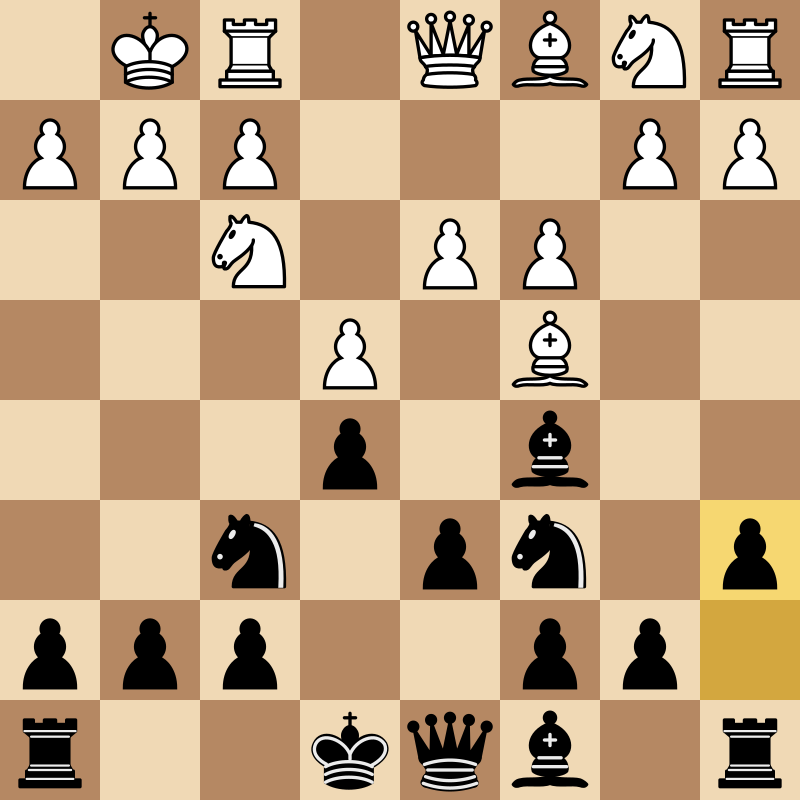
White’s knight was pinned to the queen, but White moves it anyway. If Black takes the queen with 5…Bxd1??, it’s mate in two:
6.Bxf7+ Ke7 7.Nd5#
How to avoid it: after 5.Nxe5, Black should play 5…dxe5 and accept being a pawn down, rather than taking the queen. Better still, don’t pin with …Bg4 when e5 is weak.
2. The Blackburne Shilling Gambit
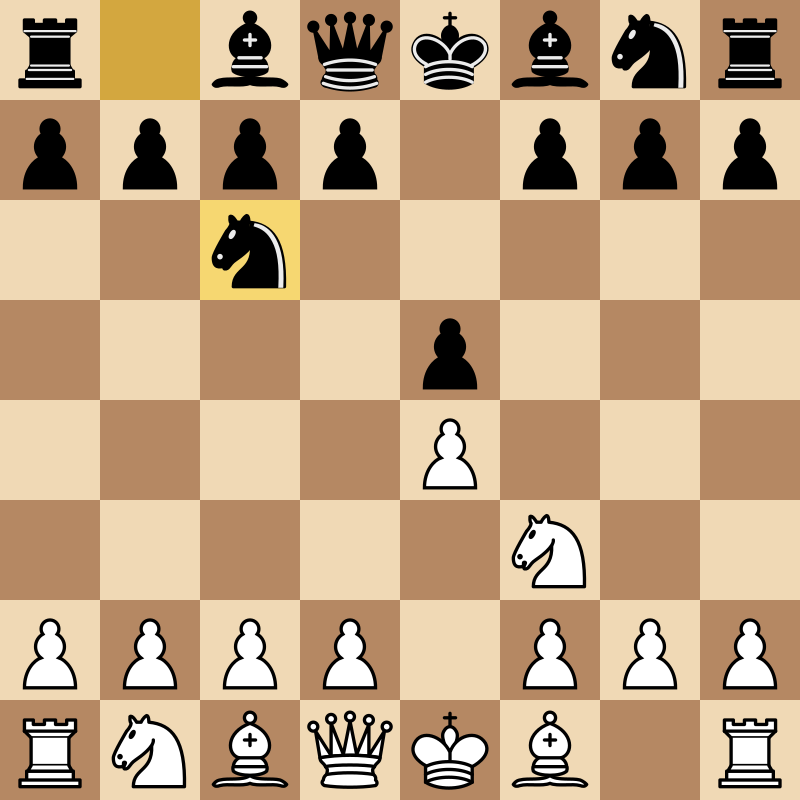
This one is a trap for White. After 1.e4 e5 2.Nf3 Nc6 3.Bc4 Nd4!?, Black’s knight blocks the d-file and leaves e5 hanging. It’s a dubious move, but it sets a nasty trap.
4.Nxe5? Qg5! hits both the e5 knight and the g2 pawn.
If White carries on greedily with 5.Nxf7? Qxg2 6.Rf1 Qxe4+ 7.Be2 Nf3#, it’s smothered mate in the middle of the board.
How to avoid it: against 3…Nd4, don’t take on e5. Play 4.Nxd4 exd4 5.O-O or 4.c3, and White is simply better with a lead in development.
3. The Fried Liver Attack
Not a trap so much as a punishment for a natural-looking mistake. In the Two Knights Defense, 1.e4 e5 2.Nf3 Nc6 3.Bc4 Nf6 4.Ng5 d5 5.exd5, the obvious recapture 5…Nxd5?! allows a famous knight sacrifice.
6.Nxf7! Kxf7 7.Qf3+
Black has to play 7…Ke6 to protect the d5 knight, walking the king into the center. After 8.Nc3, White piles up on d5 and Black’s king faces a long, dangerous defense. In practical games, especially at fast time controls, White wins a lot of these. Learn the attack on the Fried Liver page.
How to avoid it: play 5…Na5! instead of 5…Nxd5, hitting the c4 bishop. It’s the main line of the Two Knights and leads to good play for Black. See the Two Knights page.
4. The fork trick
A key tactical idea for Black. When White develops with Nc3 before supporting e4, Black can often grab the pawn and win the piece back with a pawn fork.
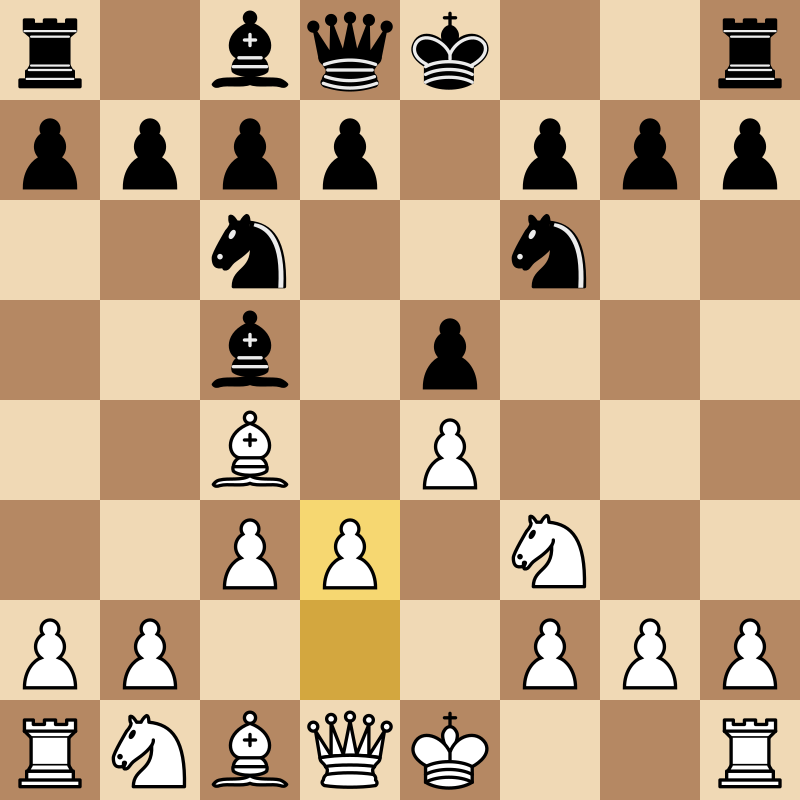
1.e4 e5 2.Nf3 Nc6 3.Bc4 Bc5 4.Nc3 Nf6 5.O-O Nxe4! 6.Nxe4 d5
The d5 pawn attacks both the c4 bishop and the e4 knight. After White moves the bishop, Black takes back on e4 and has an easy game, with the center freed and White’s attacking chances gone.
How to avoid it (as White): play d3 before Nc3, or support e4 in some other way. This is one of the reasons the modern Italian uses c3 and d3.
5. The early Qh5 trick against careless defense
Not a trap White should rely on, but one every beginner meets. White plays Bc4 and Qh5 (or Qf3) early, hitting f7 twice.
How to avoid it: after 3.Qh5, play 3…g6 (blocking the queen and attacking it) or 3…Qe7 (defending f7). Then develop with tempo by attacking the queen. White’s early queen sortie usually ends up costing time.
Why these traps matter
All five traps share the same lessons:
- Check what your opponent’s last move allows before grabbing material.
- f7 and f2 are the weakest squares in the opening. Keep them defended.
- Pins can be broken. A pinned piece can still move if the resulting tactic is strong enough, as in the Légal Trap.
For more tricks from other openings, read 10 chess opening traps every beginner should know. And for the full story of Légal’s trap, Wikipedia has a short article on the Légal Trap.
Practice the lines
Step through the Italian main line on the Italian Game page and the correct defense to 4.Ng5 on the Two Knights page. Knowing the main lines well is the best protection against every trap above.
Practice it in Chess Opens
Learn the Italian Game move by move
Step through the Italian Game with the reason behind every move, then play it from memory against the trainer. Free, no sign-up.
Also in this article: Fried Liver Attack, Two Knights Defense
Questions
Q1What is the most famous trap in the Italian Game?
The Légal Trap, named after the 18th-century French player Sire de Légal. White sacrifices the queen and mates with three minor pieces if Black greedily takes it.
Q2Does the Fried Liver Attack work against good players?
Only if Black plays 5...Nxd5. Strong players answer 4.Ng5 with 4...d5 5.exd5 Na5, which avoids the Fried Liver completely. At club level, though, 5...Nxd5 is very common.
Q3Should I play the Italian Game just for the traps?
No. The Italian is a great opening because of its sound ideas. The traps are a bonus: they win games against careless opponents, but you should be prepared to play a normal game when the trap is avoided.
Keep reading
How to Play Against the Italian Game as Black
How to beat the Italian Game as Black: the Giuoco Piano with ...a6 and ...d5, the Two Knights against 4.d3 and 4.Ng5, and how to handle the Evans Gambit.
Italian Game Pros and Cons: Simple, Safe, or Too Slow?
The Italian Game's pros and cons: principled development, attacking chances and manageable theory, versus slow main lines and solid Black defenses.
Italian Game vs Ruy Lopez: Which 1.e4 e5 Opening Fits You?
Italian Game vs Ruy Lopez compared: what 3.Bc4 and 3.Bb5 aim at, theory, Black's best defenses (Two Knights vs Berlin), plans, and which to choose.