How to Play Against the Italian Game as Black
How to beat the Italian Game as Black: the Giuoco Piano with ...a6 and ...d5, the Two Knights against 4.d3 and 4.Ng5, and how to handle the Evans Gambit.
In short
- Against 3.Bc4, Black's main choices are 3...Bc5 (Giuoco Piano) and 3...Nf6 (Two Knights).
- In the slow Giuoco Pianissimo, Black's key ideas are ...a6 and ...Ba7, ...h6 against Bg5/Ng5, and the ...d5 break.
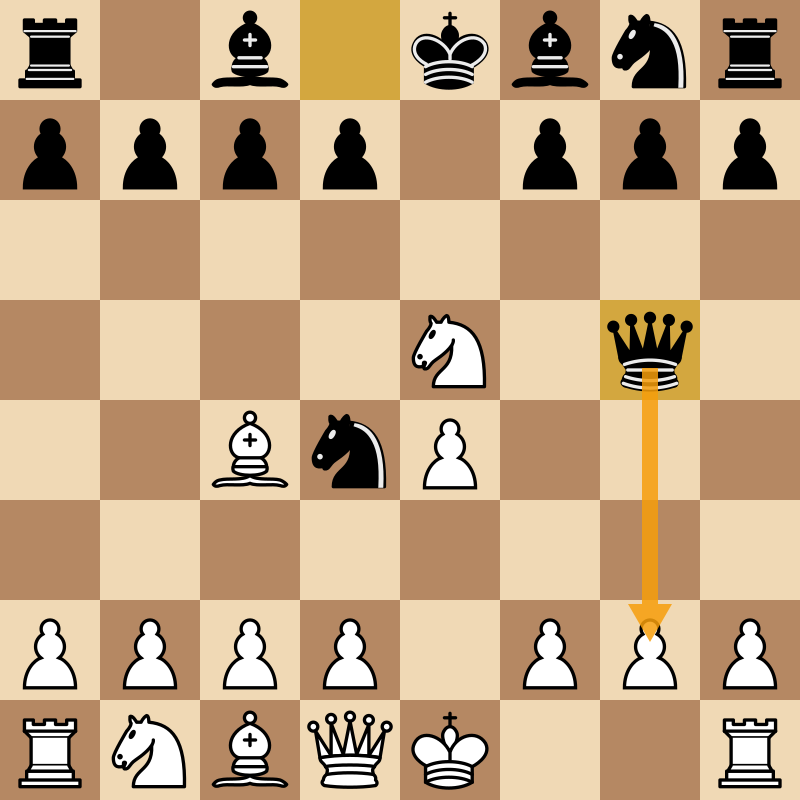
- Against 4.Ng5 in the Two Knights, play 4...d5 5.exd5 Na5, never 5...Nxd5.
- Neutralize the c4 bishop by trading it with ...Be6 or ...Na5.
The Italian Game is the most common opening you’ll face after 1.e4 e5, so a solid plan against it is essential. The good news: Black has several excellent setups, and once you understand White’s ideas (pressure on f7, the d4 break, a kingside attack), they’re easy to neutralize.
For White’s side of the opening, read the Italian Game guide.
Option 1: The Giuoco Piano (3…Bc5)
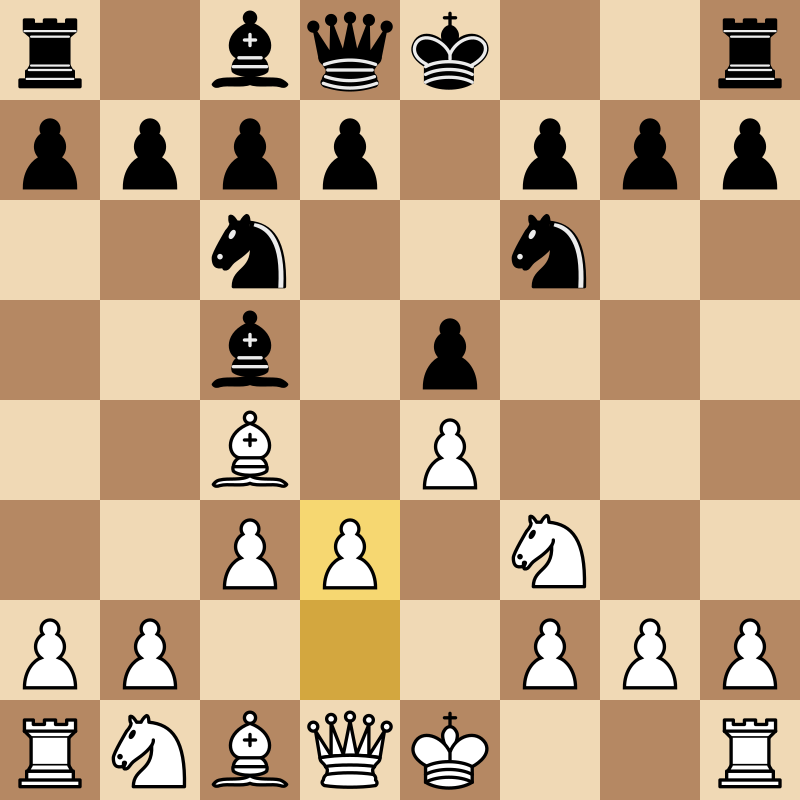
The most classical answer: mirror White’s bishop. Against the modern main line with 4.c3 Nf6 5.d3, Black has a comfortable, flexible position.
Black’s key ideas:
- …a6 and …Ba7. The c5 bishop is a target for White’s d4 and b4 pushes. On a7, it’s safe and still aims at f2.
- …h6. Stops Bg5 (pinning the f6 knight) and Ng5 (hitting f7).
- …Be6. Offers to trade the c4/b3 bishop, White’s best attacking piece.
- The …d5 break. If White plays too slowly, …d5 frees Black’s game and challenges e4.
Watch out for the Légal Trap
Avoid an early …Bg4 pin when e5 is weak. White’s knight can jump to e5, “hanging” the queen, and if you take it, mate follows. We show it in Italian Game traps.
Option 2: The Two Knights Defense (3…Nf6)
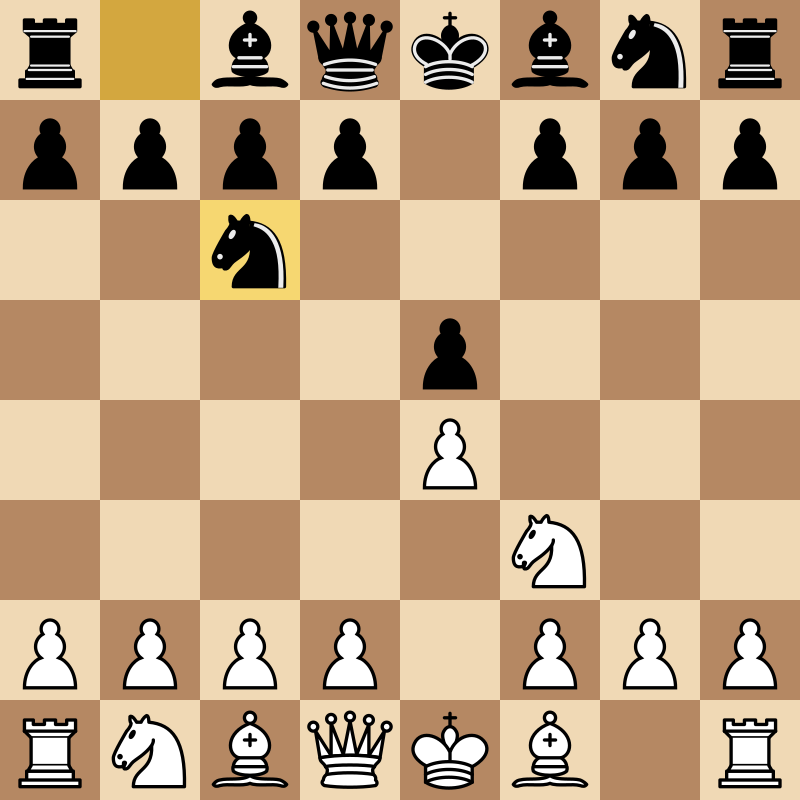
The more active choice. Black develops and immediately attacks e4. White has two very different answers.
Against 4.d3: develop and break
White defends e4 calmly. Black can play 4…Be7 or 4…Bc5, castle, and aim for …d5 when possible. These positions are close relatives of the Giuoco Pianissimo.
Against 4.Ng5: the critical test
4.Ng5 attacks f7 twice. Black’s correct reply is 4…d5 5.exd5 Na5!, giving up a pawn to chase White’s bishop.
The main line continues 6.Bb5+ c6 7.dxc6 bxc6 8.Be2 h6 9.Nf3 e4 10.Ne5 Bd6. Black is a pawn down but has a lead in development and an active position.
Never play 5…Nxd5?!, which allows the Fried Liver Attack (6.Nxf7! Kxf7 7.Qf3+), a dangerous attack that wins many games at club level. Learn the correct defense move by move on the Two Knights page.
Against the Evans Gambit (4.b4)
Some Italian players choose the gambit 1.e4 e5 2.Nf3 Nc6 3.Bc4 Bc5 4.b4. You have two good options:
- Accept with 4…Bxb4 5.c3 Ba5. The most principled answer. White gets time for d4; Black should develop quickly and be willing to give the pawn back.
- Decline with 4…Bb6. Simple and safe. White has spent a tempo on b4, which can become a target with …a5.
Our Evans Gambit guide covers White’s attacking ideas, so you know what to expect.
General principles against the Italian
- Keep f7 protected. Castle early and don’t let White pile up with Ng5, Qf3 or Qh5.
- Neutralize the c4 bishop. Trade it with …Be6 or …Na5, or blunt it with …d5.
- Don’t fear d4. If White pushes d4 too early, take on d4 and develop with tempo against the center.
- Use …h6. It costs a tempo but removes White’s main tactical ideas (Bg5 and Ng5).
Which option should you choose?
| Option | Character | Theory | Best for |
|---|---|---|---|
| 3…Bc5 (Giuoco Piano) | Solid, classical | Low–medium | Positional players |
| 3…Nf6 vs 4.d3 | Flexible | Low | Most players |
| 3…Nf6 vs 4.Ng5 (…Na5) | Sharp, gambit-style | Medium | Players who like activity |
If you also need answers to the Ruy Lopez and Scotch, read how to play against the Ruy Lopez. And if you’re deciding whether 1…e5 is right for you at all, compare it with the Sicilian in Sicilian vs 1…e5. Wikipedia’s Two Knights Defense article has more on the sharp 4.Ng5 lines.
Practice it in Chess Opens
Learn the Two Knights Defense move by move
Step through the Two Knights Defense with the reason behind every move, then play it from memory against the trainer. Free, no sign-up.
Also in this article: Italian Game, Evans Gambit
Questions
Q1What is the best defense against the Italian Game?
Both 3...Bc5 and 3...Nf6 are excellent. 3...Bc5 leads to the solid Giuoco Piano, while 3...Nf6 (the Two Knights) is more active and puts the question to White immediately.
Q2How do I avoid the Fried Liver Attack?
After 1.e4 e5 2.Nf3 Nc6 3.Bc4 Nf6 4.Ng5 d5 5.exd5, play 5...Na5 instead of 5...Nxd5. The knight hits the c4 bishop and Black gets good compensation for the pawn.
Q3Should Black accept the Evans Gambit?
Accepting with 4...Bxb4 is the most principled choice. Black must develop accurately and often gives the pawn back later. Declining with 4...Bb6 is a simpler, safe alternative.
Keep reading
Italian Game Traps: 5 Tricks Every Player Should Know
The Italian Game traps every player should know: the Légal Trap, Blackburne Shilling, Fried Liver, the fork trick and more, with diagrams and how to dodge them.
Italian Game Pros and Cons: Simple, Safe, or Too Slow?
The Italian Game's pros and cons: principled development, attacking chances and manageable theory, versus slow main lines and solid Black defenses.
Italian Game vs Ruy Lopez: Which 1.e4 e5 Opening Fits You?
Italian Game vs Ruy Lopez compared: what 3.Bc4 and 3.Bb5 aim at, theory, Black's best defenses (Two Knights vs Berlin), plans, and which to choose.