Sicilian Dragon Pros and Cons: Is the Risk Worth It?
The Sicilian Dragon's pros and cons: a powerful g7 bishop, clear attacking plans and big winning chances, versus the dangerous Yugoslav Attack and heavy theory.
In short
- Pros: a powerful g7 bishop, clear and repeatable attacking plans, huge winning chances, and a setup that's easy to remember.
- Cons: the Yugoslav Attack is extremely dangerous, the main lines are deeply theoretical, and one slow move can lose.
- Outside the Yugoslav, Black has an easy game against White's quieter setups.
- The Dragon suits tactical, well-prepared players; others may prefer the Accelerated Dragon or the Najdorf.
The Sicilian Dragon has a mystique few openings can match. A fianchettoed bishop breathing fire down the long diagonal, opposite-side castling, sacrifices on both wings: when it goes right, it’s the most exciting opening in chess. When it goes wrong, you get mated on the h-file. Here’s an honest look at its pros and cons.
For the full theory, see our Sicilian Dragon guide.
The pros
1. The Dragon bishop
The bishop on g7 is one of the best pieces in any opening. It pressures d4 and c3, sweeps toward White’s queenside king, and protects Black’s own king. In many endgames it’s still the strongest piece on the board.
2. Clear, repeatable plans
The Dragon is a setup: …g6, …Bg7, …O-O, …Nc6, …Bd7, …Rc8, then queenside play with …Ne5–c4, …Qa5 and …b5. Once you know these ideas, they apply in game after game.
3. Big winning chances
The Dragon creates imbalance immediately. Both sides attack; draws are rare. That’s exactly what Black wants against a 1.e4 player who expects a quiet game.
4. White’s quiet setups are easy to meet
Against the Classical (6.Be2), the Fianchetto (6.g3) or the Levenfish (6.f4), Black gets a comfortable game with natural development. Only the Yugoslav Attack demands deep preparation.
5. Many White players don’t know the Yugoslav well
The Yugoslav is very precise. At club level, White often plays it inaccurately, and Black’s counterattack lands first.
The cons
1. The Yugoslav Attack
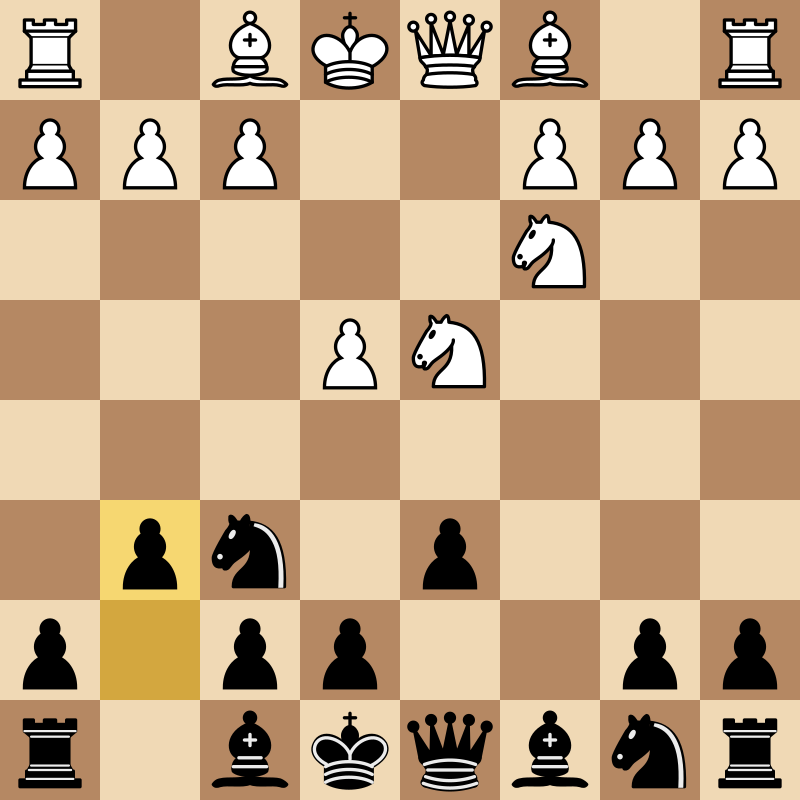
White’s most dangerous plan is simple and brutal: Be3, f3, Qd2, O-O-O, h4–h5 and Bh6, trading off the Dragon bishop and opening the h-file. Black must be fast and accurate, and the margin for error is tiny.
2. Heavy, concrete theory
The main lines of the Yugoslav go very deep. Unlike more strategic openings, forgetting a single move can lose the game outright.
3. Little room for slow play
In the race, every tempo counts. If you prefer to maneuver and wait for chances, the Dragon will punish you.
4. Losing the Dragon bishop
If White trades the g7 bishop with Bh6 and Black has no counterplay, Black’s king is suddenly very weak. That single exchange decides many Dragon games.
At a glance
| Pros | Cons | |
|---|---|---|
| Key piece | Powerful g7 bishop | If traded, the king is exposed |
| Plans | Clear and repeatable | Must be executed fast |
| Results | High winning chances | High losing chances |
| Theory | Easy against quiet lines | Very deep in the Yugoslav |
| Club practice | White often misplays it | One slip can lose instantly |
Who should play the Dragon?
It’s a great fit if you:
- Love tactics, sacrifices and opposite-side castling races.
- Are willing to study and memorize sharp lines.
- Want to play for a win with Black.
Consider something else if you:
- Prefer strategic, maneuvering games: try the Caro-Kann or a …e6 Sicilian.
- Want the Dragon bishop with less theory: the Accelerated Dragon or the King’s Indian against 1.d4.
- Want a deeper, more flexible Sicilian: the Najdorf.
The verdict
The Dragon is a high-risk, high-reward opening. Its pros (a monster bishop, clear plans, winning chances) are huge, and its main con is concentrated in one line: the Yugoslav Attack. Learn that line well and the Dragon becomes one of the most effective defenses at club level. Study it move by move on the Dragon page, and compare the Sicilian families in our Sicilian Defense guide. Wikipedia’s Dragon Variation article covers its history.
Practice it in Chess Opens
Learn the Sicilian Dragon move by move
Step through the Sicilian Dragon with the reason behind every move, then play it from memory against the trainer. Free, no sign-up.
Questions
Q1Is the Dragon still played at the top level?
Less than the Najdorf or the Sveshnikov, mainly because the Yugoslav Attack has been analyzed so deeply. At club level, though, it remains a very effective weapon, because few White players know the Yugoslav well.
Q2What's the difference between the Dragon and the Accelerated Dragon?
In the Accelerated Dragon, Black plays ...g6 before ...d6 (1.e4 c5 2.Nf3 Nc6 3.d4 cxd4 4.Nxd4 g6). This avoids the Yugoslav Attack in many lines but allows White the Maróczy Bind with c4.
Q3Is the Dragon too risky?
It's one of the riskiest main-line openings, because the Yugoslav Attack often becomes a straight race to mate. If you enjoy calculation and are willing to prepare, the risk is part of the appeal.
Keep reading
Sicilian Dragon: A Complete Guide for Aggressive Players
Learn the Sicilian Dragon: the setup with ...g6 and ...Bg7, the Yugoslav Attack race, the ...Rxc3 exchange sacrifice, and White's quieter alternatives.
Sicilian Defense: A Beginner's Guide to the Main Lines
Understand the Sicilian Defense (1.e4 c5): why it works, the Najdorf, Dragon, Sveshnikov and ...e6 systems, the anti-Sicilians, and which line to choose.
Caro-Kann Pros and Cons: Solid, but Is It Too Passive?
The Caro-Kann's pros and cons: a sound structure, a free light-squared bishop and good endgames, versus slower development, less space and fewer winning tries.