Caro-Kann Traps: 3 Tricks to Know with Both Colors
Caro-Kann traps every player should know: the Nd6 smothered mate, the Nxf7 sacrifice against ...h6, and why ...h6 matters in the Classical. With diagrams.
In short
- In the ...Nd7 lines, never play ...Ngf6 when White's queen is on e2: Nd6 is smothered mate.
- With Black's king still on e8 and White's queen on e2, ...h6 against Ng5 can allow a crushing Nxf7 sacrifice.
- In the Classical, ...h6 is essential before White's h-pawn reaches h5.
- Most Caro-Kann traps punish Black for neglecting the e-file and the king's safety.
The Caro-Kann is one of the most solid defenses in chess, so it doesn’t have dozens of cheap traps. But the few it has are brutal, and nearly all of them punish the same mistake: Black’s king lingering on e8 while White’s queen sits on the e-file.
Here are three Caro-Kann tricks every player should know, with either color. For the full opening, read our Caro-Kann guide.
1. The Nd6 smothered mate
The most famous Caro-Kann trap, and one of the quickest checkmates in any opening. In the …Nd7 variation, White plays an early Qe2, pinning nothing yet but lining up on the e-file:
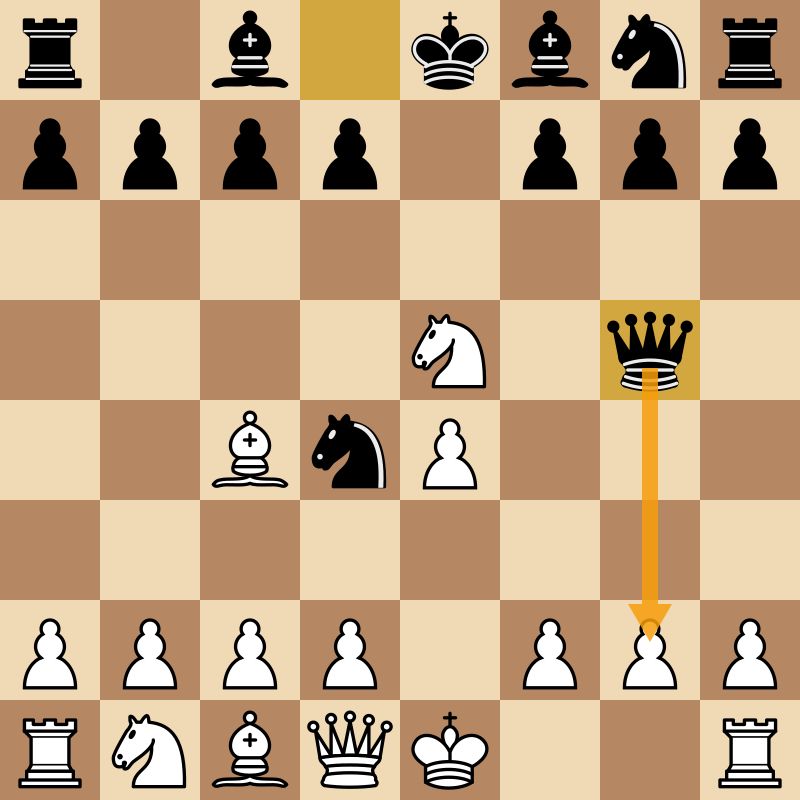
1.e4 c6 2.d4 d5 3.Nc3 dxe4 4.Nxe4 Nd7 5.Qe2
The natural developing move 5…Ngf6?? loses immediately:
6.Nd6#
The knight on d6 checks the king. The e7 pawn can’t capture it because it’s pinned to the king by the queen on e2. The king can’t move: d7 is occupied by the knight, and the other squares are blocked by Black’s own pieces.
How to avoid it: after 5.Qe2, play 5…Ndf6. The d7 knight moves to f6, so the king can escape to d7 and Nd6+ is no longer mate. Or play 5…e6, moving the e-pawn off the pinned square so the f8 bishop can capture on d6.
2. The Nxf7 sacrifice against …h6
A sharper relative of the first trap, from the Smyslov Variation with Bc4 and Ng5:
1.e4 c6 2.d4 d5 3.Nc3 dxe4 4.Nxe4 Nd7 5.Bc4 Ngf6 6.Ng5 e6 7.Qe2
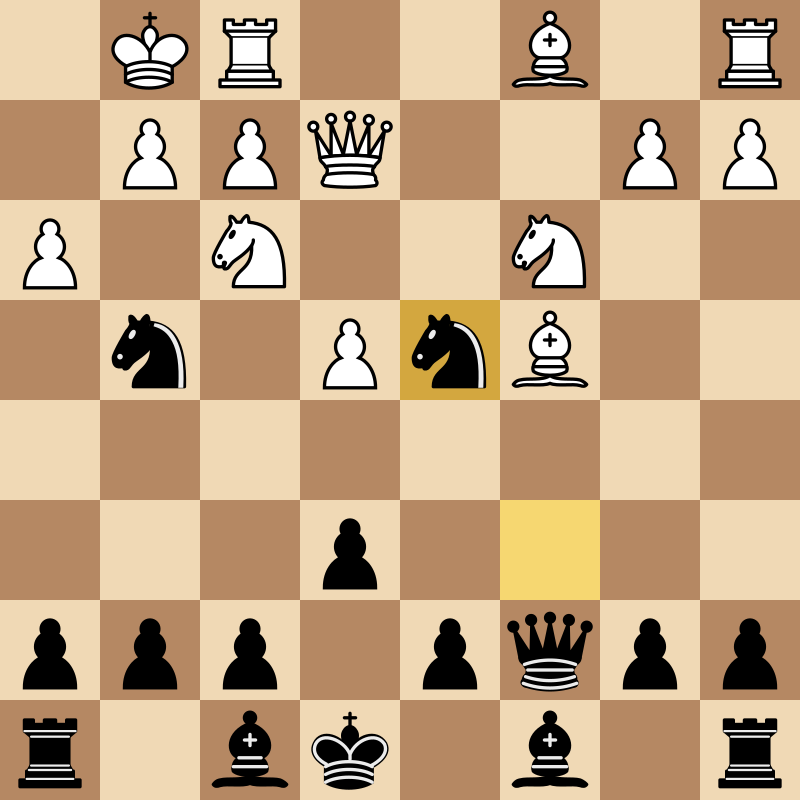
The automatic 7…h6??, kicking the knight, walks into a mating attack:
8.Nxf7! Kxf7 9.Qxe6+ Kg6 10.Bd3+ Kh5 11.Qh3#
After the knight sacrifice, every White move is a check, and the black king is driven across the board into a mating net. The c1 bishop, covering g5 from home, plays a quiet but crucial role.
How to avoid it: after 7.Qe2, the main line is 7…Nb6, hitting the c4 bishop, before considering …h6.
3. Why …h6 matters in the Classical
Not a quick trap, but a structural trick that catches many Caro-Kann players. In the Classical Variation, White’s h-pawn chases Black’s bishop:
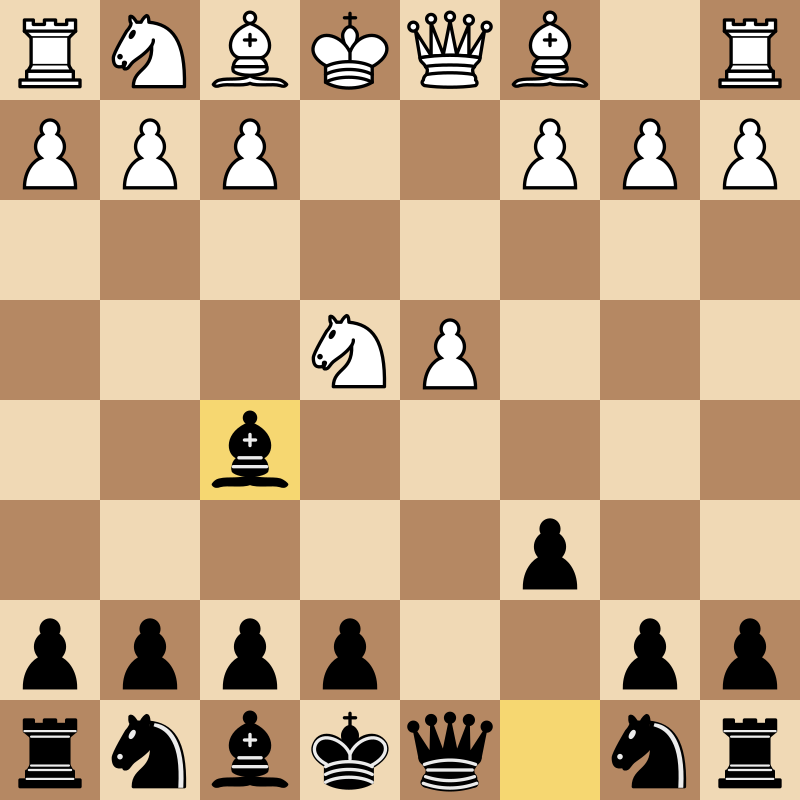
1.e4 c6 2.d4 d5 3.Nc3 dxe4 4.Nxe4 Bf5 5.Ng3 Bg6 6.h4
The correct move is 6…h6, giving the bishop a retreat on h7. If Black plays something else, say 6…e6?, then 7.h5 attacks the bishop, which has no comfortable square: h7 is occupied by Black’s own pawn, and e4 and f5 are covered by the g3 knight. The best Black can do is 7…Bf5 8.Nxf5 exf5, giving up the bishop pair and accepting doubled f-pawns.
It’s not a lost position, but it’s exactly the kind of structural damage the Caro-Kann is supposed to avoid. The main line goes 6…h6 7.Nf3 Nd7 8.h5 Bh7, and the bishop is safe. You can step through it on the Caro-Kann page.
Summary
| Trap | Key moves | Who benefits | Lesson |
|---|---|---|---|
| Nd6 smothered mate | 4…Nd7 5.Qe2 Ngf6?? 6.Nd6# | White | Watch the e-file pin on e7 |
| Nxf7 sacrifice | 7.Qe2 h6?? 8.Nxf7 | White | Don’t kick the knight while e6 is weak |
| …h6 before h5 | 6.h4 h6! | Black | Give the bishop a retreat in time |
For more traps from other openings, see 10 chess opening traps every beginner should know. White players looking for more ways to test the Caro-Kann should read how to beat the Caro-Kann. Wikipedia’s Caro–Kann Defence article lists the variations these traps come from.
Practice it in Chess Opens
Learn the Caro-Kann Defense move by move
Step through the Caro-Kann Defense with the reason behind every move, then play it from memory against the trainer. Free, no sign-up.
Questions
Q1What is the most famous Caro-Kann trap?
The smothered mate: 1.e4 c6 2.d4 d5 3.Nc3 dxe4 4.Nxe4 Nd7 5.Qe2 Ngf6?? 6.Nd6#. The e7 pawn is pinned by the queen, so nothing can capture the knight.
Q2Is the Caro-Kann full of traps?
Fewer than most openings. It's solid by nature, so most traps punish specific careless moves, usually in the lines with ...Nd7 where Black's king stays on e8 for a while.
Q3How do I avoid the Nd6 mate in the Caro-Kann?
After 4...Nd7 5.Qe2, play 5...Ndf6 or 5...e6 instead of 5...Ngf6, so the e7 pawn is no longer pinned or the d6 square is covered.
Keep reading
Sicilian Defense Traps: 4 Tricks for Both Sides
Sicilian Defense traps for White and Black: the Siberian Trap, the Smith-Morra Bxf7+ trick, the Magnus Smith Trap, and the Nd5 sacrifice pattern, with diagrams.
Italian Game Traps: 5 Tricks Every Player Should Know
The Italian Game traps every player should know: the Légal Trap, Blackburne Shilling, Fried Liver, the fork trick and more, with diagrams and how to dodge them.
Caro-Kann Pros and Cons: Solid, but Is It Too Passive?
The Caro-Kann's pros and cons: a sound structure, a free light-squared bishop and good endgames, versus slower development, less space and fewer winning tries.