Queen's Gambit: A Complete Guide for White
Learn the Queen's Gambit (1.d4 d5 2.c4): how to play against the QGD, QGA, Slav and Albin, the Exchange Variation's minority attack, and key plans.
In short
- The Queen's Gambit (1.d4 d5 2.c4) isn't a true gambit: White can almost always win the c4 pawn back.
- White's goal is to lure Black's d-pawn away from the center so White can build with e4.
- Against the Queen's Gambit Declined, the Exchange Variation and its minority attack (b4–b5) is a reliable plan.
- Know your answers to the four main replies: 2...e6 (QGD), 2...dxc4 (QGA), 2...c6 (Slav) and 2...e5 (Albin).
The Queen’s Gambit is one of the oldest and most respected openings in chess, and it has been a mainstay of world championship matches for more than a century. After 1.d4 d5 2.c4, White offers the c-pawn to pull Black’s d-pawn away from the center.
This guide covers what White is trying to achieve, how to play against each of Black’s four main replies, and the middlegame plans that make the Queen’s Gambit such a powerful choice.
What White wants
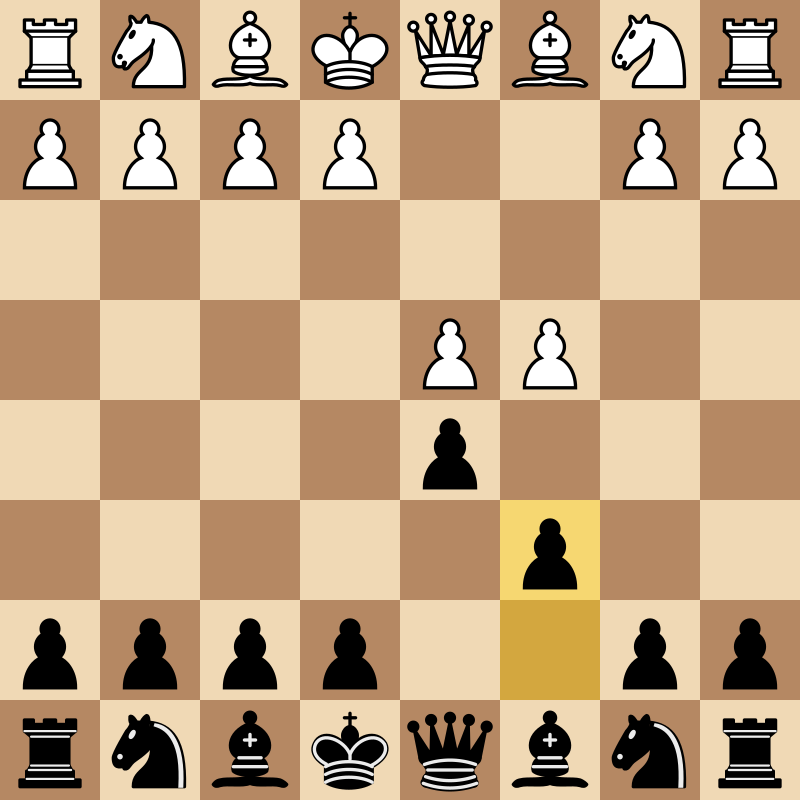
White’s ideal setup is pawns on d4 and e4, side by side in the center. Black’s d5 pawn prevents e4. By offering the c-pawn, White tempts Black to give up the center: if …dxc4, White can play e4 and build the big center.
It isn’t a true gambit because Black usually can’t keep the pawn. After 2…dxc4, White regains it with e3 and Bxc4, or with a4 and e3 if Black tries …b5.
Against 2…e6: the Queen’s Gambit Declined
Black’s most solid reply holds d5 with a pawn. White develops with Nc3, Nf6 and Bg5, pinning the knight that defends d5.
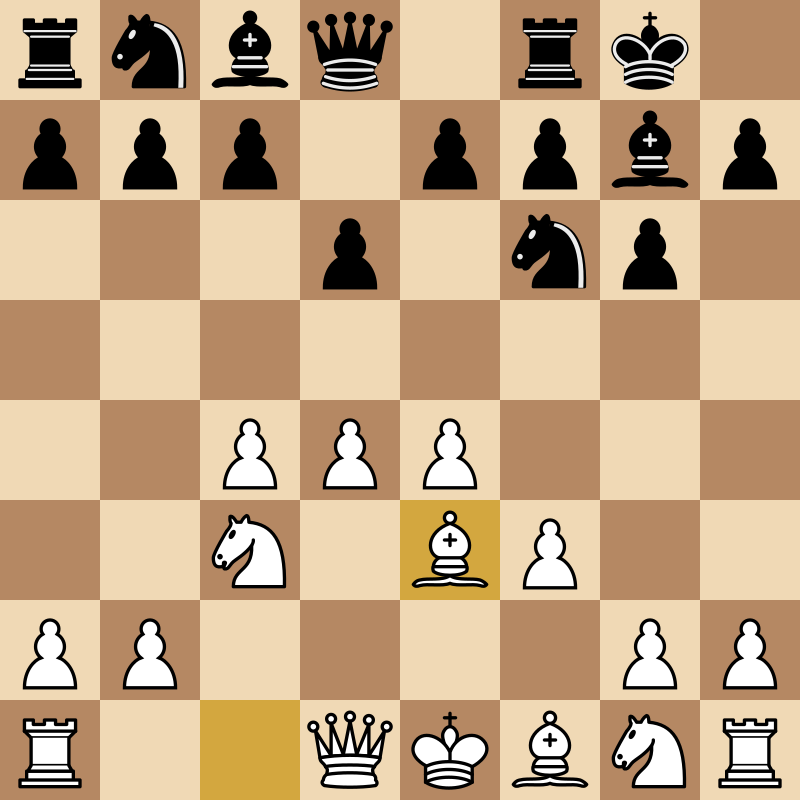
In the Orthodox Defense above, Black eventually gives up the center with …dxc4. White recaptures with tempo and keeps a small, lasting edge. You can step through it on the Queen’s Gambit page.
The Exchange Variation and the minority attack
The most reliable plan against the QGD is to trade on d5 early: 4.cxd5 exd5. This fixes the pawn structure, known as the Carlsbad structure, and gives White a clear plan.
White has two pawns on the queenside (a2, b2) against Black’s three (a7, b7, c6). In the minority attack, White pushes b4–b5 to trade off Black’s c6 pawn, leaving Black with a weak, isolated pawn on c6 or d5. With pieces on the c-file, White piles up on that weakness.
White can also play in the center with f3 and e4, or castle queenside and attack. We cover all three plans in the Carlsbad structure guide.
Against 2…dxc4: the Queen’s Gambit Accepted
Black takes the pawn, planning to give it back for free development and an attack on White’s center with …c5.
White’s two main approaches:
- 3.Nf3 and 4.e3 (classical): regain the pawn with Bxc4 and develop. White often ends up with an isolated d-pawn after …cxd4 exd4, which brings active pieces and attacking chances.
- 3.e4 (central): grab the center immediately. It’s more ambitious but gives Black targets.
Against 2…c6: the Slav
The Slav supports d5 with the c-pawn, keeping the c8 bishop free. White usually plays 3.Nf3 Nf6 4.Nc3, and after 4…dxc4 the main line is 5.a4, stopping …b5 so White can win the pawn back with e3 and Bxc4.
White can also play the Exchange Slav (3.cxd5 cxd5), a symmetrical structure that’s quiet but tricky for Black to handle against strong positional players. See the Slav guide for Black’s view.
Against 2…e5: the Albin Countergambit
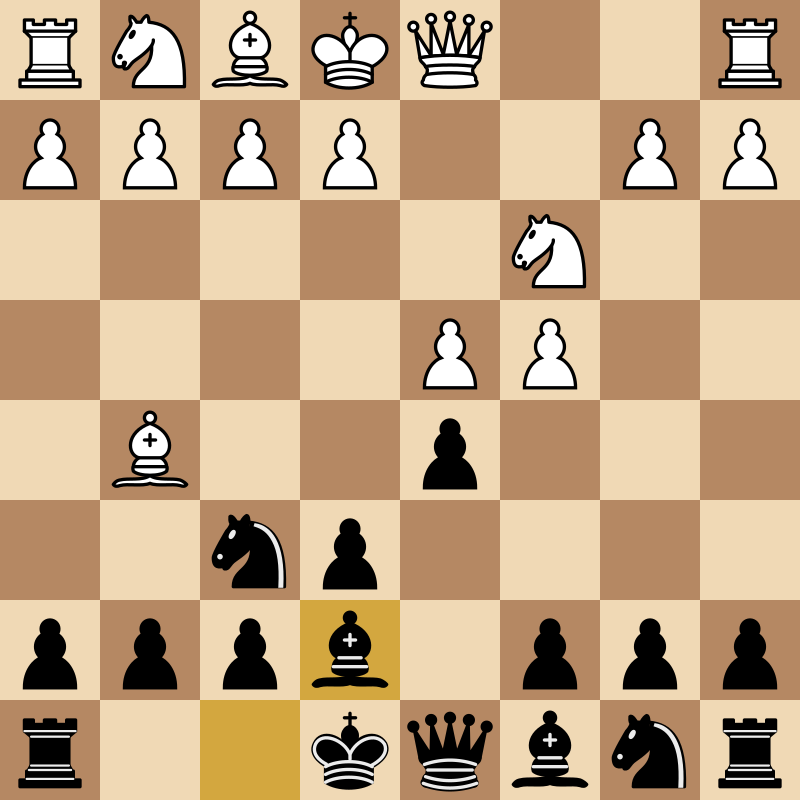
Black counter-gambits a pawn in the center. After 3.dxe5 d4, the d4 pawn cramps White and sets traps. The most famous is the Lasker Trap: 4.e3? Bb4+ 5.Bd2 dxe3! 6.Bxb4?? exf2+ 7.Ke2 fxg1=N+!, an underpromotion that wins.
The safe approach for White: 4.Nf3 Nc6 5.g3, developing calmly and fianchettoing the bishop, then winning the d4 pawn later.
Other Black replies
- 2…Nc6 (Chigorin Defense): Black develops quickly and aims for piece pressure on d4. White should take the center with Nc3 and e4 when possible.
- 2…Bf5 (Baltic Defense): Black develops the bishop early. Qb3, hitting b7, is the critical test.
Key plans for White
- Central expansion with e4. If Black gives up d5, White’s pawn duo on d4 and e4 dominates.
- The c-file. After cxd5, the half-open c-file is White’s highway, especially for the minority attack.
- Pressure on d5. Nc3, Bg5 (pinning the f6 knight) and sometimes Qb3 all target Black’s central pawn.
- The isolated queen’s pawn. In many QGA and Tarrasch lines, White gets an isolated d4 pawn: a weakness in the endgame but a strength in the middlegame, supporting Ne5 and a kingside attack. Read about it in the isolated queen’s pawn.
Is the Queen’s Gambit right for you?
Choose the Queen’s Gambit if you want a principled, respected opening that teaches deep strategic chess. It requires more study than the London System, but you’ll learn more from it. We compare the two in London vs Queen’s Gambit, and weigh it up in Queen’s Gambit pros and cons. For tactical tricks, see Queen’s Gambit traps.
Practice it
The trainer has both the Exchange Variation and the Orthodox Defense on the Queen’s Gambit page. Play them from memory in Practice mode. For history and the full tree of variations, see Wikipedia’s Queen’s Gambit article.
Practice it in Chess Opens
Learn the Queen's Gambit move by move
Step through the Queen's Gambit with the reason behind every move, then play it from memory against the trainer. Free, no sign-up.
Also in this article: Queen's Gambit Declined, Queen's Gambit Accepted, Slav Defense
Questions
Q1Is the Queen's Gambit a real gambit?
Not really. If Black takes on c4 (the Queen's Gambit Accepted), White can usually regain the pawn with e3 and Bxc4, or win it back after a4. Black can hold the extra pawn only by weakening the queenside, which is usually bad for Black.
Q2Is the Queen's Gambit good for beginners?
Yes, especially for players who want to understand pawn structure. It's more theoretical than the London System, but the plans (central control, the c-file, the minority attack) teach skills you'll use in every game.
Q3What is the best response to the Queen's Gambit?
The Queen's Gambit Declined (2...e6) and the Slav (2...c6) are the most respected. The Queen's Gambit Accepted (2...dxc4) is also completely sound if Black gives the pawn back and develops quickly.
Keep reading
Queen's Gambit Declined: A Complete Guide for Black
Learn the Queen's Gambit Declined as Black: the Orthodox, Tartakower and Lasker defenses, the Exchange Variation, freeing breaks, and the Elephant Trap.
Slav Defense: A Complete Guide for Black
Learn the Slav Defense (1.d4 d5 2.c4 c6): the main line with ...dxc4 and ...Bf5, the Exchange Slav, the Semi-Slav and Meran, and Black's key plans.
How to Beat the King's Indian Defense with White
How to beat the King's Indian Defense: the Classical with b4, the Sämisch, the Four Pawns Attack and the Fianchetto, with plans against Black's kingside attack.