How to Beat the Caro-Kann: 3 Systems for White
How to beat the Caro-Kann with White: the Advance Variation, the Panov-Botvinnik Attack and the Fantasy Variation, with plans, diagrams and traps.
In short
- The Caro-Kann's strength is its solid structure; White should aim for space or dynamic imbalances, not simplification.
- The Advance Variation (3.e5) gains space and lets White harass the f5 bishop with g4 and h4.
- The Panov-Botvinnik Attack (exd5 and c4) gives White an isolated d-pawn and active pieces.
- The Fantasy Variation (3.f3) is a sharp surprise weapon that avoids Black's standard setups.
The Caro-Kann is one of the most frustrating defenses to face as White. Black’s pawn structure is rock-solid, the light-squared bishop gets out before …e6, and the endgames are often good for Black. Play quiet developing moves and you’ll find yourself slightly worse by move twenty.
To beat the Caro-Kann, you need a system that creates a real imbalance: more space, a lead in development, or a sharp position Black would rather avoid. Here are three proven options. (If you’d like Black’s perspective first, read our Caro-Kann guide.)
System 1: The Advance Variation (3.e5)
The most popular and most testing choice. After 1.e4 c6 2.d4 d5 3.e5, White grabs space and closes the center. Black’s best piece, the f5 bishop, becomes a target.
There are two very different ways to play it.
The calm Short System: Nf3, Be2, Be3
Developing simply with 4.Nf3 e6 5.Be2 c5 6.Be3 keeps White’s center protected and the position balanced, but White has a lasting space advantage. Black’s …c5 break is met by solid support for d4, and White often plays c3 and O-O, aiming for a slow squeeze.
The aggressive Bayonet: Nc3, g4
If you want a fight, push the kingside pawns at the bishop: 4.Nc3 e6 5.g4 Bg6 6.Nge2, followed by h4 and Nf4, chasing the bishop and grabbing kingside space.
This is sharp and theoretical, but at club level many Caro-Kann players don’t know it well. The bishop can run out of good squares, and White’s kingside space becomes the basis for a direct attack.
System 2: The Panov-Botvinnik Attack (3.exd5 cxd5 4.c4)
White trades on d5 and then hits Black’s center with c4, transforming the game into an open, Queen’s Gambit-like position. After 4…Nf6 5.Nc3 e6 6.Nf3 Be7 7.cxd5 Nxd5 8.Bd3, White has an isolated queen’s pawn on d4.
The isolated pawn is a long-term weakness, but in the middlegame it gives White:
- Outposts on e5 and c5 for White’s knights.
- Open lines for the bishops and rooks toward Black’s king.
- Attacking chances with Bd3, Qc2 or Qe2, and a rook lift via e3.
This takes Caro-Kann players out of their comfort zone: instead of a slow, solid position, they must defend against an attack. Our article on the isolated queen’s pawn explains how to play these positions.
System 3: The Fantasy Variation (3.f3)
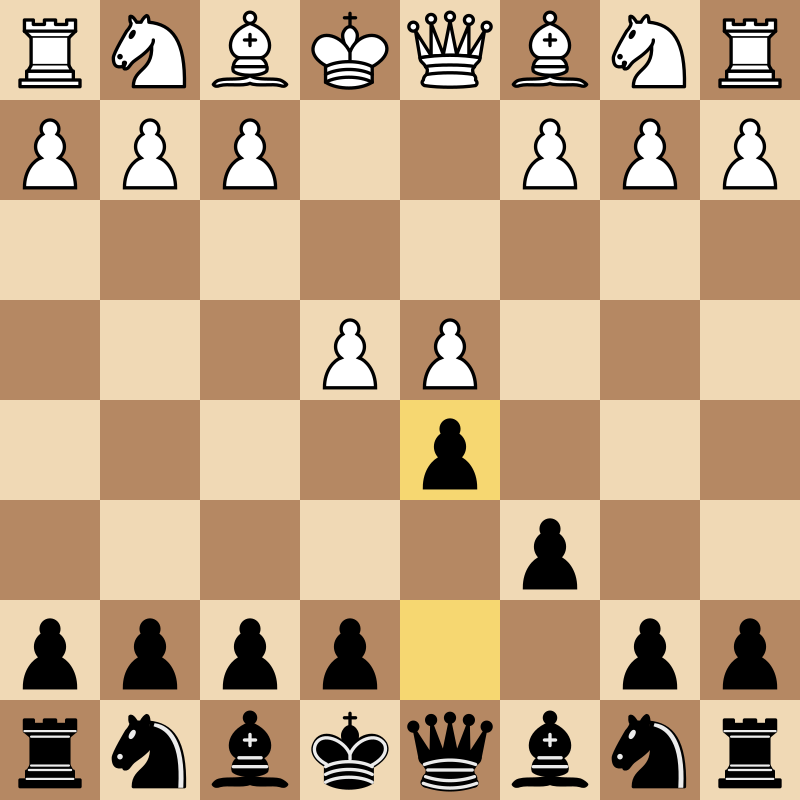
A sharp surprise weapon. 1.e4 c6 2.d4 d5 3.f3 supports e4 with a pawn, aiming for a big center with Nc3 and Be3.
Black’s standard Caro-Kann plans don’t work well here. The most common replies are:
- 3…e6, planning …c5 or …Bb4. White continues Nc3 or Be3 and often gets a French-like position.
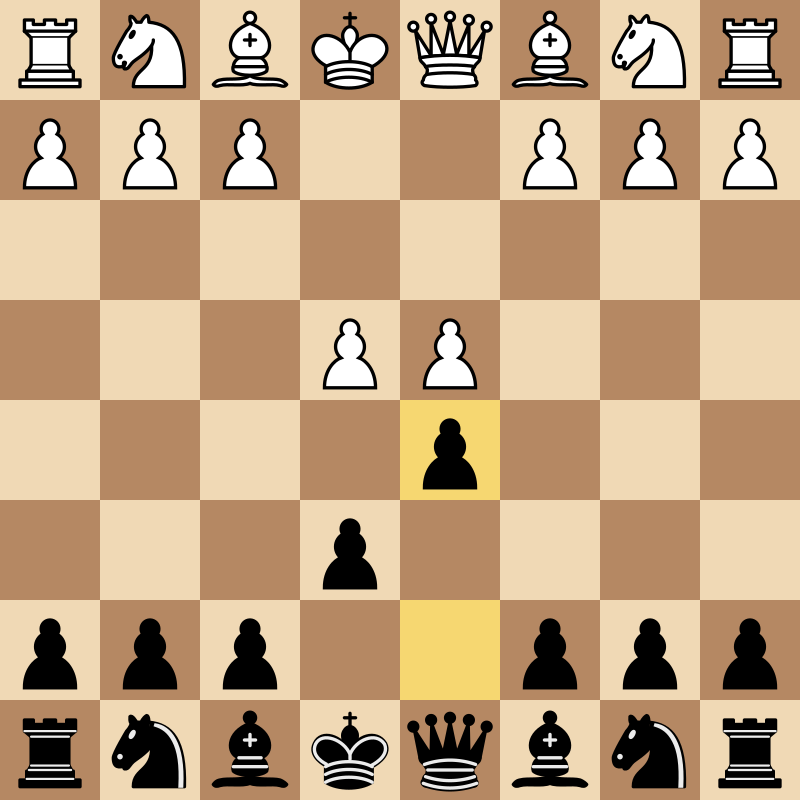
- 3…dxe4 4.fxe4 e5, a direct challenge. White should play 5.Nf3, developing with tempo, and keep the center under control.
- 3…g6, aiming for pressure on d4 with …Bg7.
The Fantasy is less theoretical and very practical, especially in rapid and blitz.
Other options
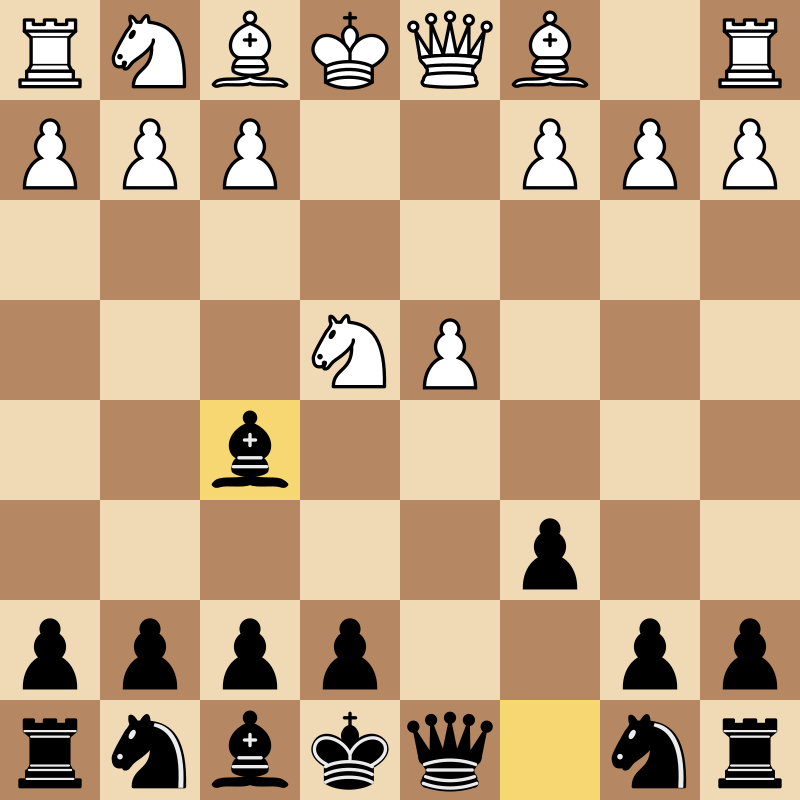
- The Classical (3.Nc3 dxe4 4.Nxe4 Bf5): the traditional main line. Solid, but Black knows it well. White’s best try is the h4–h5 line that grabs kingside space (see the Caro-Kann page for the main line).
- The Two Knights (2.Nc3 d5 3.Nf3): keeps options open. After 3…Bg4 4.h3 Bxf3 5.Qxf3, White has the bishop pair.
Which system should you choose?
| System | Character | Theory | Best for |
|---|---|---|---|
| Advance (Short System) | Space, slow squeeze | Low–medium | Positional players |
| Advance (Bayonet, g4) | Sharp attack | High | Aggressive players |
| Panov-Botvinnik | Open, IQP | Medium | Queen’s Gambit players |
| Fantasy (3.f3) | Surprise, unbalanced | Low–medium | Practical players, blitz |
Traps to know
The Caro-Kann has a few traps that White can set. The most famous is in the Classical with 4…Nd7: 5.Qe2 Ngf6?? 6.Nd6#, a smothered mate in the middle of the board. Our article on Caro-Kann traps collects the rest.
Practice against the Caro-Kann
Know your opponent’s plans: step through the Classical and Advance from Black’s side on the Caro-Kann page. For a broader look at the opening’s strengths and weaknesses, read Caro-Kann pros and cons, and see Wikipedia’s Caro–Kann Defence article for the full list of White’s options.
Practice it in Chess Opens
Learn the Caro-Kann Defense move by move
Step through the Caro-Kann Defense with the reason behind every move, then play it from memory against the trainer. Free, no sign-up.
Questions
Q1What is the best way to play against the Caro-Kann?
The Advance Variation (3.e5) is the most popular and most testing choice at club level. It grabs space, limits Black's pieces and offers attacking plans with g4 or the calmer Nf3, Be2 and Be3 setup.
Q2Should White trade into an endgame against the Caro-Kann?
Usually not. The Caro-Kann's pawn structure is very healthy, so Black often stands well in endgames. White should keep pieces on and use space or development to create problems.
Q3Is the Exchange Variation good against the Caro-Kann?
It's sound but tends to give Black an easy game unless White follows up with c4 (the Panov-Botvinnik Attack). The plain Exchange with Bd3 and c3 is solid but rarely troubles a prepared Caro-Kann player.
Keep reading
Caro-Kann Pros and Cons: Solid, but Is It Too Passive?
The Caro-Kann's pros and cons: a sound structure, a free light-squared bishop and good endgames, versus slower development, less space and fewer winning tries.
Caro-Kann vs French Defense: Which Should You Play?
Caro-Kann vs French Defense compared: pawn structures, the bad bishop, sharpness, theory, and White's main tries, to help you pick the right defense to 1.e4.
Caro-Kann Defense: A Complete Guide for Black
Learn the Caro-Kann Defense: the ideas behind 1.e4 c6, the Classical, Advance and Exchange variations, typical plans, and the mistakes to avoid.