Caro-Kann vs French Defense: Which Should You Play?
Caro-Kann vs French Defense compared: pawn structures, the bad bishop, sharpness, theory, and White's main tries, to help you pick the right defense to 1.e4.
In short
- Both defenses challenge White's center with ...d5; the French prepares it with ...e6, the Caro-Kann with ...c6.
- The Caro-Kann frees the light-squared bishop; the French often leaves it stuck behind the e6 pawn.
- The French is sharper and more counter-attacking; the Caro-Kann is more solid and reaches better endgames.
- Choose the French if you like dynamic imbalances, the Caro-Kann if you like sound structure and fewer risks.
The Caro-Kann and the French Defense are the two great “solid” answers to 1.e4. Both challenge White’s center with …d5 on move two. Both lead to closed, strategic positions more often than the Sicilian or 1…e5. And both have been trusted by world champions.
So which should you play? This comparison covers the structures, the strengths and weaknesses of each, and the kind of player each one suits.
The key difference: the light-squared bishop
Everything starts with one move. The French prepares …d5 with 1…e6; the Caro-Kann prepares it with 1…c6.
In the French, Black’s light-squared bishop on c8 is blocked by the pawns on e6 and d5. It’s often called the French’s “problem piece.” In the Caro-Kann, the bishop comes out to f5 or g4 before Black plays …e6. That’s the whole point of the opening.
The French’s compensation: the c-pawn is still free to strike with …c5 in one move, and the knight keeps its natural c6 square. The French is built for counter-attack.
The Advance Variation in both openings
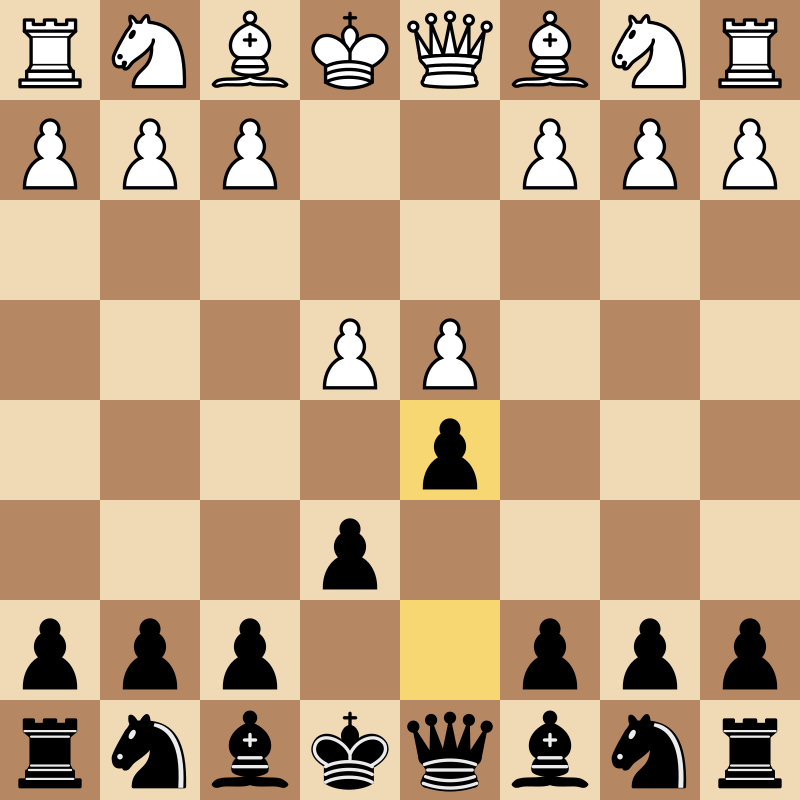
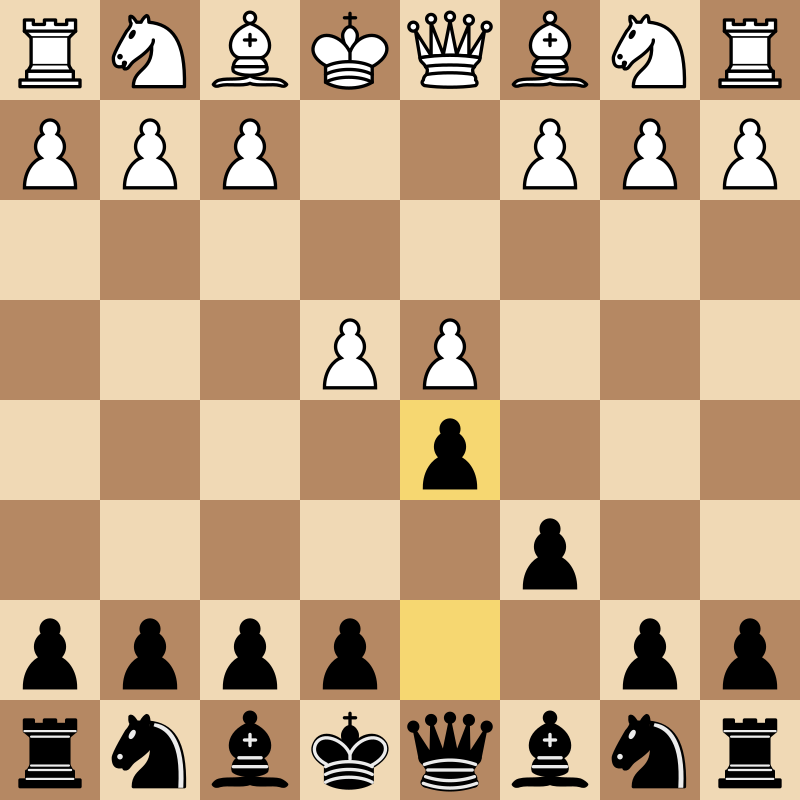
White’s most popular try against both defenses is to push e5, grabbing space.
The plans look similar: pressure on d4 with …c5, …Nc6 and …Qb6. The difference is timing. In the French, …c5 comes immediately; in the Caro-Kann, Black spends an extra tempo on …c6 and then …c5, but has the bishop outside the pawn chain.
Sharpness: the French is more double-edged
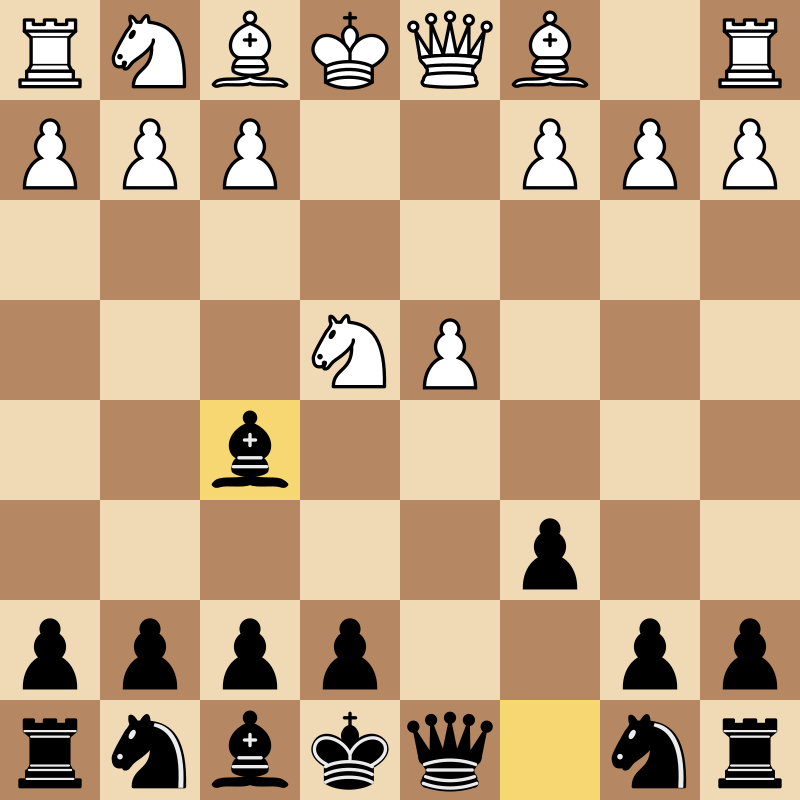
The French has some of the sharpest main lines in chess. In the Winawer (3.Nc3 Bb4), Black pins the knight, gives up the dark-squared bishop and often lets White attack the kingside in exchange for queenside counterplay.
The Caro-Kann’s main lines are calmer. In the Classical (3.Nc3 dxe4 4.Nxe4 Bf5), Black trades a center pawn, develops the bishop and aims for a sound, slightly passive but very solid position.
Side-by-side comparison
| Caro-Kann | French | |
|---|---|---|
| First move | 1…c6 | 1…e6 |
| Light-squared bishop | Develops freely to f5/g4 | Often blocked behind e6 |
| Typical character | Solid, positional | Counter-attacking, double-edged |
| Main pawn breaks | …c5, …e5 | …c5, …f6 |
| Endgames | Usually good for Black | Can be worse due to the bad bishop |
| Sharpest line | Advance with g4 ideas | Winawer Poisoned Pawn |
| Theory load | Moderate | Moderate to heavy |
| Winning chances | Lower risk, slower | Higher risk, more imbalance |
Which one suits you?
Play the Caro-Kann if you:
- Prefer solid positions where you rarely lose quickly.
- Like good endgames and healthy pawn structures.
- Want fewer sharp, must-know lines.
Play the French if you:
- Enjoy counter-attacking and unbalanced positions.
- Don’t mind a slightly cramped position in exchange for active pawn breaks.
- Like long-term plans built around pawn chains.
Learn more
Read the full guides: Caro-Kann Defense and French Defense. For the honest downsides, see Caro-Kann pros and cons and French Defense pros and cons. If you’re also considering the Sicilian, read Caro-Kann vs Sicilian.
Then try both in the trainer: the Caro-Kann (Classical and Advance) and the French (Advance and Winawer). Playing a few lines of each from memory is the fastest way to feel which one is “yours.” For more background, see the Wikipedia articles on the French Defence and the Caro–Kann Defence.
Practice it in Chess Opens
Learn the Caro-Kann Defense move by move
Step through the Caro-Kann Defense with the reason behind every move, then play it from memory against the trainer. Free, no sign-up.
Also in this article: French Defense
Questions
Q1Is the Caro-Kann better than the French?
Neither is objectively better; both are fully sound and played at the highest level. The Caro-Kann is generally considered more solid, while the French creates more imbalanced positions with more winning (and losing) chances.
Q2Which is easier to learn, the French or the Caro-Kann?
The Caro-Kann is usually easier: its plans are simpler and it has fewer razor-sharp main lines. The French, especially the Winawer, demands more precise knowledge.
Q3Can I play both the French and the Caro-Kann?
You can, and a few strong players do, but it's more efficient to choose one and learn it deeply. The two defenses share some ideas (...d5, ...c5 against the Advance), so switching later is not difficult.
Keep reading
Caro-Kann Pros and Cons: Solid, but Is It Too Passive?
The Caro-Kann's pros and cons: a sound structure, a free light-squared bishop and good endgames, versus slower development, less space and fewer winning tries.
French Defense: A Complete Guide for Black
Learn the French Defense (1.e4 e6 2.d4 d5): the Advance, Winawer, Classical, Tarrasch and Exchange variations, Black's pawn breaks, and the bad bishop.
Caro-Kann Defense: A Complete Guide for Black
Learn the Caro-Kann Defense: the ideas behind 1.e4 c6, the Classical, Advance and Exchange variations, typical plans, and the mistakes to avoid.