London System Traps: 5 Tricks for Both Sides
London System traps and tricks for both colors: the Nb5 fork, the loose b2 pawn, ...Nh5 against the bishop, the Qb3 hit on b7, and the ...Qb6 queen chase.
In short
- With the bishop on f4, the c7 square is a target: Nb5 and Nc7+ can fork the king and rook.
- The b2 pawn loses a defender once the bishop leaves c1; meet ...Qb6 with Qb3 or Qc2.
- Without h3, the f4 bishop can be chased with ...Nh5 and traded on Black's terms.
- When Black develops the c8 bishop early, Qb3 often hits a loose b7 pawn.
The London System isn’t known as a trappy opening. Most games are won slowly, with a well-timed Ne5 or a kingside attack. But there are a handful of tactical tricks that come up again and again, for both sides. Knowing them wins you free material and keeps you from losing it.
If you’re new to the opening, start with our London System guide.
1. The Nb5 fork on c7 (for White)
With the bishop on f4 already eyeing c7, a knight on b5 doubles the attack. If Black can’t defend c7, Nc7+ forks the king and the rook on a8. This trick is the signature tactic of the Jobava London (Nc3 with Bf4):
1.d4 d5 2.Nc3 Nf6 3.Bf4 c5?! 4.Nb5!
The c7 square is attacked twice and defended only by the queen. Black has to react: 4…Na6 covers c7, and 4…Qa5+ gains time, while natural developing moves like 4…e6? allow 5.Nc7+, winning the exchange.
For Black: in the Jobava London, keep c7 covered (…c6, …Na6 or …e6 with …Bd6) before playing …c5.
2. The loose b2 pawn (for Black)
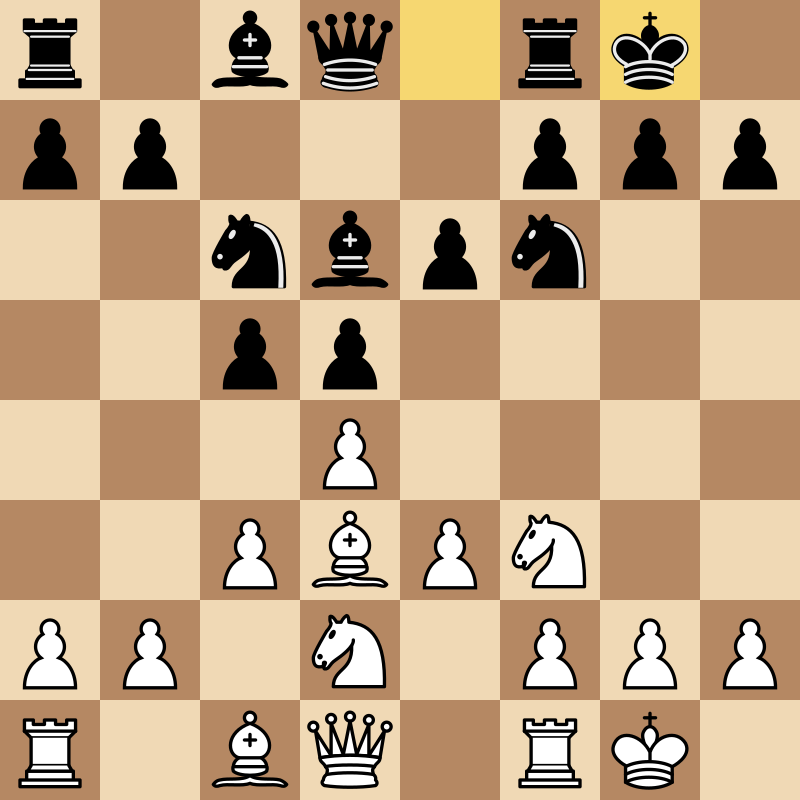
Once White’s bishop leaves c1, nothing defends b2 except the queen from a distance. Black’s queen on b6 attacks it immediately:
1.d4 d5 2.Bf4 c5 3.e3 Nc6 4.c3 Qb6
If White carries on with routine setup moves (5.Nd2?, 5.Nf3?), Black simply takes on b2. White’s best is 5.Qb3 (or 5.Qc2), defending the pawn and offering a queen trade.
For White: whenever Black’s queen lands on b6, check b2 before anything else.
3. The …Nh5 bishop hunt (for Black)
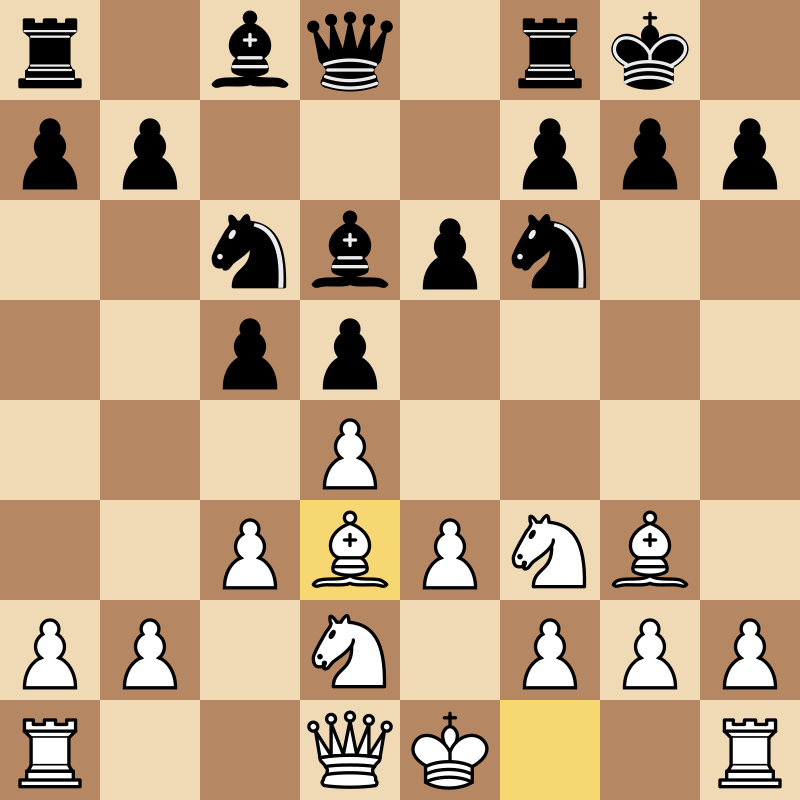
The f4 bishop is White’s best piece, and early on it has few retreats. If White doesn’t play h3, Black can chase it with …Nh5:
1.d4 Nf6 2.Bf4 g6 3.e3 Bg7 4.Nf3 d6 5.Be2 Nh5
If the bishop retreats to g3, Black takes with …Nxg3 and wins the bishop pair. If it goes to g5, …h6 and …g5 can chase it again. It isn’t a material win, but it removes White’s most important piece. Read more Black plans in how to beat the London System.
For White: include h3 in your setup so the bishop can retreat to h2.
4. Qb3 hits b7 (for White)
When Black copies White and develops the c8 bishop early (…Bf5), the b7 pawn loses its defender. White can attack it with c4 and Qb3:
1.d4 d5 2.Bf4 Nf6 3.e3 Bf5 4.c4 e6 5.Qb3
Black must spend a move defending (…Qc8, …Qb6 or …Nc6), and White has gained time. Grabbing on b7 isn’t always safe for White, though: with Black’s rook coming to b8 and knights jumping to b4, the queen can get into trouble. Take b7 only after checking that your queen can get out.
5. The …c4 and …Bf5 queen chase (for Black)
The most important trick to know as a London player. After 5.Qb3 in the line from trick 2, Black can play 5…c4!, kicking the queen, and 6.Qc2 Bf5! hits it again.
The queen usually retreats to c1, and Black has gained a lot of time. Nothing is lost for White, but the position is uncomfortable. London players should know this line and be ready to play 7.Qc1 followed by Nf3, Be2 and a well-timed b3 or e4.
The lessons
| Trick | Who benefits | Lesson |
|---|---|---|
| Nb5 and Nc7+ | White | With the bishop on f4, c7 is a target |
| …Qb6 hits b2 | Black | After Bf4, b2 needs attention |
| …Nh5 | Black | Play h3 to give the bishop a retreat |
| Qb3 hits b7 | White | When Black’s c8 bishop leaves, b7 is loose |
| …c4 and …Bf5 | Black | The London queen can get pushed around |
For more London ideas, see London System plans and the Jobava setup in the Jobava London guide. Practice the main line on the London System page, and for a wider collection of tricks, read 10 chess opening traps every beginner should know.
Practice it in Chess Opens
Learn the London System move by move
Step through the London System with the reason behind every move, then play it from memory against the trainer. Free, no sign-up.
Questions
Q1Are there quick wins in the London System?
A few. Most London wins come from the middlegame, but tricks like the Nb5–c7 fork in the Jobava London and the Qb3 attack on b7 win material against careless opponents.
Q2What is the most common mistake London players make?
Leaving the b2 pawn loose. After Bf4, b2 is no longer defended by the c1 bishop, and Black's ...Qb6 attacks it immediately.
Q3How do I avoid ...Nh5 against my London bishop?
Play h3 early so the bishop can retreat to h2, or answer ...Nh5 with Bg5 or Be5 depending on the position. Many London players include h3 in their standard setup for this reason.
Keep reading
London System vs Colle System: Which d4 System Is Better?
London System vs Colle System compared: where the dark-squared bishop goes, the plans (Ne5 and kingside attack vs the e4 break), theory, and which suits you.
London System Pros and Cons: Is It Right for You?
An honest look at the London System's pros and cons: low theory and a reliable setup, against predictability, passivity, and what it doesn't teach you.
How to Beat the London System: 4 Plans That Work
How to beat the London System as Black: four practical plans with ...c5 and ...Qb6, a King's Indian setup, ...Nh5 to hunt the bishop, and the ...Ne4 attack.