London System vs Colle System: Which d4 System Is Better?
London System vs Colle System compared: where the dark-squared bishop goes, the plans (Ne5 and kingside attack vs the e4 break), theory, and which suits you.
In short
- Both are system openings with d4, e3, Nf3, Bd3, Nbd2 and castling; the difference is the c1 bishop.
- The London develops the bishop to f4 before e3; the Colle keeps it inside the pawn chain on c1 (or fianchettoes it on b2 in the Zukertort).
- The London's main plans are Ne5 and a kingside attack; the Colle's main plan is the e3–e4 break.
- The London is more flexible and popular today; the Colle is simpler and very dangerous if Black doesn't know the e4 break.
The London and the Colle are the two most popular “system” openings for White: setups you can play on autopilot for the first several moves against almost anything. They share most of their moves, and they’re often recommended to the same players. So which one should you choose?
This comparison covers the one move that separates them, the very different plans that follow, and the kind of player each one suits.
The difference: one bishop
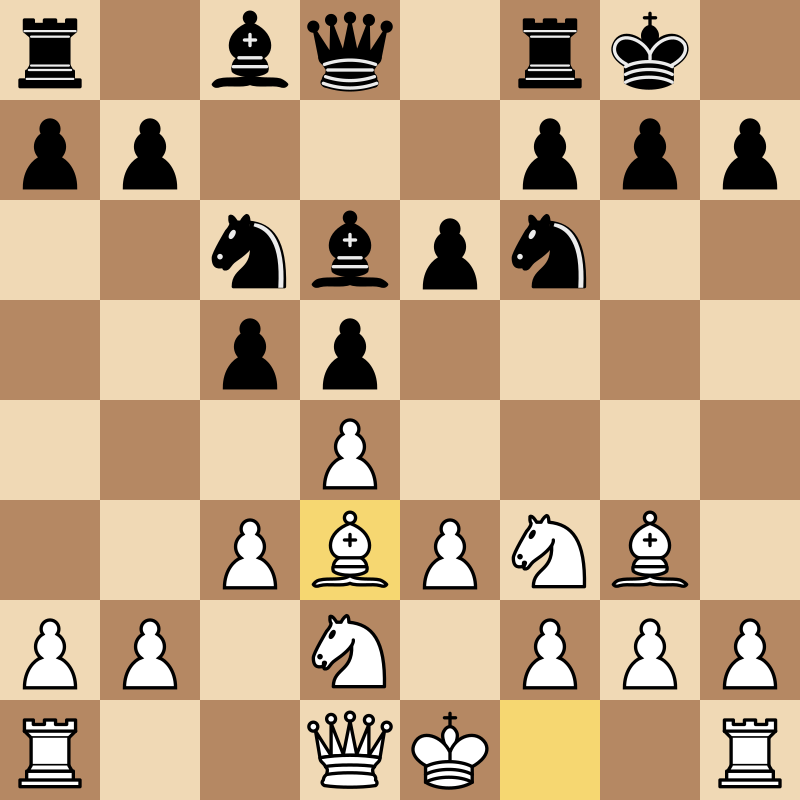
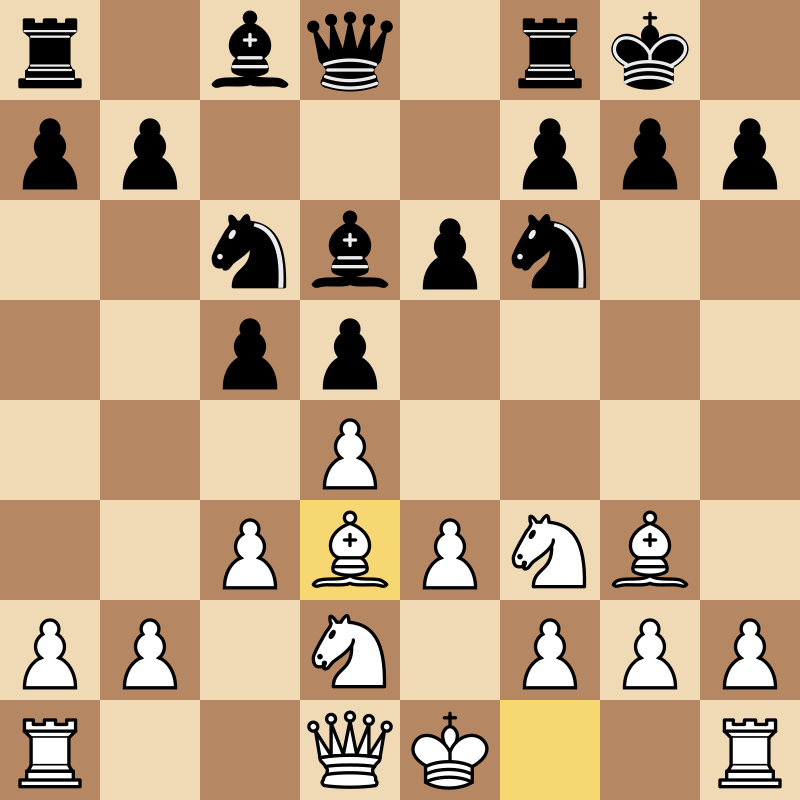
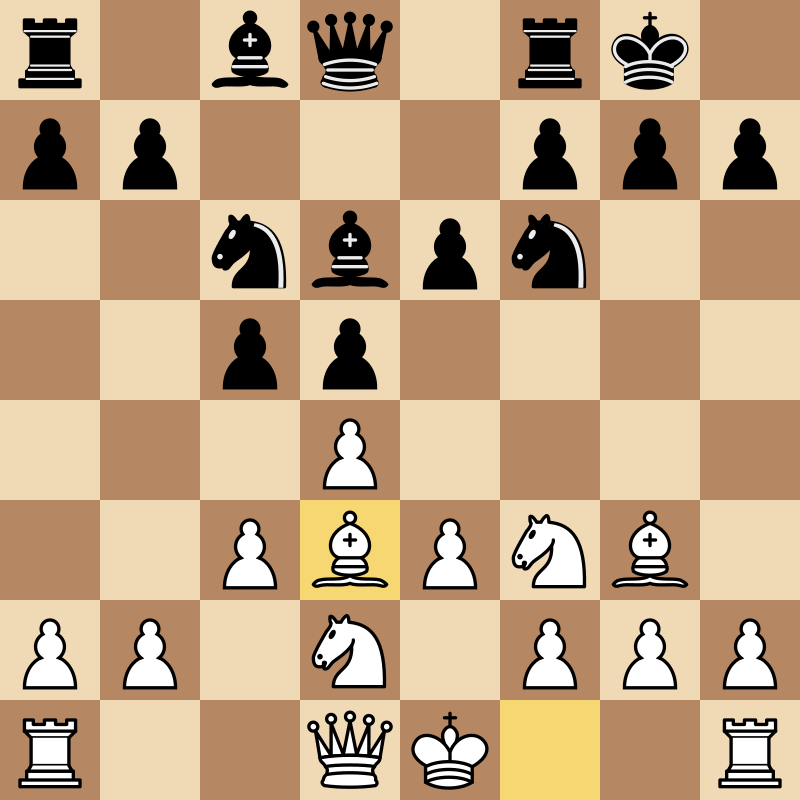
Both openings build with d4, Nf3, e3, Bd3, Nbd2 and castling. The difference is the dark-squared bishop on c1:
- London: the bishop comes out to f4 before e3 is played, so it sits outside the pawn chain.
- Colle: White plays e3 first, leaving the bishop inside the chain on c1 (or later fianchettoing it on b2 in the Colle-Zukertort).
That one difference changes everything that follows.
The plans
London: control e5, attack the king
With the bishop on f4, White controls e5. The typical plans are a knight on e5 (supported by f4 for a Stonewall-like grip), a kingside attack with Qf3–h3 or g4, and occasionally the e3–e4 break. The bishop is active from the start. See the London System guide for details.
Colle: prepare and play e4
In the Colle, White’s main plan is the e3–e4 break. White prepares it with Bd3, Nbd2, Re1 or Qc2, and when it comes, the center opens and the c1 bishop is suddenly free.
Once e4 lands, White often pushes e5, kicking the f6 knight, and the d3 bishop and queen line up against h7. Many Colle games end in a quick kingside attack right after the e4–e5 push.
The Colle-Zukertort: b3 and Bb2
A more ambitious version. White plays b3 and Bb2 instead of c3, putting the bishop on the long diagonal. Then Ne5 and f4 create a “Zukertort” attacking setup aimed at Black’s king.
Side by side
| London System | Colle System | |
|---|---|---|
| Dark-squared bishop | Active on f4 (often g3) | On c1 until the center opens, or b2 (Zukertort) |
| Main plan | Ne5, kingside attack | e3–e4 break, then attack |
| Typical weakness | b2 pawn after Bf4 | Passive c1 bishop if e4 never comes |
| Works against | Almost everything | Best against …d5 setups |
| Theory | Low | Very low |
| Popularity today | Very high | Moderate |
| Surprise value | Low (everyone knows it) | Higher |
Strengths and weaknesses
The London’s advantages:
- The bishop is active immediately, so White never suffers from a “bad bishop.”
- It works well against King’s Indian and Dutch setups, not just …d5.
- Lots of model games and resources.
The Colle’s advantages:
- Even fewer things to remember: White’s first seven moves are almost automatic.
- The e4 break is a powerful, easy-to-learn plan, and many club players don’t know how to stop it.
- No early weakness on b2.
The Colle’s main drawback is the c1 bishop. If Black prevents e4 (with …Ne4, …Bf5 or …f5), the bishop can stay passive for a long time. That’s why many Colle players switched to the London.
Which should you play?
Choose the London if you want one setup that works against everything, you like having an active bishop, and you enjoy kingside attacks with Ne5.
Choose the Colle if you want the simplest possible system, you like the idea of a central break followed by a direct attack, and you mostly face …d5 and …e6.
Many players start with the Colle and move to the London later; the transition is easy since the setups share almost every move. For more systems, see what is a system opening, and read the full Colle System guide.
Practice
The trainer covers the London’s main line on the London System page. For the Colle, the Wikipedia article on the Colle System describes both the Colle-Koltanowski and Colle-Zukertort setups. And if you like the London, read London System pros and cons before committing.
Practice it in Chess Opens
Learn the London System move by move
Step through the London System with the reason behind every move, then play it from memory against the trainer. Free, no sign-up.
Questions
Q1Is the Colle System better than the London?
Most strong players prefer the London because the f4 bishop is more active and the setup works against more Black defenses. The Colle is still fully playable and its e4 break catches many club players off guard.
Q2What is the Colle-Zukertort?
A version of the Colle where White plays b3 and Bb2 instead of c3, putting the dark-squared bishop on the long diagonal. White often follows with Ne5 and f4, aiming for a kingside attack.
Q3Can I switch from the London to the Colle easily?
Yes. The setups share most of their moves (d4, Nf3, e3, Bd3, Nbd2, O-O), so the transition is easy. The main things to learn are the timing of e4 and how to handle the c1 bishop.
Keep reading
What Is a System Opening? Pros, Cons, and the Best Ones
What a system opening is, how it differs from a normal opening, the best systems for each side (London, KIA, Colle, King's Indian), and their pros and cons.
London System Pros and Cons: Is It Right for You?
An honest look at the London System's pros and cons: low theory and a reliable setup, against predictability, passivity, and what it doesn't teach you.
London System: The Complete Guide for Club Players
Learn the London System from move one: the setup, the move order, plans against every Black defense, and the traps to avoid. With diagrams.