King's Indian Attack: A Complete System for White
Learn the King's Indian Attack: the Nf3, g3, Bg2, O-O, d3, Nbd2 and e4 setup, the e5 push, the kingside attack plan, and how to handle Black's main setups.
In short
- The King's Indian Attack is a system: Nf3, g3, Bg2, O-O, d3, Nbd2 and e4, against almost anything.
- It's a King's Indian Defense with colors reversed and an extra move for White.
- White's classic plan: push e4–e5, then attack on the kingside with Nf1–h2–g4, h4 and Bf4.
- Black's counterplay comes on the queenside with ...b5–b4 and ...a5–a4; White must attack fast.
The King’s Indian Attack (KIA) is one of the most practical systems for White. You play the same setup in almost every game: Nf3, g3, Bg2, O-O, d3, Nbd2 and e4. That’s a King’s Indian Defense with colors reversed and an extra move for White, and it leads to a clear, dangerous kingside attack.
Bobby Fischer used it to win famous games against the French and Sicilian, and it’s still a favorite of players who want to avoid theory without giving up attacking chances.
The setup
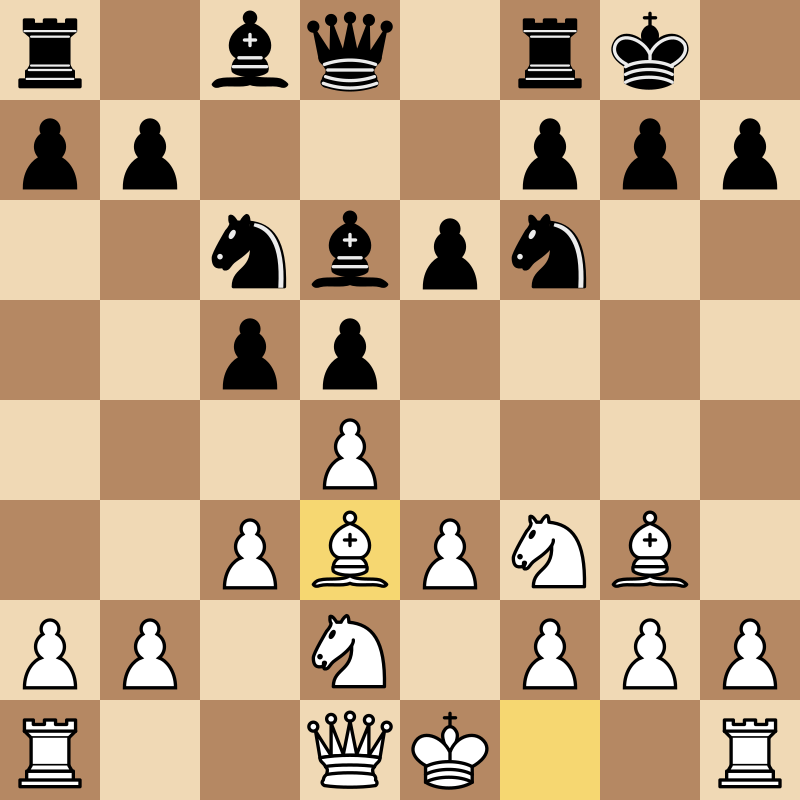
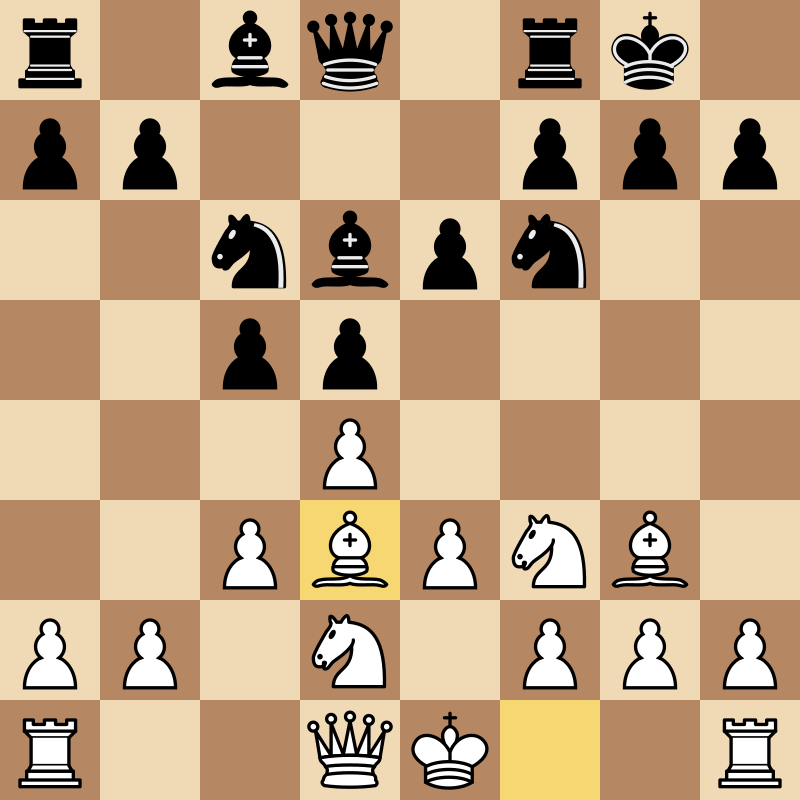
The KIA can be reached from 1.Nf3 or from 1.e4 followed by d3. Here’s a typical position against a French-style setup with …e6, …d5 and …c5:
Every piece has a job:
- Bg2 protects the king and supports e4 from a distance.
- Nbd2 supports e4 and will later travel to f1 and h2 or g4.
- d3 and e4 form a solid center; e4–e5 is the key push.
- Re1 backs up e4 and the coming e5.
The main plan: e5 and the kingside attack
Against setups where Black plays …d5 and …e6, White’s main idea is to push e4–e5, gaining space and kicking Black’s f6 knight away from the kingside.
The classic follow-up:
- Nf1 and then Nh2 or N1h2, heading for g4.
- h4 to support Ng4 and later h5.
- Bf4 to support e5.
- Qg4 or Qh5, and sometimes a rook lift via e3 to h3.
The e5 pawn cramps Black’s kingside: it takes away f6 from the knight, so Black has fewer defenders. Many KIA games end with a piece sacrifice on h6, g7 or f6.
Against the Sicilian (1.e4 c5 2.Nf3 e6 3.d3)
The KIA works well against …e6 Sicilians. After 1.e4 c5 2.Nf3 e6 3.d3 Nc6 4.g3 d5 5.Nbd2, White reaches the same structure as against the French.
Against …d5 and …Bf5 or …Bg4 (from 1.Nf3)
When Black develops the light-squared bishop actively (for example, 1.Nf3 d5 2.g3 Nf6 3.Bg2 c6 4.O-O Bg4 5.d3 Nbd7 6.Nbd2 e5), the e4 push may not lead to e5. Here White often plays e4 and keeps the tension, or switches to a queenside plan with c4.
Against a King’s Indian setup
If Black also fianchettoes (…g6, …Bg7, …d6), the position becomes symmetrical. White’s plans are slower: e4, Re1, c3 and d4, or a queenside expansion with a4 and Nc4.
Common KIA mistakes
- Playing e5 too early. Without Re1 and Nbd2, e5 can be undermined by …f6 or simply won.
- Ignoring Black’s queenside play. The …b5–b4 advance can kick the knight from c3 or d2 and open lines.
- Attacking without enough pieces. The Nf1–h2–g4 maneuver takes time; start it early.
- Forgetting about d4. In some structures White should play c3 and d4 instead of e5, especially if Black has played …e5.
Is the KIA right for you?
The King’s Indian Attack is a great choice if you want a system with very little theory, you like kingside attacks, and you prefer 1.e4-style positions to the London’s 1.d4 structures. We compare the two directly in King’s Indian Attack vs London System. If you meet the KIA as Black, read how to beat the King’s Indian Attack. To understand the “reversed” opening it’s based on, see the King’s Indian Defense guide.
For more about systems in general, read what is a system opening, and for history, Wikipedia’s King’s Indian Attack article covers Fischer’s famous games.
Practice it in Chess Opens
Learn the King's Indian Defense move by move
Step through the King's Indian Defense with the reason behind every move, then play it from memory against the trainer. Free, no sign-up.
Also in this article: London System
Questions
Q1Is the King's Indian Attack good for beginners?
Yes. It needs very little theory, the setup is the same in most games, and the attacking plan with e5 is easy to understand. It's a great alternative to the London System for players who prefer 1.e4-style positions.
Q2What's the difference between the King's Indian Attack and the King's Indian Defense?
The setup is similar (fianchettoed bishop, castle, pawns on d3/d6 and e4/e5) but the King's Indian Attack is played by White, so White has an extra move. The Defense is a reply to 1.d4; the Attack is a system White can use against almost anything.
Q3Which players used the King's Indian Attack?
Bobby Fischer famously used it against the French and Sicilian in the 1960s, and it has remained a popular system among club players ever since.
Keep reading
What Is a System Opening? Pros, Cons, and the Best Ones
What a system opening is, how it differs from a normal opening, the best systems for each side (London, KIA, Colle, King's Indian), and their pros and cons.
Stonewall Dutch: A Complete Guide for Black
Learn the Stonewall Dutch: the ...f5, ...e6, ...d5, ...c6 setup, the e4 outpost, Black's kingside attack, the bad bishop, and how to meet White's main plans.
London System: The Complete Guide for Club Players
Learn the London System from move one: the setup, the move order, plans against every Black defense, and the traps to avoid. With diagrams.