English Opening: A Complete Guide to 1.c4
Learn the English Opening (1.c4): the Reversed Sicilian, Symmetrical English, the Botvinnik setup and transpositions, with White's main plans and diagrams.
In short
- The English (1.c4) fights for d5 from the flank, usually with Nc3, g3 and Bg2.
- Against 1...e5, White plays a Sicilian with colors reversed and an extra tempo.
- The Botvinnik setup (c4, Nc3, g3, Bg2, e4, Nge2) gives White a firm grip on d5.
- The English is flexible and can transpose into 1.d4 openings; know which transpositions you're happy with.
The English Opening begins 1.c4. Instead of occupying the center with a pawn, White controls it from the side, especially the d5 square. It’s flexible, strategic, and a favorite of many world champions, from Mikhail Botvinnik to Magnus Carlsen.
This guide covers the English’s main structures, White’s typical setups, and how to deal with Black’s most common replies.
The basic idea
The English is built around three ideas:
- Control d5. The c4 pawn, a knight on c3 and a bishop on g2 all aim at d5.
- Fianchetto the king’s bishop. With g3 and Bg2, the bishop rakes the long diagonal toward b7 and a8.
- Stay flexible. White often delays d4 or e4, choosing the center structure based on what Black does.
Against 1…e5: the Reversed Sicilian
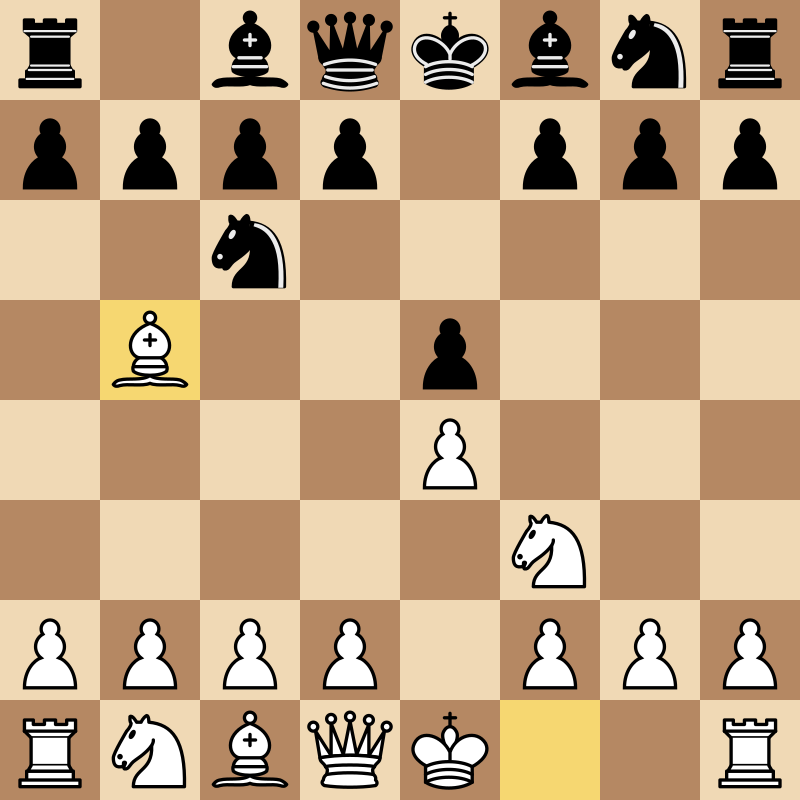
The most common reply. Black occupies the center, and White effectively plays a Sicilian Defense with an extra tempo.
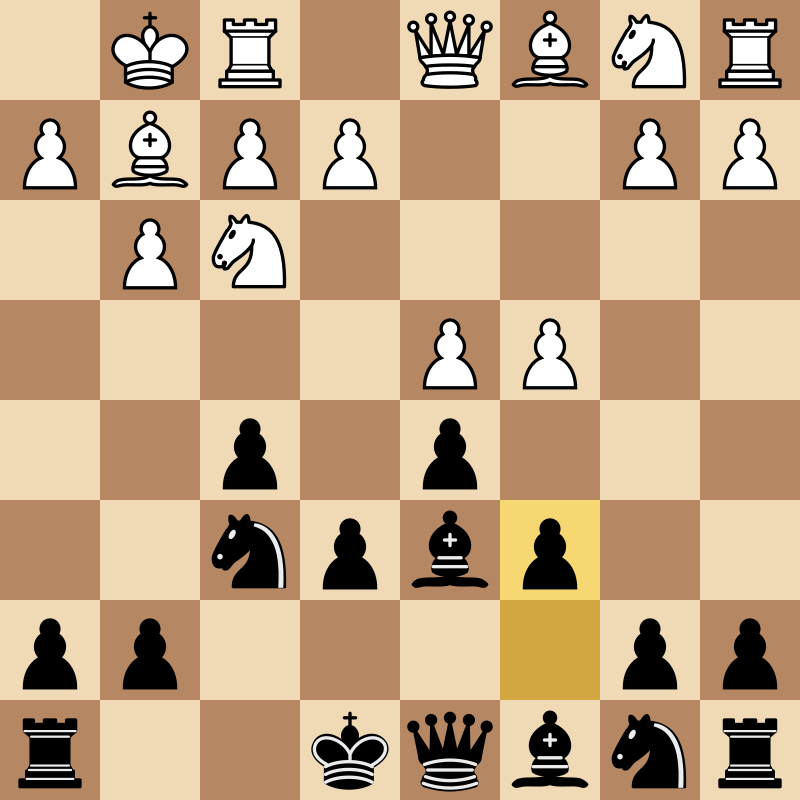
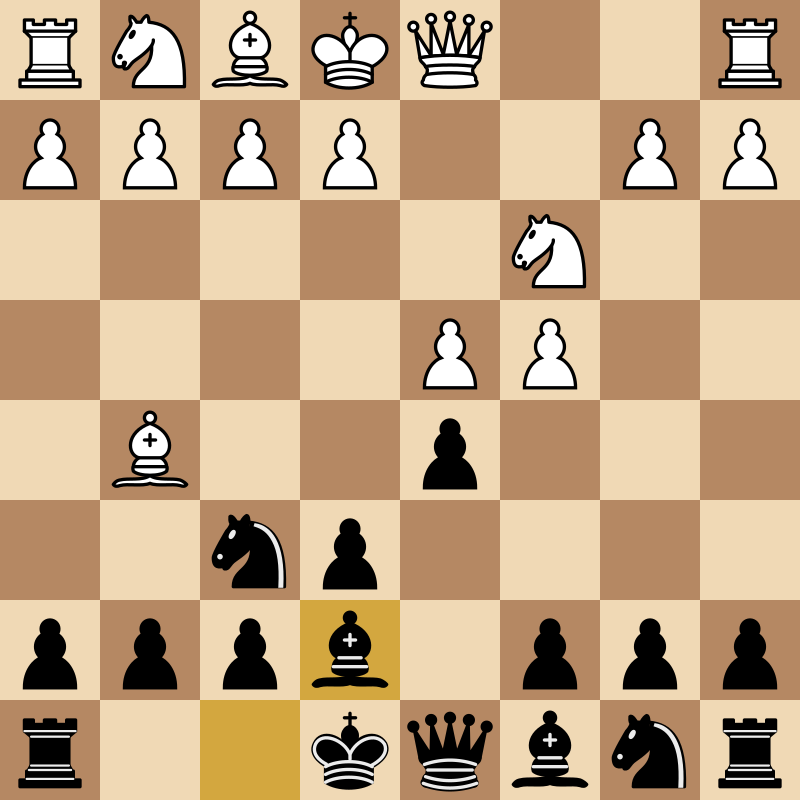
In the line above (the trainer’s main line), White plays a Reversed Dragon: Black’s pieces are active in the center, but White has the long-diagonal bishop and a queenside plan. White’s typical moves:
- a3 and b4, expanding on the queenside.
- Rb1 and b5, hitting the c6 knight.
- Be3 and Rc1, using the half-open c-file.
Step through it with explanations on the English Opening page.
Against 1…c5: the Symmetrical English
Black copies White’s first move. White’s main setup is Nc3, g3, Bg2, Nf3, O-O and later d4 or b3, while Black often mirrors with …Nc6, …g6 and …Bg7.
These positions are subtle. Small details (an early d4, a timely b4) decide who gets the better of the symmetry.
The Botvinnik System
White can also build a powerful bind with pawns on c4 and e4: c4, Nc3, g3, Bg2, e4, Nge2, O-O and d3.
White controls d5 so firmly that Black’s pieces struggle to find good squares. White’s plans include f4 for a kingside expansion, or queenside play with a3, Rb1 and b4.
Against 1…Nf6 and the Indian setups
After 1…Nf6, White can stay in English territory with 2.Nc3 and 3.g3, or transpose to 1.d4 openings with d4 (a Queen’s Gambit, Nimzo-Indian or King’s Indian). Decide in advance which transpositions you’re happy with.
Against 1…e6 and …d5
Black often aims for a Queen’s Gambit Declined structure. White can transpose with d4, or play the Agincourt setup with Nf3, g3, Bg2 and b3, keeping the d-pawn back and pressuring d5 from the flanks.
Transpositions
The English’s flexibility is also its challenge. Depending on move order, you can end up in:
- A Queen’s Gambit (1.c4 e6 2.Nc3 d5 3.d4)
- A King’s Indian Defense (1.c4 Nf6 2.Nc3 g6 3.e4 d6 4.d4)
- A Réti (1.c4 Nf6 2.Nf3 e6 3.g3 d5)
Know which of these you’re comfortable playing, and use the move order that avoids the ones you’re not. We cover this in chess opening transpositions, and the related 1.Nf3 system on the Réti Opening page.
Is the English right for you?
The English suits positional players who enjoy maneuvering, understanding structures, and avoiding heavy main-line theory. It’s less suited to players who want sharp, forcing positions early. Read English Opening pros and cons for an honest assessment, and how to beat the English Opening if you face it as Black.
Practice it
Learn the Reversed Dragon line on the English Opening page and play it from memory in the trainer. For history and a full list of variations, see Wikipedia’s English Opening article.
Practice it in Chess Opens
Learn the English Opening move by move
Step through the English Opening with the reason behind every move, then play it from memory against the trainer. Free, no sign-up.
Also in this article: Réti Opening
Questions
Q1Is the English Opening good for beginners?
It's better suited to intermediate players. The English rewards understanding of structures and transpositions more than memorized lines, which can be hard for beginners. It's a great second opening once you know the basics.
Q2What's the difference between the English and the Réti?
The English starts with 1.c4; the Réti with 1.Nf3. They often transpose into each other. The Réti usually keeps the d-pawn back and plays around d5 with pieces and pawns from the side.
Q3What is the Botvinnik System in the English?
A setup with pawns on c4 and e4, the bishop fianchettoed on g2, and the knights on c3 and e2. It locks down the d5 square and was a favorite of world champion Mikhail Botvinnik.
Keep reading
Best Chess Openings for White: 7 Choices for Every Style
The best chess openings for White, by style: the Italian, Ruy Lopez, Scotch, Vienna, Queen's Gambit, London System and English, with diagrams and plans.
Stonewall Dutch: A Complete Guide for Black
Learn the Stonewall Dutch: the ...f5, ...e6, ...d5, ...c6 setup, the e4 outpost, Black's kingside attack, the bad bishop, and how to meet White's main plans.
Queen's Gambit Declined: A Complete Guide for Black
Learn the Queen's Gambit Declined as Black: the Orthodox, Tartakower and Lasker defenses, the Exchange Variation, freeing breaks, and the Elephant Trap.